People in the United States with more authoritarian tendencies are less likely to wear a mask when going out in public, which might be explained by the fact that they also tend to be less concerned about the impact of COVID-19, according to new exploratory research published in Frontiers in Psychology.
“I became interested in authoritarianism and conspiracy theories in graduate school. The lab at which I trained studied the neuropsychological underpinnings of a number of cognitive and personality related variables, usually using measures of cerebral lateralization such as handedness as our main neuropsychological variable,” said study author Eric Prichard, an assistant professor at the University of Arkansas at Monticello.
“As the virus became more widespread and we noticed a segment of the population resisted wearing masks and denying the existence/severity of the virus, we felt it was important to use our experience studying individual difference variables to try to help and shed light on some of the behaviors and attitudes that were contributing to the spread of the virus.”
The researchers conducted an online survey of 189 U.S. adults in June using Amazon’s Mechanical Turk service. The survey included an assessment of authoritarianism, in which participants indicated their level of agreement with statements such as “Our country desperately needs a mighty leader who will do what has to be done to destroy the radical new ways and sinfulness that are ruining us” and “The only way our country can get through the crisis ahead is to get back to our traditional values, put some tough leader in power, and silence the troublemakers spreading bad ideas.”
The researchers found that participants with more authoritarian tendencies were less concerned about the virus’s impact on their own and others’ health. They were also less inclined to wear masks and heed the advice given by experts and scientists. But those with authoritarian tendencies were more likely to believe China was directly responsible for the infection rates and death toll from COVID-19 in the United States.
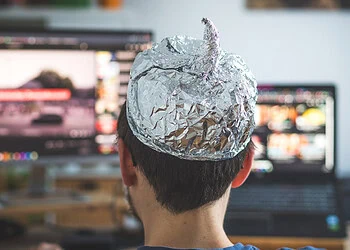
People who endorsed conspiracy beliefs — such as that “technology with mind-control capacities is used on people without their knowledge” — were also more likely to blame the virus on China. But, unlike authoritarianism, conspiracy beliefs were positively associated with concern for one’s personal health and unrelated to the tendency to wear a mask.
Men also tended to be less concerned about the virus overall compared to women, but did not express a lower tendency to wear masks.
“There appear to be personality and individual differences which are systematically related to behaviors that increase the spread of the virus,” Prichard told PsyPost.
“A colleague of mine at University of Arkansas at Monticello and I plan to run a study which we believe will replicate some of these findings, but it is always important to consider a finding tentative as the replication and verification process plays out,” he added.
“We have seen this time and again with a number of studies related to COVID-19 across scientific disciplines. The press around the virus science has likely made the public more aware of science as it is happening, but they might not be as aware of how quickly findings may be modified as an important topic is pursued.”
The findings are somewhat at odds with another study, which found that both Left-Wing and Right-Wing Authoritarianism were associated the endorsement of coercive and punitive coronavirus-related policies. That study was conducted in April, and the overlap between Right-Wing Authoritarianism and support for Donald Trump might have caused a shift in attitudes over the course of the pandemic, Prichard and his colleague wrote in their study.
It is also unclear whether the link between authoritarianism and reduced concern about COVID-19 exists in other countries. “It is hard to tell whether the relationship between our variables would hold in a different culture or whether they reflect the unique cultural and political situation of the United States,” Prichard said.
The researchers believe that psychologists have a role to play in combating misinformation related to the COVID-19 pandemic. Part of that role is better understanding how individual factors influence people’s beliefs and behaviors.
“Studies such as this are important for two reasons,” Prichard told PsyPost. The first is that ‘one size fits all’ public health messaging may not work in a pluralistic society like the United States. Our population represents a wide range of world views, cognitive styles, and personality types. Knowing which types of individual differences are correlated with health behaviors may help with messaging.”
“The second reason is that studies such as this one may shed light on who is most susceptible to misinformation. The contemporary social media environment makes misinformation easy to spread and providing people with the critical thinking tools to combat misinformation requires an understanding of how misinformation is processed by different types of people.”
“This extends beyond just public health messaging,” Prichard explained. “Take for example, someone who is susceptible to conspiratorial thinking. Such a person may be quite intelligent and even, from their perspective, quite inquisitive. Yet, they are weighting evidence in such a way that they come to conclusions that are implausible.”
“Understanding how these people weight and evaluate evidence gives psychologists and educators their best chances and trying to help people get better at evaluating the claims they are exposed to on a daily basis. This is more important than ever with the proliferation of social media and will continue to be an issue long after the virus is under control.”
The study, “Authoritarianism, Conspiracy Beliefs, Gender and COVID-19: Links Between Individual Differences and Concern About COVID-19, Mask Wearing Behaviors, and the Tendency to Blame China for the Virus“, was authored by Eric C. Prichard and Stephen D. Christman.