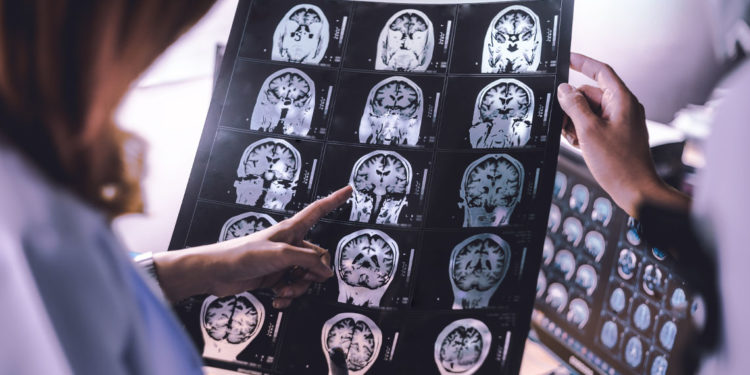

An analysis of a large number of existing neuroimaging studies has found that obese individuals have reduced grey matter density and functional activations in the midbrain and thalamus regions of the brain. Lower densities of grey matter were also found in specific areas of the prefrontal cortex of obese persons. The study was published in NeuroImage: Clinical.
Excessive fat accumulation in the body represents the conditions known as overweight and obesity. These two conditions differ in the amount of accumulated excessive fat and are usually defined using a body mass index. Body mass index (BMI) is obtained by dividing a person’s weight in kilograms with the square of the person’s height in meters (kg/m2). BMI values of 25 and up to 30 indicate that a person is overweight, while BMI values of 30 and above classify a person as obese.
Being overweight or obese is a serious impediment to health. Superficially, the cause of obesity looks quite straightforward – eating more food than the body needs. However, the neural and psychological mechanisms due to which some persons eat more than their body needs and other do not have not yet been clearly identified.
In recent decades, obesity rates worldwide have greatly increased. This drew the interest of researchers to discovering the neural mechanisms underpinning obesity. They proposed possible explanations of behaviors leading to obesity based on the alterations in the neural reward system or the system of cognitive control of the brain. A number of neuroimaging studies pointed to possible reductions in the density of gray matter in certain regions of the brain of obese people.
Study author Laura Zapparoli and her colleagues wanted to explore whether the findings of neuroimaging studies focusing on obesity have been consistent and whether they yield support to any of the proposed theoretical explanations of neural underpinnings of obesity. They searched the PubMed database (containing published scientific papers) for studies that included obese and normal-weight participants and met a range of criteria about the method used.
This resulted in a final collection of 27 papers that, in total, included 7650 participants. Of these, 497 were known to be normal-weight, 315 were classified as obese. Authors report that the remaining 6838 participants were taken from an analysis of association between gray matter density and BMI, but there were no specifications about whether they were normal-weight, overweight or obese.
In addition to this, the researchers carried out their own study on 22 normal-weight participants who underwent functional magnetic resonance imaging while at rest. The goal of this study was to complement the results of previous analyses by providing data on functional brain networks that are associated with neural clusters reported to display abnormalities in obese individuals.
“The first meta-analysis [analysis of results of previous studies] conducted on structural data highlighted three different clusters [of brain cells] consistently associated with reduced grey matter volumes in obese individuals compared to healthy controls. These regions were located bilaterally [on both sides] in the orbitofrontal cortex, in the medial prefrontal cortex, in the anterior cingulum and subcortically in the thalamus and the midbrain,” the researchers wrote.
They further found that the group of brain cells that seems to be associated with obesity-related functional impairments are linked to the anterior cingulum region on both sides of the brain, to the middle cingulum and medial superior frontal gyrus regions on the right side of the brain, and the insula region on the left side. It was also connected to striatal regions such as the putamen, the pallidum and the thalamus itself on the right side.
The researchers conclude that their analyses show that people with higher body mass indexes tend to have reduced volumes of grey matter in prefrontal, subcortical thalamic and brainstem regions of the brain, but also that grey matter density is reduced at the level of the medial prefrontal cortex – including the anterior cingulate cortex – and subcortically in the thalamus and the midbrain regions.
They argue that their findings support the Reward Deficit and the Inhibitory Control Deficit theories of obesity. The Reward Deficit Theory postulates that obese individuals overeat to compensate for a lowered responsivity of reward brain regions in response to food consumption, possibly as a result of dopamine deficiency. The Inhibitory Control Deficit theory proposes that frontal brain regions responsible for higher-level cognitive control are less effective at inhibiting behaviors, making such individuals more sensitive to temptation of appetizing foods, which they are less able to inhibit, leading to overeating.
The study sheds light on the neural underpinnings of obesity. However, it also has limitations that need to be taken into account. Notably, it is not very clear what reductions or increases in the density of grey matter in certain regions of the brain mean for behavior.
The paper, “Neural structural abnormalities behind altered brain activation in obesity: evidence from meta-analyses of brain activation and morphometric data”, was authored by Laura Zapparoli, Francantonio Devoto, Gianluigi Giannini, Sara Zonca, Francesca Gallo, and Eraldo Paulesu.