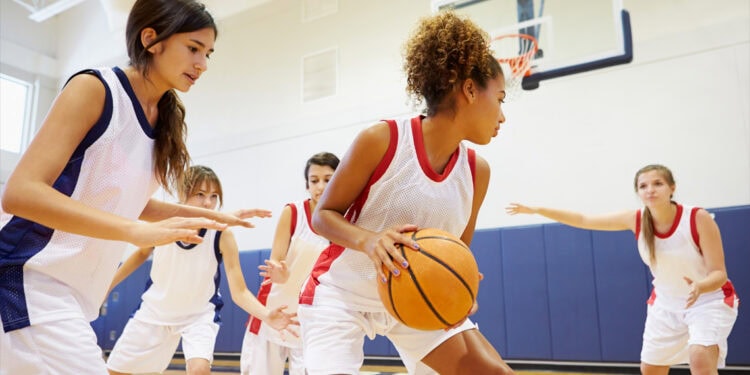

Early sports participation can improve self-esteem, which, in turn, can contribute to better mental health outcomes in young people, according to new research published in JAMA Psychiatry.
While risk factors for psychiatric symptoms in young people are well-established, there is a limited understanding of the protective factors that could mitigate these symptoms. The authors of the new study noted that there was compelling evidence showing that physical activity had a positive impact on mental health throughout life.
“I was particularly interested in this topic because I previously performed a systematic review and meta-analysis where I observed that physical activity had a small but positive effect on mental health in young people,” said study author María Rodriguez-Ayllon (@MariaRAyllon) of Erasmus University Medical Center.
“I hypothesized that by unraveling the mechanisms linking physical activity with mental health, we could design more effective interventions in the future to increase the positive benefits of physical activity on mental health at these ages.”
To conduct their study, the researchers used data from the Generation R study, an ongoing prospective population-based birth cohort conducted in Rotterdam, the Netherlands. They collected data from over 6,000 participants at the ages of 6, 10, and 13 years.
Physical activity data were obtained through questionnaires completed by the primary caregivers, and psychiatric symptoms were reported using validated checklists. The researchers also collected neurobiological, psychosocial, and behavioral data to investigate the potential mediating factors.
The researchers found that higher levels of sports participation in children at the age of 6 were correlated with lower levels of internalizing symptoms (such as depression and anxiety) at the age of 13.
The mediating factor identified was self-esteem, which explained 26% of the variance in the association between sports participation and internalizing symptoms. Higher levels of sports participation were independently associated with higher self-esteem, and higher self-esteem was associated with lower internalizing symptoms.
Further analysis revealed that the mediating role of self-esteem was mainly driven by the athletic competence domain. In addition to self-esteem, the study also found that higher sports participation was associated with better diet quality, while lower sleep quality was associated with higher internalizing symptoms.
“Sports participation during childhood is associated with better mental health in adolescence through the positive role of sports on self-esteem (how we value and perceive ourselves),” Rodriguez-Ayllon told PsyPost. “We found this to be mainly driven by the athletic competence domain of self-esteem, referring to one´s ability to do well at sports.
“Overall, youth with high perceived competence in sports are more likely to experience the positive effects of sports on mental health, which should be considered when choosing a sports-based activity at these ages.”
Other types of physical activity, apart from sports, did not show significant associations with psychiatric symptoms, indicating that early participation in sports might be the most effective physical activity practice for improving or preserving mental health in adolescents.
However, no significant correlations were observed for other measures of physical activity and psychiatric symptoms, and the study did not find any other mechanisms that explain the association between sports participation and internalizing symptoms.
“Previous studies found positive benefits of physical activity on the structure and function of the brain as well as on other associated behaviors, such as sleep, so I expected more than one path mediating the relationship between sports and psychiatric symptoms in addition to self-esteem,” Rodriguez-Ayllon said.
As with all research, the study includes some caveats. The cross-sectional nature of the study prevented causal conclusions, and the researchers noted there may be other unexplored mechanisms that mediate the association between sports participation and internalizing symptoms.
“The observational design that limits inferences about causality is one of the most important limitations of our study,” Rodriguez-Ayllon said. “Therefore, future intervention studies might be carried out to address this question.”
Despite the limitations, the findings highlight the important role of self-esteem as a mediator in the association between sports participation and mental health outcomes in young people.
“As a recommendation, we suggest that parents find a sport for their children that they enjoy and feel comfortable with,” Rodriguez-Ayllon advised. “This is not only proven to be good for their physical development, but also potentially for their mental health.”
The study, “Neurobiological, Psychosocial, and Behavioral Mechanisms Mediating Associations Between Physical Activity and Psychiatric Symptoms in Youth in the Netherlands“, was authored by María Rodriguez-Ayllon, Alexander Neumann, Amy Hofman, Trudy Voortman, David R. Lubans, Junwen Yang-Huang, Pauline W. Jansen,Hein Raat, MeikeW. Vernooij, and Ryan L. Muetzel.