![[Adobe Stock]](https://sp-ao.shortpixel.ai/client/to_webp,q_glossy,ret_img,w_750,h_375/https://www.psypost.org/wp-content/uploads/2024/11/scientists-examining-brain-scans-750x375.jpg)
A neuroimaging study of adolescents found that the association between impulsivity and future suicidal thoughts depends on how the right anterior insula, a region of the brain involved in processing emotions, reacts to loss. In adolescents whose anterior insula reacted with strong activation to a small monetary loss, high impulsivity was associated with elevated suicidal thoughts a year later. In contrast, in adolescents whose anterior insula did not react strongly to loss, higher impulsivity was associated with lower levels of suicidal thoughts. The paper was published in Developmental Cognitive Neuroscience.
If you or someone you know is struggling with suicidal thoughts or mental health matters, please call the National Suicide Prevention Lifeline at 988 (or 800-273-8255) or visit the NSPL site.
Suicide is currently the second leading cause of death among U.S. youth. Despite ongoing prevention efforts, statistics show that youth suicide rates have increased in recent years. Usually, suicidal behavior is preceded by periods during which a person thinks about death and suicide, a concept known as suicidal ideation. These thoughts can range from general contemplations about ending one’s life to making specific plans.
Suicidal thoughts tend to appear when a person feels trapped, hopeless, isolated, or in unbearable emotional pain. They can occur alongside depression, trauma, substance use, or other situations of intense distress. Not every person with suicidal thoughts wants to die permanently, as many simply want their pain to stop or wish to escape an unbearable situation.
Lead author Carly J. Lenniger and colleagues note that leading theories propose that behavioral traits such as impulsivity act as background vulnerabilities. These traits can make suicidal thoughts more likely to occur when a person experiences severe emotional distress.
Impulsivity is a general tendency to take action without considering the consequences. Because of this, impulsive teenagers in distress might respond quickly with suicidal thoughts without fully considering other outcomes. However, previous studies have not shown a simple link between impulsivity and suicide, as impulsivity alone does not reliably differentiate between people who think about suicide and those who actually attempt it.
The authors proposed that the way the brain processes negative outcomes and losses might affect how impulsivity relates to suicidal thoughts. They conducted a study to examine whether neural sensitivity to monetary loss influences this relationship during adolescence.
The final study sample consisted of 63 adolescents between the ages of 13 and 17 at the start of the research. They were recruited from the Pittsburgh area, and 59 percent of the participants were female. Although the study originally enrolled 135 participants, the final sample only included those who completed all of the required questionnaires and brain scans.
Importantly, two-thirds of the participants were classified as having a high familial risk for mental health issues because they had a parent with a lifetime history of disorders such as major depression or schizophrenia. The remaining third of the participants had no such family history. Interestingly, the high-risk group showed overall stronger brain activation in the anterior insula when experiencing a loss compared to the low-risk group.
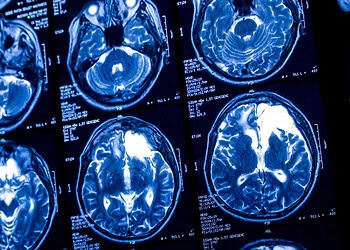
At the start of the study, participants completed assessments of impulsivity, suicidal thoughts, depression symptoms, and anhedonia, which is the inability to feel pleasure. They also underwent a brain scan using functional magnetic resonance imaging. During this scan, they completed an eight-minute guessing task.
In this task, participants won one dollar on winning trials and lost 50 cents on losing trials. Although the participants believed their guesses determined the outcomes, the wins and losses were actually prearranged by the researchers. To ensure fair compensation, everyone received ten dollars at the end of the game regardless of their performance. One year later, participants again completed the assessment of suicidal thoughts.
The brain scans revealed distinct clusters of active neurons in the anterior insula when participants experienced a monetary loss. The strength of this activation differed among participants, with some showing strong responses and others showing much weaker responses in this region during a loss.
Further analyses showed that the link between impulsivity and future suicidal thoughts depended on how the right anterior insula reacted to these loss outcomes. Interestingly, in participants with lower brain activation to the loss, the association between impulsivity and suicidal thoughts was negative. This meant that highly impulsive individuals with low brain reactivity were actually less likely to experience future suicidal thoughts, whereas less impulsive individuals with low brain reactivity faced an elevated risk.
Conversely, in teenagers with high brain activation to a loss, the link between impulsivity and suicidal thoughts was positive, meaning that highly impulsive individuals tended to report increased suicidal thoughts. Overall, seven participants had very low brain activity to the loss, ten had very high activity, and 46 had medium levels of activity. Among the 46 participants in the middle range, impulsivity was not associated with suicidal thoughts.
The authors concluded that the relationship between impulsivity and future suicidal thoughts varied based on the brain’s reaction to a negative outcome. Impulsive adolescents appeared to be at an elevated risk only when they showed a heightened neural sensitivity to loss, whereas those with lower sensitivity appeared to have a reduced risk.
These findings could point to specific targets for clinical therapy. For impulsive adolescents with highly reactive brains, building the capacity to tolerate distress and regulate emotional responses to negative experiences may be especially critical. In contrast, teenagers with a quieter brain response and low impulsivity may benefit more from therapies that encourage active engagement, such as behavioral activation, or methods that stimulate brain networks.
The study contributes to the scientific understanding of the neural pathways underlying suicidal thoughts. However, it is important to note that the final sample size was relatively small due to a high number of participants who did not complete all scans and surveys. Additionally, the monetary loss experienced in the study was very small and might not fully capture how teenagers react to more personally relevant or severe life losses.
The paper, “Anterior Insula Reactivity to Loss Moderates the Association Between Trait Impulsivity and Future Suicidal Ideation in Adolescents,” was published in 2026. It was authored by Carly J. Lenniger, Kristen L. Eckstrand, T.H. Stanley Seah, Jennifer S. Silk, Jamie L. Hanson, Melissa Nance, Morgan Lindenmuth, Gretchen Haas, Neal Ryan, and Erika E. Forbes.