Alzheimer’s disease steals memories and devastates lives. Yet despite an abundance of research, the earliest brain changes that trigger this disease still remain unclear, making it challenging to find effective treatments.
But could lithium – a metal most of us know better for its use in batteries or as a treatment for mood disorders – play a role in cognitive health? New research shows that this mineral may play a key role in protecting against Alzheimer’s disease.
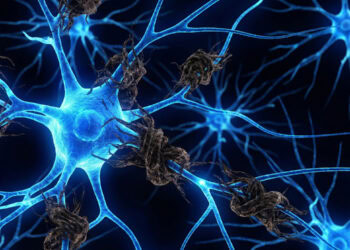
Alzheimer’s is linked to the buildup of two harmful proteins: amyloid-beta and tau. Amyloid-beta clumps outside brain cells (neurons), forming sticky plaques that block communication. Tau twists into tangles inside cells, disrupting their structure and function. Together, they damage the delicate network of neurons that supports memory and thinking.
But for nearly a decade now, scientists from Harvard University have also been uncovering lithium’s unexpected importance in the brain.
Lithium is naturally present in small amounts in the brain. This lithium comes from our diet, where it’s transported through the bloodstream to the brain’s cells. But researchers have found that as people move from mild cognitive impairment – a stage often seen as a warning sign for Alzheimer’s – to full Alzheimer’s disease, their lithium levels drop. This loss of lithium appears to set off the cascade of changes that lead to memory loss and confusion.
This recent study now helps to explain why a loss of lithium is linked with Alzheimer’s disease. The study showed that lithium acts as a natural defender – helping to keep amyloid and tau in check. When lithium levels fall, the brain becomes more vulnerable to these toxic proteins.
Researchers uncovered this connection by conducting postmortem examinations of brain tissue taken from people who had been in different stages of cognitive health. Those with mild cognitive impairment had noticeably less lithium in their brains compared to those who had been in good cognitive health. Levels were even lower in Alzheimer’s patients.
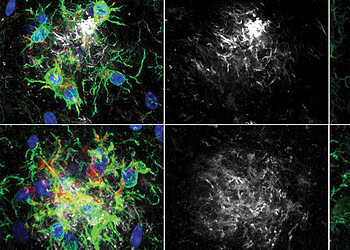
Interestingly, they found that the lithium doesn’t just disappear. Much of it becomes trapped within amyloid plaques, which lock it away from the brain cells where it’s needed most. This means even if total lithium levels don’t drop drastically, brain cells may still be starved of its protective effects.
So to explore what happens when lithium is missing completely, the scientists then studied mice – both healthy mice and mice that had been genetically engineered to develop Alzheimer’s symptoms. They cut the mice’s dietary lithium by 50% and observed the results.
The effects were striking. Mice with reduced lithium showed faster amyloid and tau buildup, more brain inflammation and lost connections between neurons – all crucial for learning and memory. The genetically engineered mice also performed worse in memory tests.
At the core of this process is an enzyme called GSK3β. Lithium normally keeps this enzyme under control. But when lithium is low, GSK3β becomes overactive, encouraging tau to behave abnormally and form tangles that damage neurons. This enzyme acts like a switch, tipping brain cells toward disease if unchecked.
The good news is the study didn’t stop at identifying the problem. Researchers treated mice with lithium orotate, a form of the mineral that’s less likely to get trapped by amyloid plaques. This treatment prevented the harmful buildup of amyloid-beta and tau, reduce inflammation, preserved neuron connections and improved memory.
Lithium’s importance
This research recasts lithium as more than a forgotten trace mineral. It appears to be a vital guardian of brain health, protecting neurons and maintaining cognitive function throughout life. Disrupting lithium balance might be one of the earliest steps toward Alzheimer’s – even before symptoms show.
Lithium’s protective role isn’t entirely new. It’s been used in psychiatry for decades, particularly to manage bipolar disorder where it stabilises mood. But medicinal doses are much higher than the tiny amounts naturally present in the brain. This study is the first to reveal that even these small, natural levels have a crucial protective function.
Beyond Alzheimer’s, lithium supports brain growth, shields nerve cells, and calms inflammation, all important for healthy ageing. Keeping lithium levels stable could have wider benefits in preventing dementia and supporting brain resilience.
One reason lithium hasn’t featured prominently in Alzheimer’s research before is its simplicity. It doesn’t target one molecule but acts like a conductor, balancing multiple brain processes. This makes it harder to study but no less important.
The discovery that lithium deficiency worsens Alzheimer’s damage opens new possibilities. Unlike current treatments focusing on removing amyloid plaques or tau tangles, lithium replacement could boost the brain’s defences.
Lithium orotate is especially promising because it doesn’t get trapped by amyloid and delivers lithium where neurons most need it. Lithium salts have long been used safely in medicine, so this approach could be easy and accessible for older adults.
Still, it’s unclear why lithium levels fall in some people. Is it due to diet, genetics or another cause? Could differences in the natural levels of lithium in drinking water worldwide influence Alzheimer’s risk? These puzzles invite future research.
It’s also important to note that much of this work was done in mice. While animal models offer valuable insights, human brains are more complex. Clinical trials will be needed to see if lithium orotate can safely prevent or slow Alzheimer’s in people.
We also don’t yet know how supplements or diet might affect brain lithium levels over time, or if this would be practical as treatment.
Still, the idea that a simple mineral could delay or prevent one of the world’s most devastating diseases is both exciting and hopeful.
This article is republished from The Conversation under a Creative Commons license. Read the original article.