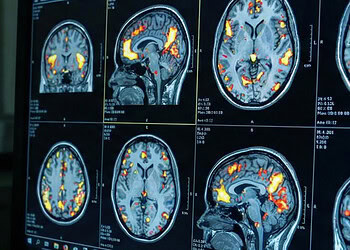
A recent study out of China has uncovered new insights into how listening to classical music can positively influence the brain, offering a potential non-drug approach to treating depression. Published in Cell Reports, the research demonstrates that Western classical music can synchronize specific brain areas responsible for processing both sound and emotion, which helps to alleviate depressive symptoms. By using advanced brainwave measurements and neural imaging, the scientists identified that music engages a circuit connecting the auditory cortex and parts of the brain involved in reward and emotional processing, creating what the researchers call “triple-time locking” of neural oscillations.
The researchers were motivated by the need for new ways to treat depression, a major global health challenge. Current treatments, such as antidepressant medications and psychotherapy, do not work for everyone, especially for individuals suffering from treatment-resistant depression. Up to half of all people with major depressive disorder experience limited or no relief from these conventional treatments.
Music therapy has been used for centuries to improve mood, and modern science has shown that music can influence brain activity related to emotions. However, there is still much to learn about how music affects the brain, especially in people with severe forms of depression who do not respond well to standard therapies. By studying the brain’s response to music in people with treatment-resistant depression, the researchers hoped to uncover new ways to improve mental health using music as a non-invasive treatment.
The study involved 23 patients who had been diagnosed with treatment-resistant depression. All participants had experienced depressive episodes for at least two years, and none had responded well to at least three different types of antidepressant treatments. Before the experiment, each participant underwent a surgical procedure to implant electrodes deep into their brain to target specific areas involved in emotion and reward processing. These electrodes were originally implanted for deep brain stimulation therapy, which is used to treat some cases of depression, but in this study, the electrodes were used solely to record brain activity.
During the experiment, the participants listened to two different types of classical music: one piece that evoked sad emotions (Tchaikovsky’s Symphony No. 6) and another that evoked joyful emotions (Beethoven’s Symphony No. 7). The researchers measured participants’ emotional responses to the music using a visual analog scale, where they rated their levels of depression, anxiety, and enjoyment of the music. Brain activity was recorded using both traditional scalp-based electroencephalogram (EEG) sensors and the implanted electrodes that monitored deeper brain regions.
To better understand how music affects the brain, the researchers also used mathematical models and machine learning techniques to analyze the brainwaves. They specifically looked at how brain oscillations—rhythmic patterns of activity—were synchronized between the auditory cortex (responsible for processing sounds) and the bed nucleus of the stria terminalis (BNST) and nucleus accumbens (NAc), two key areas involved in emotion and reward processing.
The results of the study showed that music has a profound effect on the brain, particularly when it is enjoyed by the listener. Regardless of whether the music was sad or joyful, the participants who reported higher enjoyment experienced the greatest reduction in their depressive symptoms. This suggests that personal preference plays a more significant role in the emotional and antidepressant effects of music than the specific emotional content of the music itself.
On a neural level, the researchers found that music enjoyment was linked to increased synchronization between the brain’s auditory cortex and the BNST-NAc circuit. This synchronization occurred through “triple-time locking,” a pattern where rhythmic brain activity in the auditory cortex was timed with activity in both the BNST and NAc.
“The BNST-NAc circuit, sometimes referred to as part of the ‘extended amygdala,’ underscores the close relationship between this circuit and the amygdala, a central structure in emotional information processing,” explained senior author Bomin Sun, director and professor of the Center for Functional Neurosurgery at Shanghai Jiao Tong University. “This study reveals that music induces triple-time locking of neural oscillations in the cortical-BNST-NAc circuit through auditory synchronization.”
Another significant finding is the role of brain oscillations, or rhythmic patterns of neural activity, in the brain’s response to music. The researchers observed that gamma oscillations, which are fast brainwaves associated with attention and emotional processing, were more prevalent in the BNST and NAc when participants enjoyed the music.
These gamma oscillations were also tightly linked with theta oscillations, which are slower brainwaves often associated with memory and navigation. The study showed that when participants enjoyed the music, the theta oscillations in the auditory cortex were synchronized with the gamma oscillations in the BNST and NAc, reinforcing the idea that music enjoyment activates a network of brain regions involved in emotional processing and reward.
The researchers further explored this by looking at the timing of these brainwaves, discovering that the gamma oscillations in the BNST and NAc were often “nested” within the theta oscillations in the auditory cortex. This nesting refers to the idea that the faster gamma waves occurred at specific points in the slower theta wave cycle, creating a rhythmic pattern of synchronized activity. This nesting was much stronger in participants who enjoyed the music, suggesting that the more synchronized the brain activity, the greater the emotional and antidepressant effects of the music.
Interestingly, participants who listened to music they were familiar with, but did not enjoy, showed little to no improvement in their depressive symptoms. In these cases, the brain did not show the same level of synchronization between the auditory cortex and the emotional processing regions. This further highlights the importance of personal music preference in music’s ability to alleviate depressive symptoms.
In cases where participants did not respond to music, the researchers experimented with auditory modulation. This involved introducing specific sound frequencies designed to enhance the synchronization between the auditory cortex and the BNST-NAc circuit. The results showed that this auditory modulation was successful in increasing brain synchronization and improving depressive symptoms, even in participants who had previously shown little response to music alone. This finding opens up new possibilities for using sound-based therapies to enhance the brain’s response to music, particularly for individuals who do not experience immediate benefits from music therapy.
“Our research integrates the fields of neuroscience, psychiatry, and neurosurgery, providing a foundation for any research targeting the interaction between music and emotion,” Sun said. “Ultimately, we hope to translate our research findings into clinical practice, developing convenient and effective music therapy tools and applications.”
But the study, like all research, includes some limitations. First, the sample size was relatively small, with only 23 participants. Although this number is sufficient to provide preliminary findings, larger studies will be needed to confirm these results and to see if they apply to a broader population. The researchers also faced limitations with their equipment. While the electrodes provided valuable data about deep brain activity, the precision of the measurements could be improved with newer technologies.
Looking ahead, the research team is interested in exploring how different forms of sensory stimulation, including visual and tactile experiences, might work in combination with music to enhance the therapeutic effects for people with depression. They also plan to collaborate with experts in technology and music therapy to develop digital tools that could deliver personalized music-based therapies through smartphones or other devices.
“By collaborating with clinicians, music therapists, computer scientists, and engineers, we plan to develop a series of digital health products based on music therapy, such as smartphone applications and wearable devices,” Sun said. “These products will integrate personalized music recommendations, real-time emotional monitoring and feedback, and virtual-reality multi-sensory experiences to provide convenient and effective self-help tools for managing emotions and improving symptoms in daily life.”
The study, “Auditory entrainment coordinates cortical-BNST-NAc triple time locking to alleviate the depressive disorder,” was authored by Xin Lv, Yuhan Wang, Yingying Zhang, Shuo Ma, Jie Liu, Kuanghao Ye, Yunhao Wu, Valerie Voon, and Bomin Sun.