A new study published in the Journal of Medical Internet Research has found that regular participation in dance classes can help ease depression in people with Parkinson disease. The research shows that both mood scores and brain activity in a region involved in regulating emotions improved over an eight‐month period of dance practice. These findings suggest that the art of dance may offer a nonmedical way to support emotional well-being in this population.
Parkinson’s disease is a neurodegenerative disorder affecting millions worldwide, and it’s known for its impact on movement. However, many people with Parkinson’s also experience non-motor symptoms, with depression being one of the most prevalent and impactful. Depression significantly lowers quality of life for those with the condition. The standard treatments for Parkinson’s, such as medication and deep brain stimulation, primarily focus on motor symptoms.
While medications exist for depression, they can have side effects, and their effectiveness can diminish over time. Moreover, some antidepressants can interact negatively with Parkinson’s medications. Therefore, finding alternative, non-pharmacological ways to manage depression in this population is a significant need.
Previous research has hinted at the benefits of dance for people with Parkinson’s. Studies have shown improvements in motor skills like balance, as well as positive changes in mood and overall quality of life. Dance is an accessible and low-cost activity that has deep roots in many cultures. Specific dance programs, like Dance for Parkinson’s Disease (DfPD), have been designed to be adaptable to different levels of motor ability, emphasizing creativity and artistic expression.
Prior investigations have mostly relied on behavioral measures, and the few studies that looked at brain activity were limited by small sample sizes or short intervention periods. No study had thoroughly examined the long-term effects of community-based dance classes on brain activity related to emotion in people with Parkinson’s.
“This research project has been an ongoing project initially started in Professor DeSouza’s lab at York University and my interest in this project stemmed from my childhood history of being a dancer myself and also from the research interest that I have in neuroscience,” said study author Karolina A. Bearss. “Combining the two passions is what led me to pursue this project, which all began during my doctoral studies under DeSouza’s supervision and now continues to be a passion and research interest as a professor and researcher of my own lab at Algoma University.”
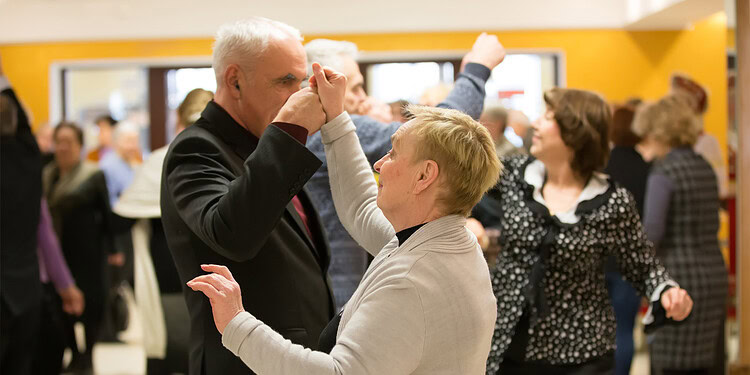
For their study, the researchers observed a group of individuals participating in weekly, 75-minute Dance for Parkinson’s Disease classes in Toronto, Canada. These classes, held at Canada’s National Ballet School, are structured to include seated exercises, mirrored movements, paired activities, and choreographed sequences. The specific choreography used in the study involved interactions between dancers, fostering social engagement.
Participants were recruited from these ongoing community classes. Out of 34 volunteers, 23 had Parkinson’s disease, and 11 were healthy individuals without Parkinson’s, serving as a comparison group. The individuals with Parkinson’s ranged in age from 52 to 76, with varying lengths of time since diagnosis.
The study spanned eight months, with data collected at multiple time points. To measure depression, participants completed the Geriatric Depression Scale (GDS), a well-established questionnaire, both before and after a dance class on three separate occasions (March, April, and June).
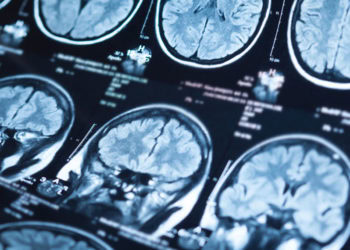
To examine brain activity, a subset of 15 volunteers (including people with Parkinson’s and healthy individuals) participated in brain imaging sessions using functional magnetic resonance imaging (fMRI). Due to the longitudinal nature of the study and challenges in maintaining consistent participation, only 7 people with Parkinson’s completed the necessary two fMRI scans and corresponding GDS questionnaires. These individuals were scanned at four different times (September, December, January, and April).
During the fMRI scans, participants were instructed to visualize themselves dancing the learned choreography while listening to the music associated with the dance. This technique, previously used to study brain activity in professional dancers, allowed researchers to examine brain responses related to the dance experience.
The researchers focused on a specific brain region called the subcallosal cingulate gyrus (SCG). This area is known to play a role in emotional regulation and has been implicated in depression. It is a target for deep brain stimulation in treatment-resistant depression. The researchers measured changes in blood oxygen level-dependent (BOLD) signals in the SCG, which reflect brain activity.
The analysis of the Geriatric Depression Scale scores revealed significant improvements in mood and depression symptoms related to dance participation. Specifically, depression scores decreased significantly after each dance class (in March and April) and also improved over the entire eight-month period.
The fMRI data from the 7 people with Parkinson’s who completed the imaging sessions showed a corresponding pattern. The BOLD signals in the subcallosal cingulate gyrus decreased over the course of the study, indicating reduced activity in this brain region.
Importantly, the decrease in brain activity in the SCG was significantly correlated with the reduction in depression scores reported on the GDS. This means that the individuals who showed the greatest improvements in their self-reported depression also showed the largest decreases in activity in this key brain area.
“The relationship that we found between biological (fMRI) and behavioral measures (GDS depression scores) provides the first and early evidence that participation in a program such as DfPD, a noninvasive, widely available intervention throughout the world, can facilitate adaptive plastic changes in a neural network node associated with depression and ultimately positively improve people’s affect (their mood),” Bearss told PsyPost.
“We’re not trying to cure Parkinson’s with dance,” said DeSouza, of the Centre for Vision Research and Connected Minds at York University. “What we’re trying to do is to have people live a better quality of life. This goes for both those with the disease, and their families that take care of them — they also get benefits of feeling better.”
While these findings are encouraging, the researchers also acknowledged certain limitations of their study. Notably, this study was observational, meaning that participants were not randomly assigned to a dance or non-dance group. The absence of a control group of people with Parkinson’s who did not participate in dance makes it more challenging to definitively attribute the observed improvements solely to the dance intervention. It is possible that other factors, unrelated to dance, might have contributed to the positive changes. Future research could strengthen these findings by including a control group of people with Parkinson’s who do not engage in dance, allowing for a more direct comparison and stronger conclusions about the specific effects of dance.
This research builds on Bearss and DeSouza’s three-year-long study, which demonstrated that dance training can improve motor control, enhance mood, and boost everyday functioning for people with Parkinson disease.
Looking ahead, the researchers are interested in exploring the potential of dance for a broader range of mental health conditions, such as anxiety. They also plan to investigate the long-term effects of dance on brain health and the progression of Parkinson’s disease.
“Our long-term goal is to continue this line of research for another 10 years or more, while expanding it to include additional populations, such as those with depression and anxiety,” Bearss explained.
“Future research intends to extend our brain imaging studies to explore the benefits that dance may offer individuals with depression. Since the results of this study showed reduced activity in the SCG—the depression node—we can now consider expanding our work to other clinical populations, including those with major depressive disorder and anxiety. The SCG is part of a network that connects to frontal brain regions and plays a role in the brain’s emotional circuitry, which largely depends on dopaminergic projections from the basal ganglia, the area affected in people with Parkinson’s disease.”
“In addition, we hope to explore the benefits of dance on sleep cycles in people with Parkinson’s disease, as disturbances in sleep may accelerate the disease and its progression,” Bearss added. “Our overall goal is to identify the neural network involved in slowing Parkinson’s disease progression with dance—what we refer to as multisensory training—by examining three functional and structural neural circuits related to anxiety, depression, and sleep that may contribute to disease onset and progression.”
The study, “Impact of Weekly Community-Based Dance Training Over 8 Months on Depression and Blood Oxygen Level–Dependent Signals in the Subcallosal Cingulate Gyrus for People With Parkinson Disease: Observational Study,” was authored by Karolina A. Bearss, Rebecca E. Barnstaple, Rachel J. Bar, and Joseph F. X. DeSouza.