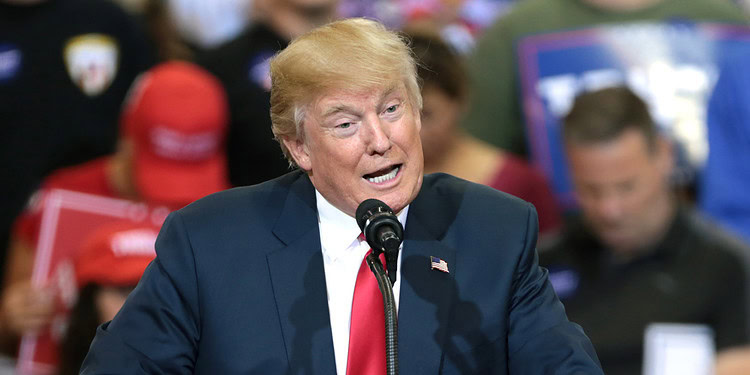

Recent research published in American Speech indicates that despite projecting an uncompromising public image, Donald Trump has subtly altered specific features of his New York accent over the past several decades. By analyzing his speech patterns from 1980 to 2023, scientists found that he mostly maintained a traditional accent but steadily shifted how he pronounces certain stigmatized vowels. This pattern provides evidence that deep-rooted social perceptions of language can influence how a person speaks over their lifespan, even for highly visible public figures.
Linguists study how people’s speech patterns adapt or remain stable as they age. A foundational concept in this field involves examining lifespan language change, which looks at whether adults continue to adopt new pronunciations as their local community’s speech evolves.
Tracking these subtle vocal shifts over time can be difficult in everyday people because finding high-quality audio recordings from multiple stages of a single person’s life is rare. As a result, public figures with massive archives of recorded media offer an ideal subject pool for mapping how language shifts over an adult lifespan.
“Our project follows a tradition of studies that have examined language produced by celebrities and other public figures to explore the plasticity of the human language faculty during adulthood,” said lead author Christopher Strelluf, a reader in linguistics at the University of Warwick. “(The most famous of these studies were led by linguist Jonathan Harrington and examined the speech of Queen Elizabeth II; e.g. https://www.nature.com/
“We saw Donald Trump as an interesting complement to other studies of adult lifespan language change among celebrities.”
Throughout his career, Trump has heavily tied his identity to New York City, cultivating a public persona as a tough, unyielding real estate mogul and dealmaker. His native New York City accent features distinct pronunciations, particularly regarding specific vowel sounds that have long been recognized as markers of a classic local identity. Such accents carry social weight, and speakers often unconsciously lean into them to project authenticity, authority, or toughness.
Over the last half-century, the broader New York City accent has undergone gradual transformations. Younger generations have slowly shifted away from traditional, heavily localized vowel sounds in favor of more generalized North American pronunciations. Certain classic New York vowels are often associated with negative social evaluations, leading many speakers in the region to unconsciously soften those sounds over time.
“Many of Donald Trump’s public identities were tied closely to New York City as a place, or drew on values and qualities that people might sociolinguistically associate with New York accents, such as toughness and authenticity,” Strelluf noted. “We wanted to explore how these competing sociolinguistic motivations might play out in language change during Donald Trump’s adult life.”
To investigate these dynamics, the research team relied on an extensive collection of publicly available audio. The dataset comprised 70 speech events featuring Trump, spanning from a television interview in 1980 to a political video in 2023. These recordings captured him in various roles, including his time navigating the business world, hosting a reality television show, and serving as president.
To process this massive amount of audio, the scientists used automated speech recognition software to generate transcripts and differentiate his voice from interviewers or co-hosts. They then paired these transcripts with acoustic analysis tools to pinpoint the exact vocal frequencies of individual vowel sounds. The software measured the frequencies of the first two vocal tract resonances, which determine whether a listener perceives a vowel as being pronounced high or low, and front or back, in the mouth.
The team focused their analysis on six specific vowels known to be changing in the New York City region, as well as a few stable comparison vowels. The data collection focused only on vowels that carried primary stress in a given word. In total, the researchers extracted measurements for 212,279 distinct vowel sounds. They applied mathematical normalizations to the data to filter out acoustic differences caused by varying recording environments.
The analysis indicates that Trump has largely maintained a traditional New York City vowel system throughout his adult life. For most of the analyzed vowels, his pronunciation remained remarkably stable across all five decades. He generally did not adopt the more generalized American pronunciations that have become increasingly common in his home region. This stability aligns with his consistent public projection of a steadfast, unwavering persona.
“We report acoustic measurements of speech, which can be much more fine-grained than human hearing,” Strelluf told PsyPost. “To a normal listener, Donald Trump ‘sounds like a New Yorker’ throughout his adult life, and there’s variability in his pronunciations—which is always the case for every person when they speak.”
However, the researchers identified a consistent, long-term shift in one specific vowel sound. Over the decades, Trump has steadily lowered his pronunciation of the vowel sound found in words like “thought,” “daughter,” and “coffee.” In a traditional New York accent, this vowel is typically pronounced quite high in the mouth. The data tracks a steady trajectory from a higher, more classic New York pronunciation in the 1980s to a lower, more standard pronunciation in the 2010s and 2020s.
“This indicates the power of sociolinguistic ideologies about language and accents,” Strelluf said. “Even Donald Trump, who has strong motivations to maintain a New York accent, participates in ongoing sound change away from stigmatized accent features.”
The team also found nuanced patterns in his use of the short “a” sound, found in words like “bad” and “trap.” Traditional New York speakers use a complex system that tenses and raises this vowel in specific words but keeps it relaxed in others. The data indicates that Trump occasionally exaggerated this distinct vowel split during his time hosting a reality television show based in New York, likely to emphasize his local identity. Aside from that specific era, he showed a slight trend toward softening this extreme vowel separation as he transitioned into national politics.
The gradual shifts observed in the data might suggest to some that these vocal modifications were intentional, but the researchers do not believe Trump consciously changed his accent.
“We do not suggest that Donald Trump consciously changed his accent. In the United Kingdom, there is a myth that Margaret Thatcher underwent voice coaching to make her speech sound more appropriate for political leadership,” Strelluf explained.
“Rather, we think Donald Trump is subject to the same linguistic and sociolinguistic pressures as the rest of us. We are all surrounded by changes in language around us and all aware at some level of socially positive and negative ideologies about language features, and these changes and ideologies exert a pressure on our language systems throughout our lives.”
“We suggest that, if Donald Trump participates in language change during his adult life, despite some powerful motivations to maintain his home accent variety, then the rest of us probably do, too,” he added.
Relying on automated software to transcribe and measure audio from internet videos introduces a margin of error. Minor background noises, poor microphone quality, or overlapping speech can result in inaccurate acoustic measurements for individual words. The researchers addressed this by analyzing massive amounts of data, ensuring that occasional software mistakes would not artificially skew the overall decade-by-decade trends.
The process of normalizing the audio to account for different microphones and recording settings also removes some physiological information. As people age, their vocal cords change, which naturally lowers the pitch and resonant frequencies of their voice. Because the normalization process filters out these biological shifts, the data only highlights changes in how Trump actively shapes his mouth and tongue to produce specific vowels, not how aging has altered his voice globally.
The observed linguistic stability in most of his vowels might reflect a deliberate resistance to change, matching his cultivated public persona. It is also entirely possible that his speech is simply less malleable than that of other public figures. Future explorations into the speech of politicians could examine whether specific conversational topics, audiences, or emotional states trigger stronger regional accents in a given moment.
“We are exploring features of Donald Trump’s New York City accent across all seasons of The Apprentice,” Strelluf said. “We are curious about whether his accent provides a sociolinguistic resource for him in particular tasks—for instance, as he evaluates candidates or talks with his leadership team.”
The study, “Donald Trump Has Lowered thought for Five Decades: Lifespan Language Change and Stability in New York City English Vowels,” was authored by Christopher Strelluf, Xinran Gao, Sophie Frankpitt, Cagla Karatepe, Ayman Alrajhi, and Holly Taylor.