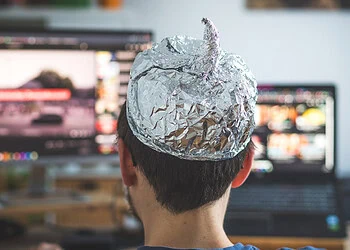
People who have difficulty managing their emotions are more likely to believe in conspiracy theories, according to new research published in Personality and Individual Differences.
Emotion regulation involves being aware, accepting, and understanding of one’s emotions, using appropriate strategies to control emotions, and being able to control impulses and act in line with personal goals even when experiencing negative emotions. Difficulties in any of these areas can lead to emotion dysregulation.
“Scholars have argued that conspiracy beliefs have emotional underpinnings (e.g., van Prooijen & Douglas, 2018), such as anxiety. Recent research (Marchlewska et al., 2022) showed that not only aversive experiences (such as feelings of uncertainty or stress) but also how people deal with these adversities play a role in adopting conspiracy explanations,” said study author Zuzanna Molenda, a PhD student at the Polish Academy of Sciences and member of the Political Cognition Lab.
“Specifically, Marchlewska and colleagues demonstrated that maladaptive coping with stress is related to higher conspiracy beliefs. As a researcher interested in a related topic of emotion regulation, I aimed to explore conspiracy beliefs in this framework.”
“Thus, my colleagues (from the Polish Academy of Sciences and the University of Kent) and I hypothesized that those individuals who do not have sufficient abilities to deal with emotions – that is, those with greater difficulties with emotion regulation – might be more prone to believe in conspiracy theories.”
In an initial study, the researchers recruited 391 U.S. participants from the crowdsourcing platform Prolific. The participants completed the Generic Conspiracist Beliefs scale, which includes items such as “The power held by heads of state is second to that of small unknown groups who really control world politics.”
They also completed an adapted version of the Difficulties in Emotion Regulation Scale in which they reported the extent they agreed with statements such as “When I’m upset, I become irritated with myself for feeling that way,” “When I’m upset, it takes me a long time to feel better,” and “When I’m upset, I become embarrassed for feeling that way.”
Molenda and her colleagues found that those with higher levels of emotion dysregulation were more likely to endorse conspiracist beliefs. The researchers then replicate the findings in a sample of 411 U.K. participants who were recruited from Prolific. Importantly, the findings held even after accounting for social conservatism, economic conservatism, age, and gender.
“More and more studies in different areas of social psychology have shown that emotion regulation plays a significant role in the way we perceive, interpret and respond to social issues (e.g., intergroup conflict, conspiracy theories, or politics),” Molenda told PsyPost.
“I believe that our research emphasized that emotion dysregulation might be related not only to an individual’s well-being but also to important social phenomena, which actually – in my opinion – makes emotion regulation even more important to work on. All in all, it seems that how we deal with our emotions is linked to the way we interpret the world, especially how we comprehend some sudden events that evoke negative emotions and stress.”
For their third study, Molenda and her colleagues sought to examine belief in specific conspiracy theories rather than belief in general notions of conspiracy.
The researchers recruited a sample of 558 Polish participants and asked them how much they believed in specific conspiracies such as “Gender [ideology] was created in order to destroy the Christian tradition,” “Tiny devices are placed in vaccines to track people,” “Climate change is a hoax,” and “The results of the 2020 presidential election were falsified.”
In line with their previous studies, the researchers found that emotion dysregulation positively predicted belief in all four conspiracy theories.
“In Study 3 (conducted in Poland), in which we measured belief in various specific conspiracy theories, we included conspiracy theories that are appealing to liberals (presidential election conspiracy) and conservatives (e.g., ‘gender’ conspiracy). We found out that emotion dysregulation is linked to a higher endorsement of all conspiracy theories we measured, regardless of the specifics of the theory and participants’ political orientation,” Molenda said.
There is an important question for future research to address: the issue of causality.
“The three studies we presented in this line of research were correlational, which means that we cannot draw firm conclusions about the causal character of the relationship between emotion dysregulation and conspiracy beliefs. In other words, the causality of this link is yet to be established,” Molenda explained.
“Thus, experimental and longitudinal designs are very much needed. Moreover, I would like to examine the potential mechanism of the relationship between emotion dysregulation and conspiracy beliefs, for example, by investigating the role of the intensity of negative emotions. We hope to conduct other lines of research in this field, employing various methodologies.”
The study, “Emotion dysregulation and belief in conspiracy theories“, was authored by Zuzanna Molenda, Ricky Green, Marta Marchlewska, Aleksandra Cichocka, and Karen M. Douglas.