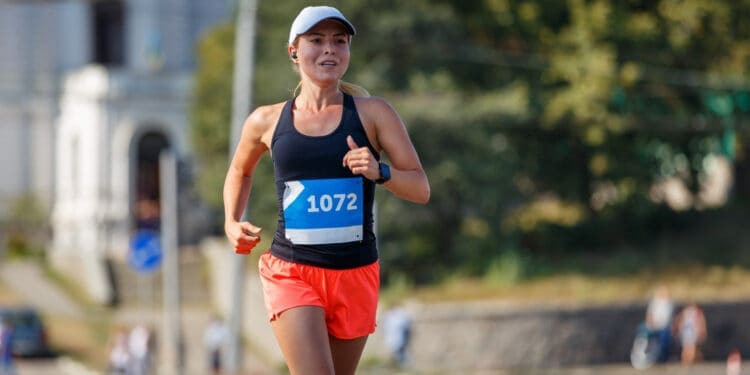

A study of more than 1,000 runners found that these individuals use more negative self-talk after a race when they perceive a higher level of stress. Negative self-talk was less common in runners with better emotional intelligence. The study was published in Psychology of Sport & Exercise.
Negative self-talk refers to the habit of engaging in internal dialogue that is critical, self-deprecating, or pessimistic, undermining one’s self-esteem and overall mental well-being. It involves repetitive thoughts or statements that focus on perceived shortcomings, failures, or inadequacies. This can result in a negative mindset. This harmful dialogue can become automatic and pervasive, adversely influencing various aspects of life including decision-making, relationships, and overall emotional well-being.
In sports, self-talk is considered to be a strategy that can optimize emotion regulation and improve performance. It is particularly important in endurance sports, where physical activity needs to be sustained for a long time, which often requires that high level of motivation be maintained. These long durations of sport activities allow athletes to use part of the time to talk to themselves. Running is one such sport. As much as positive self-talk might contribute to an athlete maintaining motivation and improving performance, negative self-talk might produce adverse effects that impair athletes’ performance.
Study author Erika Borrajo and her colleagues wanted to explore the joint role of perceived stress and emotional intelligence on the occurrence of negative self-talk in runners. They hypothesized that negative self-talk would be more likely to occur in runners under stress, but less likely to occur in runners who are more emotionally intelligent. These researchers also expected emotional intelligence to buffer the association between perceived stress and the occurrence of negative self-talk.
The study involved 1,071 runners who participated in a race in the Basque Country, Spain. Their ages varied from 18 to 71 years, with an average age of 42, and 71% of them were male. Regarding the race distances, 40% participated in a 10-kilometer race, 45% in a 21-kilometer race, and 15% in a 42-kilometer race. On average, these runners had 9 years of experience, although there was considerable variation in their levels of experience.
Participants completed assessments of negative self-talk (the Automatic Self-Talk Questionnaire for Sport), emotional intelligence (the Wang-Law Emotional Intelligence Scale), and perceived stress (the Perceived Stress Scale).
The results showed that participants with higher perceived stress levels were more prone to negative self-talk. More emotionally intelligent individuals were less prone to negative self-talk. Further analysis showed that the link between perceived stress and negative self-talk is stronger in individuals who are less aware of their own emotions and less able to manage them.
“The present research has highlighted the importance of emotional processes as potential adaptive strategies in stressful situations that generate negative self-talk,” the study authors concluded. “On the one hand, self-talk can become an obstacle with negative consequences for runners, and knowing the antecedents that may be related to its appearance can help to establish effective strategies to identify and avoid its presence. On the other hand, identifying the stressors that may appear during training and/or competitions, as well as analyzing the emotions that may appear in the face of these stressors, would enhance runners’ ability to reduce the negative messages they receive.”
The study sheds light on the factors associated with negative self-talk in runners. However, the correlational design of the study does not allow any cause-and-effect inferences to be made from the findings. Additionally, analyses did not take into account runners’ experience, a factor that may very well affect the relationship of negative self-talk and stress.
The paper, “Negative self-talk in runners: Emotional intelligence and perceived stress as explanatory factors”, was authored by Erika Borrajo, Esther Calvete, and Itziar Urquijo.