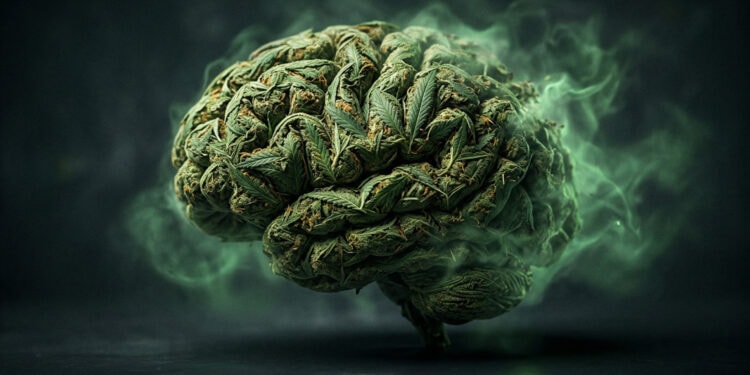
Cannabis intoxication broadly impairs multiple memory types, new study shows
A new study in the Journal of Psychopharmacology mapped how cannabis impacts human cognition. The findings provide evidence that intoxication broadly disrupts multiple memory domains, increasing false memories and making it harder to recall practical, everyday information.
Read moreDetails
Psychologists implant false beliefs to understand how human memory fails
A new cognitive psychology study reveals that our susceptibility to false memories depends heavily on how believable a suggested event is, and whether we are told it happened just once or repeatedly.
Read moreDetails
Using cannabis to cut back on alcohol? Your working memory might dictate if it works
Many people use cannabis to help cut back on drinking. However, a new study reveals that smoking THC only reduces alcohol cravings for individuals with average or high working memory, leaving those with poorer cognitive control without this benefit.
Read moreDetails
New psychology research reveals how repetitive thinking primes involuntary memories
New research suggests that what you think about repeatedly can prime your brain to retrieve related memories later. The study found that repetitive thinking caused people to experience more involuntary memories about that specific topic.
Read moreDetails
Scientists have found a fascinating link between breathing and memory
New research published in The Journal of Neuroscience suggests breathing acts as a pacemaker for memory. The study found that successful retrieval is linked to the respiratory cycle, synchronizing brain patterns needed to remember.
Read moreDetails
Hippocampal neurons shift their activity backward in time to anticipate rewards
A new study published in Nature reveals the hippocampus does more than store memories. Researchers found that neural patterns in mice reorganize over time, shifting activity backward to anticipate rewards before they happen.
Read moreDetails
Motivation acts as a camera lens that shapes how memories form
A new framework suggests motivation is more than just effort. Distinct chemical signals create specific "moods" that determine whether the brain records broad concepts or specific details, fundamentally reshaping how we understand learning.
Read moreDetails
Random signals in support cells help cement long-term memories
A new study reveals that spontaneous calcium fluctuations in astrocytes are essential for memory consolidation. This finding challenges the neuron-centric view of the brain, suggesting that cellular unpredictability plays a vital role in stabilizing neural circuits.
Read moreDetails
Conversational AI can increase false memory formation by injecting slight misinformation in conversations
Can you trust your memory after chatting with an AI? A new study reveals that misleading chatbots are significantly more effective at implanting false memories than static text, causing users to accept fake details as fact.
Read moreDetails
A specific neural pathway links the insula to the creation of new memories
New research using intracranial recordings reveals that specific populations of neurons in the insula communicate directly with the hippocampus to lock in memories, while neighboring neurons separately track emotional valence.
Read moreDetails
Listening to music immediately after learning improves memory in older adults and Alzheimer’s patients
A new study suggests that the right soundtrack can influence what we remember. Researchers found that stimulating music helps Alzheimer’s patients reduce false memories, while relaxing music may help fade negative images.
Read moreDetails
Deep sleep reorganizes brain networks used for memory recall
A new study reveals that deep sleep physically shifts where the brain processes memories. Researchers found that spending more time in slow wave sleep moves recall activity to the temporal lobe, boosting retention.
Read moreDetails
Couples share a unique form of contagious forgetting, new research suggests
A new study finds evidence that romantic partners synchronize their brain activity to prune specific details from their shared memories.
Read moreDetails
Neuroscientists discover that letting the mind wander may aid passive learning
New research suggests that losing focus allows the brain to absorb hidden environmental patterns more effectively. This spontaneous mental drifting is linked to sleep-like neural activity that appears to facilitate information processing while awake.
Read moreDetails
This common snack enhanced memory and brain vascular function in a 16-week trial
A new study published in Clinical Nutrition suggests that daily consumption of skin-roasted peanuts improves brain vascular function and memory.
Read moreDetails