
Employees who feel attractive are more likely to share ideas at work
A recent study indicates that feeling physically appealing gives workers the confidence to share new ideas and report problems. This effect relies on the underlying belief that physical appearance grants a person greater social influence.
Read moreDetails
Early physical attractiveness predicts a more socially effective personality in adulthood
New research reveals a small but consistent link between early physical attractiveness and adult personality. Using decades of data, scientists found that attractive children tend to develop highly cooperative and socially effective traits by middle age.
Read moreDetails
Younger women find men with beards less attractive than older women do
New research indicates that a woman's age and reproductive status influence her preferences for male secondary sexual characteristics, such as muscularity and facial hair.
Read moreDetails
People readily spot gender and race bias but often overlook discrimination based on attractiveness
People judge race and gender bias more harshly than attractiveness bias, but not because they approve of "lookism." A new study reveals we simply fail to notice attractiveness bias, whereas other prejudices are easily spotted.
Read moreDetails
Women prefer masculine faces only when they appear safe
New research suggests women prioritize safety when choosing partners. While masculine faces are often preferred, this preference disappears if the face also signals aggression, indicating a “risk-first” approach to mate selection.
Read moreDetails
New psychology research sheds light on how “vibe” and beauty interact in online dating
A new study using artificial intelligence suggests that while a beautiful face helps on dating apps, trying to prove you are wealthy or popular at the same time might actually hurt your chances of finding a match.
Read moreDetails
Researchers identify distinct visual cues for judging female attractiveness and personality traits
New findings indicate that static body features drive judgments of physical beauty, whereas dynamic movements are crucial for perceiving feminine expressive traits, highlighting distinct mechanisms in social perception.
Read moreDetails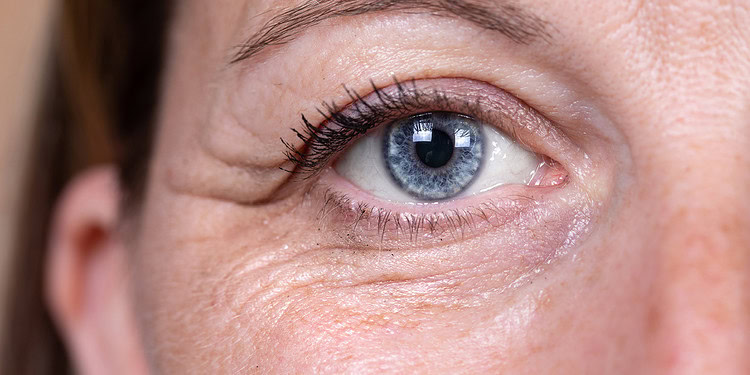
Wrinkles around the eyes are the primary driver of age perception across five ethnic groups
A multi-center study shows that assessors from differing ethnic backgrounds rely on the same facial features—specifically periorbital wrinkles—when evaluating the age and appearance of women.
Read moreDetails
New psychology research identifies a simple trait that has a huge impact on attractiveness
New research suggests that a potential partner’s willingness to protect you from danger is a primary driver of attraction. The study found this trait often outweighs actual physical strength, persisting even if the partner fails to stop the threat.
Read moreDetails
Women prefer partners with strong personal growth motivation for long-term relationships
Researchers found that women prefer mates who show "growth motivation," meaning a desire to broaden perspectives and develop wisdom. This trait signals maturity and stability, making these men more desirable for long-term commitments.
Read moreDetails
Study examines how self-perceived desirability gaps influence romantic dynamics
People who see themselves and their partners as similarly high in desirability tend to report happier, more committed romantic relationships, according to new findings.
Read moreDetails
New study shows that not all forms of social rank are equally attractive
A new study in Social Psychological and Personality Science suggests that attraction to high-status partners depends on both the kind of status someone displays and the relationship a person wants.
Read moreDetails
ChatGPT’s social trait judgments align with human impressions, study finds
A recent study tested whether ChatGPT sees faces like humans do. The findings suggest its judgments of social traits often mirror ours, including the tendency to associate attractiveness with other positive qualities—a bias common in human social perception.
Read moreDetails
Beauty ideals shift with socioeconomic status, new psychology study suggests
Could a region’s economic health influence how its residents present themselves online? A recent study analyzed thousands of edited photos to explore an unexpected link between digital beauty standards and socioeconomic conditions.
Read moreDetails
Women can read age, adiposity and testosterone level from a man’s face
Recent research suggests that women find men with lower body fat more attractive. While facial masculinity was linked to testosterone and age, the link between health and attractiveness was fully explained by adiposity, age, and hormone levels.
Read moreDetails