
Hair shine linked to perceptions of youth and health in women
Beyond color and length, what makes hair appear attractive? A new study systematically alters hair shine, alignment, and volume to see how these features shape our judgments of female appearance.
Read moreDetails
Researchers have decoded TikTok’s viral Bold Glamour filter
A popular social media filter subtly reshapes faces in ways that are surprisingly specific. New research quantifies these digital alterations and explores their connection to aesthetic procedures.
Read moreDetails
Your politics are just as hot as your profile picture, according to new online dating study
Your political party can make or break a first impression on dating apps. But a new study suggests another political trait might be even more attractive to potential partners.
Read moreDetails
The ‘beauty bias’ in the service industry is inconsistent and sometimes backfires, major new study finds
A major study on workplace attractiveness reveals a surprising twist: the "beauty premium" is weaker for female service employees. The analysis found men's perceived performance is more consistently influenced by their physical appearance.
Read moreDetails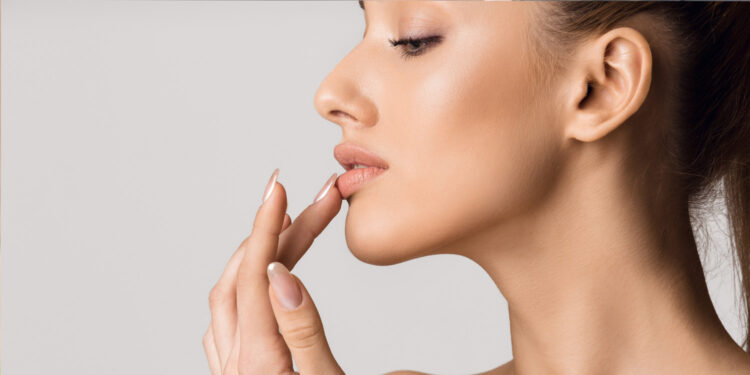
Surprising finding emerges from psychology study on lip size and attractiveness
The desire for plumper lips may be driven more by women than men. A recent study shows that preferences for lip size are largely shaped by own-gender biases, challenging assumptions about who cosmetic procedures appeal to.
Read moreDetails
Researchers predict romantic attraction using brain signals and AI
Can your brain reveal your romantic type? A new study suggests it can, using machine learning to decode brainwaves and predict whether someone finds a potential partner attractive from just a glance.
Read moreDetails
Autistic traits linked to stronger attraction to masculinity in both male and female faces
A new study reveals that people with higher autistic traits perceive facial attractiveness differently. Researchers found a link between these traits and a stronger preference for masculine features in both male and female faces.
Read moreDetails
Neuroscience study shows how praise, criticism, and facial attractiveness interact to influence likability
A new study suggests that attractive people are generally liked more—but not when they’re critical of others. Researchers found that verbal negativity can dampen the likability boost typically associated with good looks, both in behavior and neural responses.
Read moreDetails
Attraction goes beyond looks: Study shows voices, scents, and motion all matter
Facial symmetry and good looks are only part of the picture. A new study suggests that scent, voice, and body motion also contribute to attractiveness—and people often disagree on who’s appealing.
Read moreDetails
People interpret long eyelashes as a signal of openness to casual relationships
A new study finds that while moderate eyelash length is seen as most attractive and healthiest, longer lashes are linked to greater perceived sexual receptivity—suggesting that long eyelashes may signal openness to casual relationships, despite lower attractiveness ratings.
Read moreDetails
Can facial fillers and Botox-like injections improve your dating prospects or how others see you?
New research suggests that minimally invasive facial aesthetic treatments, such as fillers and neurotoxin injections, offer only a modest boost in perceived attractiveness. The treatments had little effect on how trustworthy, competent, or romantically desirable people were judged to be.
Read moreDetails
Women feel unsafe when objectified—but may still self-sexualize if the man is attractive or wealthy
New research from China suggests that women feel unsafe when confronted with a sexually objectifying gaze—but still choose to self-sexualize if the man is attractive or high status. The findings highlight a psychological tradeoff between risk and potential reward.
Read moreDetails
Too attractive to relate? Study suggests extreme beauty may backfire for fitness influencers
A new study challenges the idea that more beauty equals more influence. Researchers found that highly attractive fitness influencers often receive less engagement than moderately attractive ones—likely because their polished appearance makes them seem less relatable to their followers.
Read moreDetails
Traditional beliefs can shift the link between beauty and women’s sexual openness, new research suggests
Physically attractive women tend to report greater interest in casual sex, but a new study finds that traditional moral values—especially those emphasizing social order and purity—can override this tendency, particularly among women with rural or conservative backgrounds.
Read moreDetails
Scientists map the visual patterns people use when evaluating others’ bodies
Researchers have used eye-tracking to show that our gaze is not random when we evaluate bodies. A study in Behavioral Sciences found that attention is focused on the chest and torso, and this focus shifts when judging for attractiveness, health,...
Read moreDetails