
Fascinating new research reveals how sexual desire shapes long-term partner preferences
Psychologists have discovered that sexual desire plays a key role in long-term partner preferences. When desire increases, women’s interest in physical attractiveness rises to match men's, reducing long-standing sex differences in what people look for in committed relationships.
Read moreDetails
Researchers explore the role of social and sexual attractiveness in hiring decisions
How much do looks really matter when hiring someone or evaluating a coworker? A new study finds that people claim to prioritize charm and liveliness over physical beauty — but researchers suspect those answers may not reflect actual behavior.
Read moreDetails
What makes women’s lips attractive? Study points to balance over volume
Despite the popularity of full lips on social media, new research finds that people tend to favor more natural proportions. Lips with exaggerated volume were rated as unattractive, while balanced upper-to-lower lip ratios remained the most aesthetically preferred.
Read moreDetails
Women favor men with attractive faces when making social bargaining decisions
New research shows that women are more likely to accept offers from men with attractive faces and positive social interest in economic games, highlighting how appearance and perceived friendliness can influence fairness judgments in social decision-making.
Read moreDetails
What is the most attractive body fat percentage for men? New research offers an answer
What makes a man’s body attractive? A new international study explored this question using body scans and evolutionary models—testing which physical traits matter most. The results challenge some popular assumptions about leanness, muscle, and what people really prefer.
Read moreDetails
What drives vulnerable narcissism? Clues may lie in childhood attachment
A new meta-analysis reveals that vulnerable narcissism is moderately linked to insecure attachment styles, particularly preoccupied and fearful types. The findings highlight how early emotional experiences may shape narcissistic traits and underscore the importance of supporting healthy childhood development.
Read moreDetailsThe “beautiful is moral” stereotype may be an illusion shaped by how much we like someone
New research across three countries suggests that people view attractive individuals, especially women, as more moral—but this effect disappears when liking is accounted for. The findings highlight how emotional responses shape moral character judgments more than appearance alone.
Read moreDetails
Self-perceived physical attractiveness linked to stronger materialistic values
People who believe they are attractive are more likely to value wealth and possessions, according to a new study. The tendency to compare themselves with others may drive this materialism—unless buffered by a sense of personal affirmation.
Read moreDetails
Ugly bystanders boost beauty: Study finds background faces shape personality judgments
A new study in Current Psychology finds that people judge faces more positively when they appear next to less attractive ones. Brain activity data shows that emotion plays a key role in these social perceptions—even when we're not fully aware...
Read moreDetails
New attractiveness research reveals surprising preference for femininity in men’s faces
A new study finds that people across cultures and sexual orientations generally prefer feminine facial features—even in men. The findings challenge long-held assumptions about the appeal of masculine male faces and highlight how identity shapes perceptions of attractiveness.
Read moreDetails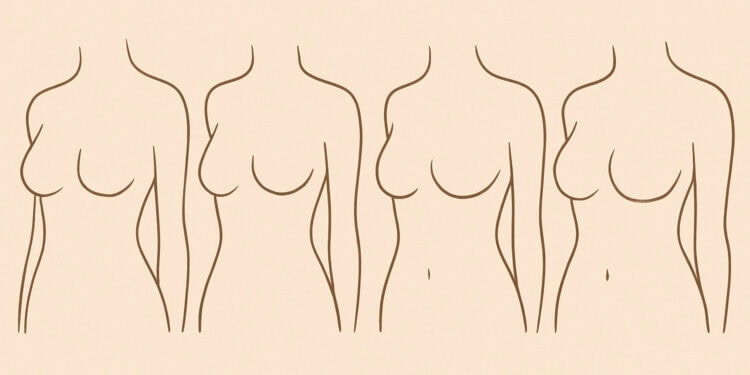
Judgments of breast attractiveness show surprising consistency across gender, race, and orientation
Despite small differences in average ratings by gender, race, and sexual orientation, people showed strong agreement in which breasts they found most attractive, suggesting shared aesthetic preferences across diverse demographic groups.
Read moreDetails
Attractiveness shapes beliefs about whether faces are real or AI-generated, study finds
A new study published in Acta Psychologica reveals that people’s judgments about whether a face is real or AI-generated are influenced by facial attractiveness and personality traits such as narcissism and honesty-humility—even when all the images are of real people.
Read moreDetails
New research challenges idea that female breasts are sexualized due to modesty norms
A new study of indigenous men in Papua, Indonesia, found that exposure to topless women during youth did not reduce sexual interest in female breasts—suggesting male attraction to breasts may stem from evolved biology rather than cultural taboos.
Read moreDetails
Biographical details influence how attractive we find faces and change how our brains respond, study finds
A new brain imaging study suggests that learning even brief personal details—such as political views or psychiatric history—can alter how attractive someone’s face appears. The brain responds by activating areas involved in processing language, values, and social meaning.
Read moreDetails
Eye-tracking study reveals which facial features truly matter in attraction
A study published in The Laryngoscope reveals that eye movements during face evaluation can predict attractiveness judgments. Men are drawn to women’s mouths, while women are more influenced by men’s eyes and hair.
Read moreDetails