
Is bad mental health an economic problem at its core?
A geographical analysis of the United States reveals that regional mental health is closely tied to local economic conditions. Communities with higher household incomes, lower commute times, and more college graduates consistently report better psychological well-being.
Read moreDetails
Children with obesity face a steep decline in adult economic mobility
A new genetic study shows that children who experience obesity are far less likely to out-earn their parents. The condition limits educational attainment and pushes adults into lower-paying jobs, creating a lasting barrier to economic mobility.
Read moreDetails
Artificial intelligence makes consumers more impatient
Getting advice from an automated chatbot might accidentally change how you perceive the passage of time. A new psychological study suggests that waiting for an artificial intelligence agent makes future delays feel longer, leading to highly impatient consumer choices.
Read moreDetails
When the pay gap is wide, women see professional beauty as a strategic asset
New research reveals that many women view beauty as a practical tool for professional success. When faced with a gender pay gap, those who reject traditional gender roles often leverage their appearance to compete in the labor market.
Read moreDetails
New study finds link between receptivity to “corporate bullshit” and weaker leadership skills
Using a newly developed "Corporate Bullshit Receptivity Scale," researchers have uncovered a troubling trend: professionals who view jargon-heavy statements as profound actually perform much worse on tests measuring leadership, reasoning, and situational judgment.
Read moreDetails
Psychologists found a surprisingly simple way to keep narcissists from cheating
Narcissistic employees are notorious for acting unethically to get ahead. However, new research reveals that simple workplace tweaks—like removing piece-rate bonuses and forcing a "cool-down" period—can effectively neutralize their urge to cheat.
Read moreDetails
Employees who feel attractive are more likely to share ideas at work
A recent study indicates that feeling physically appealing gives workers the confidence to share new ideas and report problems. This effect relies on the underlying belief that physical appearance grants a person greater social influence.
Read moreDetails
Black employees struggle to thrive under managers perceived as Trump supporters
A new study published in the Human Resource Management Journal shows that Black employees feel less included and less able to excel when their managers support Donald Trump. This effect is especially strong for younger workers.
Read moreDetails
A man’s psychological fit at work tends to increase when his financial values align with his partner’s
A recent study in the Journal of Business and Psychology suggests a man’s workplace fulfillment is deeply connected to his romantic relationship. When his financial values align with his female partner's, he experiences greater satisfaction at work.
Read moreDetails
New study sheds light on the psychological burden of having a massive social media audience
Independent creators often struggle with “audience entanglement” after achieving success, a new study in Administrative Science Quarterly reports. Researchers found that managing the psychological weight of a large fanbase is critical for avoiding burnout and sustaining a creative career.
Read moreDetails
AI boosts worker creativity only if they use specific thinking strategies
A new field experiment in a real workplace shows that generative AI can improve employee creativity, but only for workers who actively monitor and manage their own thinking processes.
Read moreDetails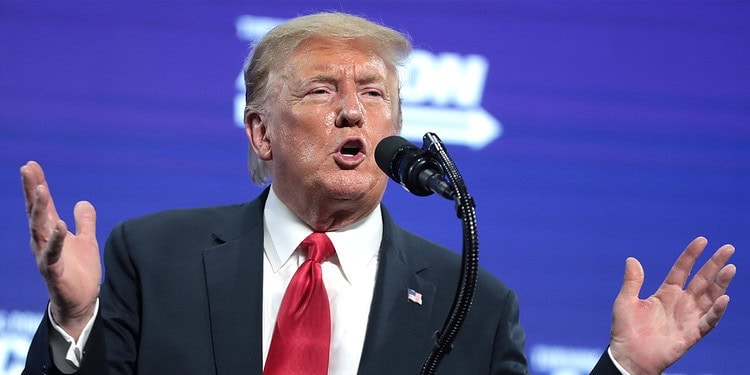
Trump-related search activity signals a surprising trend in the stock market
A new study suggests that online attention paid to Donald Trump helps predict optimism on Wall Street. Researchers found that spikes in Google searches for the president tend to precede increases in bullish sentiment among individual investors.
Read moreDetails
Researchers confirm the detrimental effects of psychopathic traits on job performance
A new meta-analysis published in the Journal of Applied Psychology reveals that employees with psychopathic traits tend to exhibit lower task performance and are less likely to help colleagues, while engaging in more counterproductive behaviors.
Read moreDetails
These two dark personality traits are significant predictors of entrepreneurial spirit
Entrepreneurial spirit is driven by a complex mix of personality traits, including narcissism and psychopathy. Researchers found that these dark characteristics predict entrepreneurial potential even when controlling for general personality factors.
Read moreDetails
Women tend to downplay their gender in workplaces with masculinity contest cultures
A new study finds that workplaces prioritizing dominance and competition cause women to downplay their gender. This "self-group distancing" serves as a coping mechanism to maintain status in environments where the female identity is devalued.
Read moreDetails