
The disturbing impact of exposure to 8 minutes of TikTok videos revealed in new study
A recent study uncovers surprising effects after just 8 minutes of TikTok viewing, revealing how certain content may influence young women’s perceptions of themselves and societal ideals.
Read moreDetails
Twitter polls exhibit large pro-Trump bias — but these researchers have a fix
A recent study found that polls on X (formerly Twitter) during the 2016 and 2020 U.S. elections were biased toward Donald Trump, influenced by conservative user participation and bot activity, making them less reliable than traditional polls.
Read moreDetails
Adolescents addicted to short-form videos tend to have more sleep problems and social anxiety
A study in China found that adolescents with more severe addiction to short-form videos tend to have worse sleep quality and higher levels of social anxiety. The paper was published in BMC Psychology.
Read moreDetails
Narcissists are prone to internet trolling, but not so much if their self-esteem is high
Narcissists are more prone to internet trolling, but high self-esteem significantly reduces this tendency, revealing self-esteem's protective role against the darker aspects of narcissistic behavior online.
Read moreDetails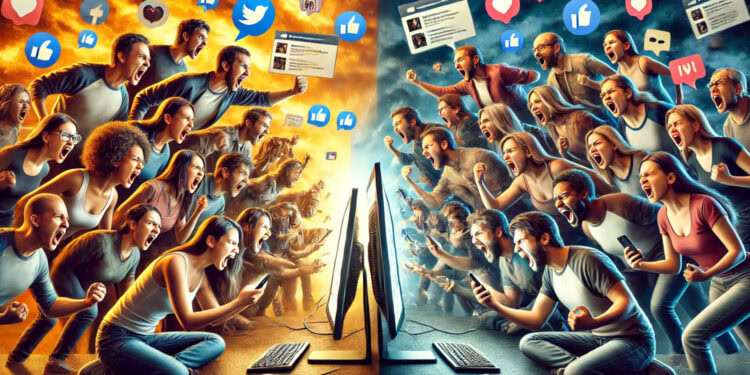
Algorithms and outrage: How social media shapes political hostility
Recent studies show that online political hostility is influenced by psychological and socioeconomic factors, especially in unequal and less democratic countries. Social media amplifies this hostility but is not the sole cause, with dominance-driven personalities playing a significant role.
Read moreDetails
Two-week social media detox yields positive psychological outcomes in young adults
A two-week social media detox significantly reduces smartphone addiction and improves sleep, stress levels, and life satisfaction among young adults, a recent study reveals.
Read moreDetails
Facebook and Instagram’s algorithmic favoritism towards extremist parties revealed in new study
Recent research found that social media algorithms disproportionately favored ads from extremist political parties, leading to greater reach and efficiency for these ads compared to others, highlighting significant biases in political advertising.
Read moreDetails
Anxious, depressed, and lonely adolescents are more likely to be overdependent on their smartphones
A study of adolescents found that anxiety, depression, loneliness, and violent experiences increase the likelihood of smartphone overdependence, with girls being more prone than boys.
Read moreDetails
The psychological effects of social media: A double-edged sword
A meta-analytic study found that the frequency and intensity of social media use do not consistently affect well-being, highlighting other factors that play a more significant role in mental health outcomes.
Read moreDetails
Internet addiction associated with altered brain connectivity in teens
Internet addiction in adolescents is linked to altered brain connectivity in the default mode, executive control, and salience networks, potentially impacting self-regulation, impulsivity, and attention management.
Read moreDetails
Muscle dysmorphia linked to use of social media photo filters
Frequent use of photo filters is linked to increased muscle dysmorphia symptoms, particularly among boys and young men.
Read moreDetails
The dark side of social media: Study reveals link to disturbing nightmares
A new study has found that frequent social media use is linked to increased social media-related nightmares, which are associated with higher anxiety, lower peace of mind, and poorer sleep quality.
Read moreDetails
Study explores link between social media algorithms and loneliness
New research suggests social media algorithms can both reduce and increase loneliness, depending on how responsive users perceive these algorithms to be to their needs and identity.
Read moreDetails
Can TikTok exacerbate eating disorders?
A study found that TikTok users who actively engage with appearance and eating-related content are more likely to exhibit eating disorder symptoms, potentially influenced by the platform's content recommendation algorithms and the ensuing social comparisons.
Read moreDetails
Internet use linked to higher well-being, study of 2.4 million people finds
A large, global study found that people with internet access generally report higher levels of life satisfaction, positive experiences, and social well-being compared to those without internet access.
Read moreDetails