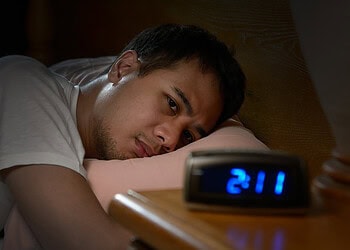
A study of older adults with insomnia found that a 12-week exercise intervention improved their sleep quality. The group that exercised also showed improved functional connectivity between the motor network and the cerebellum region of the brain. The paper was published in Translational Psychiatry.
Insomnia is a sleep disorder characterized by difficulty falling asleep, staying asleep, or waking up too early and not being able to go back to sleep. It can lead to daytime fatigue, mood disturbances, and impaired cognitive function. Insomnia can be acute (short-term) or chronic (lasting for a month or longer) and may be caused by factors such as stress, anxiety, medications, or specific medical conditions.
As people age, the prevalence of insomnia tends to increase. It often starts with lighter and shorter sleep cycles and increased frequency of waking up during the night. Additionally, older adults are more likely to have chronic health conditions, such as arthritis or heart disease, that can contribute to sleep disturbances. The use of certain medications, which are more common in older adults, can also affect sleep. Lifestyle changes, such as retirement and reduced physical activity, can adversely impact sleep quality as well.
Study author Rongrong Chen and his colleagues wanted to explore the effects of exercise on subjective and objective sleep quality indicators in middle-aged or older adults with insomnia. They also wanted to see whether exercising might affect functional connectivity patterns in the brains of these individuals. They noted that the results of previous studies indicated that exercise has the potential to improve sleep, particularly with medium- and long-term exercise programs.
In these studies, the most frequent exercise interventions were based on Tai Chi, a type of traditional Chinese martial art, converted in recent decades into a style of mind-body aerobic exercise. Tai Chi emphasizes a gentle, balanced, and stable rhythm. Because of this, it has been recommended as a suitable exercise for middle-aged and older adults. Additionally, studies in animals indicated that exercise might also affect functional connectivity between areas of the brain involved in movement.
Study participants were 169 Chinese adults between 45 and 80 years of age, recruited through advertisements and living near the Beijing university campus. Eighty-four of them were healthy sleepers, and 85 suffered from insomnia.
Participants with insomnia were divided into two groups. One group underwent a 12-week exercise intervention based on Tai Chi. The other group was a waitlist group that did not undergo any intervention during the study period but was told that they would start the exercise program after the first group completed it.
“The exercise protocol consists of a warm-up and formal training. The traditional Tai Chi elements are performed throughout the process. The warm-up exercise was Tai Chi Chan Si Gong. The training session included Zhuang Gong (including Tai Chi Zhuang and Tai Chi Ball), Chen-style 8-form Tai Chi, and resistance training. The exercise intervention was performed in community-based groups under the guidance of experienced and qualified instructors. All the exercise group participants engaged in three sessions a week, each lasting one hour,” the study authors explained.
Healthy participants underwent assessments at the start of the study, while participants with insomnia completed assessments at the start and after the exercise period. They completed functional magnetic resonance imaging to examine functional connectivity in various regions of the brain and completed assessments of sleep quality (the Insomnia Severity Index, the Pittsburgh Sleep Quality Index, and using an electroencephalography-based wearable forehead sleep recorder for two nights). They also completed assessments of anxiety and depression (the Self-Rating Anxiety Scale and the Self-Rating Depression Scale).
Of the 85 insomnia patients who started the study, 67 completed it. The remaining participants dropped out for various reasons. At the start of the study, insomnia patients had significantly worse sleep quality than healthy participants. They also had more pronounced depression and anxiety symptoms.
After the 12-week exercise period, results showed that the group that exercised had significantly better sleep quality compared to the waitlist group (the group of insomnia patients that did not exercise). The levels of depression and anxiety in the exercise group were also reduced both compared to the start of the study and when compared to the waitlist group.
Analysis of the functional magnetic resonance imaging data showed that functional connectivity between the motor networks of the brain and the cerebellum was improved in the exercise group compared to the waitlist group. The motor network of the brain is a system of interconnected regions, including the primary motor cortex, premotor cortex, supplementary motor area, and basal ganglia, that work together to plan, initiate, and control voluntary movements. The cerebellum, located at the back of the skull, is responsible for coordinating voluntary movements, maintaining balance and posture, and fine-tuning motor activities.
“The present study showed motor network hypoconnectivity in middle-aged and older adults with insomnia. We further demonstrated that an exercise intervention improved insomnia symptoms and motor network connectivity. We highlight the ability to modulate sleep quality and plasticity of the aging brain via exercise intervention,” the study authors concluded.
The study sheds light on the effects of exercise on insomnia in older adults. However, it also has limitations that need to be taken into account. Notably, many of the study participants did not complete the study. This could have affected the results by creating survivor bias. Survivor bias is the distortion of results that occurs when only the participants who remain in the study are analyzed, while it remains unknown whether the effects on those who dropped out of the study might have been different.
The paper, “Exercise intervention in middle-aged and elderly individuals with insomnia improves sleep and restores connectivity in the motor network,” was authored by Rongrong Chen, Shilei Wang, Qinzi Hu, Ning Kang, Haijiang Xie, Meng Liu, Hongyu Shan, Yujie Long, Yizhe Hao, Bolin Qin, Hao Su, Yongchang Zhuang, Li Li, Weiju Li, Wei Sun, Dong Wu, Wentian Cao, Xiaoqin Mai, Gong Chen, Dongmin Wang, and Qihong Zou.