In a recent study published in PNAS Nexus, researchers uncovered a stark divide in the moral language used by U.S. political candidates during the 2016 and 2020 presidential primaries. The findings also shed light on a notable divergence in Donald Trump’s use of fairness language in 2016 compared to typical Republican rhetoric, setting him apart from other candidates in his party.
Historically, effective use of moral language – focusing on notions of right and wrong – has been a powerful tool in political persuasion and advocacy, as observed by Aristotle. In recent political eras, characterized by heightened moral and emotional discourse, this form of rhetoric has become increasingly prevalent.
However, there remained a significant gap in understanding precisely how this moral rhetoric shapes the electoral landscape. The researchers were particularly interested in whether the use of different moral values in rhetoric by opposing political candidates entrenched voters in their existing views, thereby exacerbating political polarization, a key concern in contemporary politics.
To explore these questions, the researchers conducted a comprehensive analysis of tweets published by presidential candidates during the 2016 and 2020 U.S. presidential primaries. This period was chosen for its rich and diverse political discourse, providing ample data for analysis.
The study involved collecting 139,412 tweets from 39 campaigns, including 24 Democratic and 15 Republican, through Twitter’s Academic application programming interfaces, a platform for querying Twitter data. The researchers focused on candidates who participated in at least two official primary debates, ensuring that the rhetoric analyzed was from significant political figures.
The tweets were cleaned of any non-textual elements like emojis and hashtags, and standard language processing techniques were applied to them. The researchers used a tool called the Moral Foundations Dictionary (MFD) 2.0 to identify and categorize moral language. This dictionary categorizes words into five moral foundations: care, fairness, loyalty, authority, and sanctity. It helped in quantifying the use of moral language by different candidates.
Using this dictionary, the team constructed two types of networks. One network connected candidates by the mutual use of moral words, while the other compared the similarity in moral language use between candidates. These analyses allowed the researchers to map out how candidates’ moral word choices positioned them in the rhetorical landscape of their political community.
“To the best of our knowledge, this is the first study to combine natural language processing and network analysis to map the dynamics of moral rhetoric in online discourse,” the researchers wrote.
There was a clear divergence in the moral language used by Democratic and Republican candidates. Democrats tended to focus more on language related to care and fairness, while Republicans leaned more towards loyalty, authority, and sanctity. This trend was consistent across both election cycles, suggesting entrenched moral-rhetorical norms within each party.
Additionally, within each party, candidates used their favored moral foundations in highly similar ways, indicating a strong sense of unity in moral rhetoric. For example, Democratic candidates consistently used similar language when talking about care and fairness, a pattern also observed among Republicans with loyalty and authority.
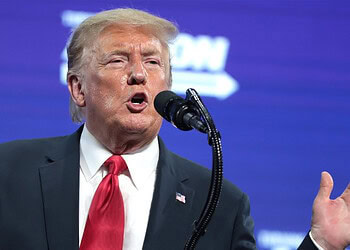
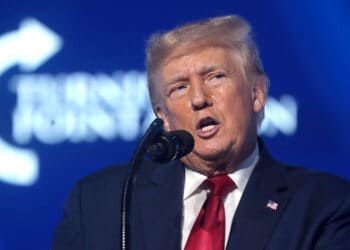
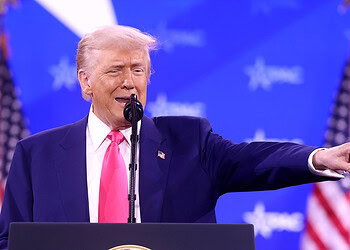
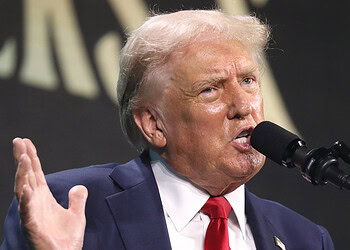
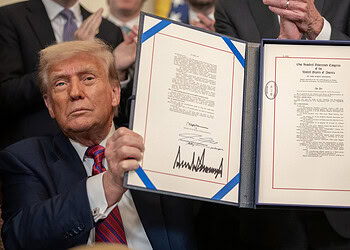
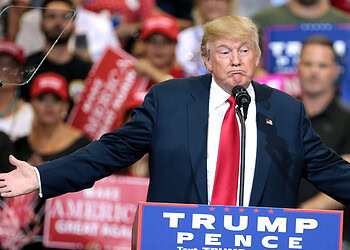
In a key discovery, the researchers also identified instances where candidates deviated from their party’s typical moral rhetoric and used language more commonly associated with the opposing party. For example, Donald Trump during the 2016 Republican primary used a significantly larger amount of fairness language compared to other Republican candidates. This was an unusual strategy within the Republican field.
However, Trump’s use of fairness language did not align him closer to Democratic candidates, who typically emphasize this moral foundation. Instead, it seemed to create a unique rhetorical space for him. He deviated from both Republican and Democratic norms by using fairness language in a way that was distinct to his campaign, setting him apart within the political discourse. For example, while Trump employed fairness language such as “biased,” “dishonest,” and “unfair,” Democrats employed fairness language such as “rights,” “justice,” and “equality.”
“Donald Trump’s status as a political outsider in 2016 corresponded with meaningful differences in his moral-rhetorical style vis-à-vis other candidates, making him a moral-rhetorical outsider as well. His unique use of negatively valanced fairness language pushed him far to the periphery of moral-rhetorical space, away from his own party and the opposition,” the researchers wrote.
Additionally, the study highlighted the strategic use of moral language. For example, Democrats Joe Biden and Pete Buttigieg managed to use language associated with Republican values while maintaining central positions in the Democratic rhetorical network. This was achieved by balancing their use of these moral foundations with typical Democratic moral language.
For instance, Biden’s framing of the 2020 election as a “battle for the soul of the nation” invoked the sanctity foundation, while still resonating with Democratic values. Similarly, Buttigieg’s emphasis on creating a sense of “belonging” tapped into the loyalty foundation in a manner that was still palatable to Democratic voters. This nuanced use of moral language allowed them to maintain central positions within the Democratic rhetorical space.
The study, “Mapping moral language on US presidential primary campaigns reveals rhetorical networks of political division and unity“, was authored by Kobi Hackenburg, William J. Brady, and Manos Tsakiris.