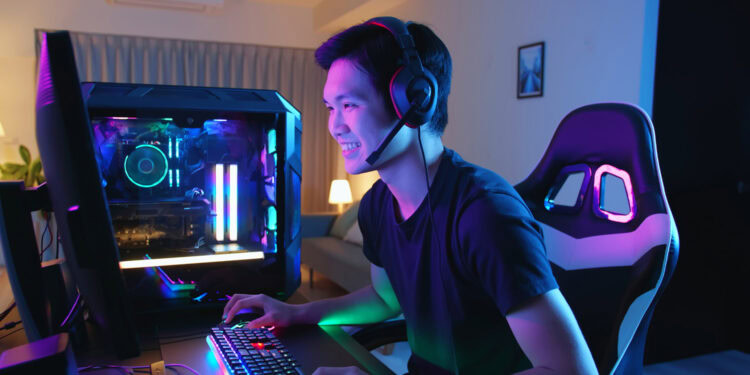
A new study published in Computers in Human Behavior explores how competitive attitudes influence in-game impulse purchases, focusing on the psychological mechanisms that drive spending in gaming environments. The study found that while competitiveness alone does not directly lead to impulsive purchases, the desire for popularity acts as a key motivator, and the effect is especially strong for players with lower social competence. These findings offer important insights into the psychology of gamers and have implications for game developers and marketers.
The rise of in-game purchases has transformed the gaming industry, generating billions in revenue. As digital economies continue to expand, researchers have become increasingly interested in understanding the psychological factors that drive impulsive spending in games. While past studies have explored emotional triggers, game mechanics, and player engagement, little attention has been given to personality traits such as competitiveness, the desire for social recognition, and social competence.
“I’ve been researching maladaptive consumption behaviors for many years. People often engage in impulsive or otherwise irrational purchasing when they feel especially highly positive or negative emotions, and these behaviors can lead to unfavorable outcomes for them,” said study author Hakan Cengiz, a full professor of Marketing at Karabuk University.
“Video games, in particular, have become a major part of younger individuals’ leisure time and often involve substantial spending. The competitive environment and the drive for social recognition in these games sparked my curiosity about how factors like the need for popularity and competitive spirit might trigger impulsive in-game purchases.”
The researchers conducted an online survey of 234 participants recruited from the popular gaming platforms Discord and Twitch. These platforms were chosen due to their large, active gaming communities and the prevalence of live streaming, which can foster competition and encourage in-game purchases. Participants were eligible for the study if they had been actively playing games on Steam for at least three months and had made prior in-game purchases.
The survey included questions about demographics, gaming habits, social competence, the need for popularity, in-game impulse purchase tendencies, and competitive attitudes. Social competence was assessed using items like “I am good at making friends.” The need for popularity was measured with items such as “I have done things to make me more popular, even when it meant doing something I would not usually do.” In-game impulse purchasing tendencies were measured using items such as “I have a desire to buy things that do not pertain to my specific shopping goal when browsing the Steam website.” Finally, competitive attitudes were measured through items like “It is important to me to do better than others on a task.”
The findings of the study revealed an important distinction: competitive attitudes alone did not directly lead to in-game impulse purchases. This suggests that simply being competitive does not necessarily drive impulsive spending. However, competitiveness did significantly increase the need for popularity, meaning that highly competitive players were more likely to seek social validation through their gaming achievements.
In turn, the need for popularity strongly predicted in-game impulse purchases. Players who valued social recognition were more likely to make impulsive purchases, possibly as a way to gain status or approval within their gaming communities. This supports the idea that in-game purchases serve not only a functional purpose—such as enhancing performance—but also a social one, helping players maintain a desirable image among their peers.
“Overall, our results aligned closely with our hypotheses,” Cengiz told PsyPost. “The main surprise was that purely competitive feelings didn’t independently prompt in-game impulse purchases, even though we initially assumed they might. It turns out that the need for popularity plays a pivotal role in turning competitive drive into impulsive buying.”
The study also found that social competence played a key moderating role. Players with lower social competence were more susceptible to making impulsive purchases when driven by the need for popularity. In contrast, those with higher social competence were less influenced by these pressures. This suggests that individuals who struggle with social interactions in real life may be more likely to seek validation through in-game purchases, whereas those with stronger social skills rely less on virtual goods for social approval.
“One of the most important findings is that young people with higher levels of social competence tend to avoid impulsive in-game purchases, even when they desire to be popular,” Cengiz explained. “Conversely, those who perceive themselves as lacking social skills are more prone to spontaneous purchases if they feel a strong need for popularity. Another key insight is that competitive attitudes on their own don’t necessarily lead to impulsive purchases, but when combined with a heightened desire for popularity, they can drive more frequent impulse buying in gaming contexts.”
The study has some limitations that should be considered. First, the sample was drawn from users of Discord and Twitch, which may not be representative of all gamers. These platforms attract a specific type of gamer, often those who are highly engaged and participate in live streaming and online communities. Future research should include participants from a wider range of gaming platforms and demographics to improve the generalizability of the findings.
Second, the study focused on in-game item purchases, but other types of gaming expenditures, such as buying games directly or subscribing to gaming services, were not examined. Future research could explore these different types of purchases to provide a more complete picture of spending behaviors within gaming.
“Many variables are still worth exploring in the realm of impulsive in-game purchases,” Cengiz said. “Moving forward, I plan to investigate how different personality types influence or interact with in-game impulsive buying behavior. Expanding the scope, I hope we can better understand how various personal and situational factors shape these purchasing habits.”
The study, “Linking gamers’ competitive spirit and in-game impulse purchase: The need for popularity as a mediator and social competence as a moderator,” was authored by Hakan Cengiz, Arezoo Pouyan, and Hasan Azdemir.