Subscribe
The latest psychology and neuroscience discoveries.
My Account
  • Mental Health
  • Social Psychology
  • Cognitive Science
  • Neuroscience
  • About
No Result
View All Result
PsyPost
PsyPost
No Result
View All Result
Home Exclusive Mental Health

Large study reveals that people who are unemployed have a greater tendency to oversleep or undersleep

by Beth Ellwood
December 14, 2021
in Mental Health
Share on TwitterShare on Facebook

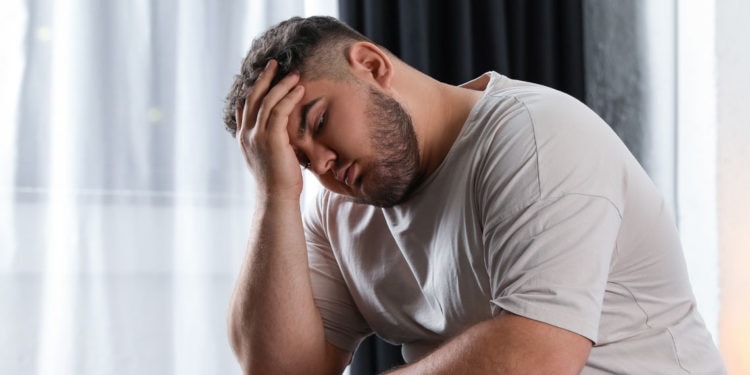
People who are out of work are more likely to experience too much sleep, too little sleep, and disturbed sleep, according to findings published in the journal Economics and Human Biology. These problematic sleep outcomes are especially likely to afflict those experiencing prolonged unemployment.

Since the COVID-19 pandemic, unemployment has increased drastically, underscoring the need for further study on the mental and physical health impacts of joblessness. People who are unemployed tend to experience worse health, and one contributing factor may be poor sleep. But the relationship between sleep and unemployment is unclear. Some studies suggest that jobless individuals get less sleep compared to people who work, while other studies suggest they get more sleep.

Researchers David G. Blanchflower and Alex Bryson aimed to re-explore the link between unemployment and sleep while considering several sleep-related outcomes — sleep duration, short sleep, long sleep, insufficient sleep, and disturbed sleep. They also distinguished between several types of unemployment — short-term unemployment (less than one year), long-term unemployment (one year or more), and being unable to work.

Blanchflower and Bryson analyzed data from the Behavioral Risk Factor Surveillance System (BRFSS) survey, a phone survey of U.S. residents conducted by the Center for Disease Control (CDC). The survey questioned participants about their health-related risk behaviors, including their sleep habits. The researchers focused on data collected between 2006 to 2019, which included 2.5 million respondents.

Participants were asked to indicate the amount of sleep they typically get within a day. At every survey year, the average response fluctuated close to 7 hours of sleep per day, for an average of 6.98 across all survey years. While most respondents (61.3%) said they got between 7 and 9 hours of sleep per day, 35.2% were classified as short sleepers, getting 6 or fewer hours of sleep. A much smaller percentage (3.5%) were long sleepers, getting 10 or more hours per day.

The findings revealed that, on average, those who were unemployed slept only a small amount more than workers did — while workers slept 6.87 hours per day, the short-term unemployed slept 6.99 hours, and the long-term unemployed slept 6.91 hours. However, those who were unemployed were more likely than workers to be classified as short sleepers or long sleepers, and these differences were more pronounced among those experiencing prolonged unemployment.

While 37.3% of people who were working got under 7 hours of sleep, 37.8% of the short-term unemployed and 42.3% of the long-term unemployed did. Further, 1.9% of those with jobs were getting over 10 hours of sleep, compared to 5% of the short-term unemployed and 6% of the long-term unemployed. Half of those who identified as “unable to work” were short sleepers, and 9% were long sleepers.

When participants were asked how often in the past month they felt they did not get enough sleep, those experiencing prolonged unemployment reported more days of insufficient sleep compared to the employed. When asked how often they had trouble falling asleep or staying asleep in the past two weeks, the short-term unemployed, long-term unemployed, and the unable to work groups all struggled more compared to the employed.

Google News Preferences Add PsyPost to your preferred sources

Overall, the findings offer evidence that unemployment can negatively impact sleep, especially among those who are unemployed for more than a year and those who are unable to work. Since the Great Recession of 2007-2009, prolonged unemployment is becoming more common in the United States — a concern given that poor sleep is linked to a higher likelihood of disease or death. Poor sleeping habits may also limit a person’s ability to look for and secure a job, leading Blanchflower and Bryson to suggest that sleep issues may potentially drive people to unemployment, or drive those who are unemployed toward being unable to work.

The study, “Unemployment and sleep: evidence from the United States and Europe”, was authored by David G. Blanchflower and Alex Bryson.

Previous Post

Study links the ceremonial use of ayahuasca to robust reductions in neuroticism

Next Post

Psilocybin-assisted psychotherapy reduces loss of meaning and suicidal ideation among cancer patients

RELATED

Little-known psychedelic drug reduces motivation to take heroin in rats, study finds
Anxiety

Researchers find DMT provides longer-lasting antidepressant effects than S-ketamine in animal models

April 15, 2026
Midlife diets high in ultra-processed foods linked to cognitive complaints in later life
Mental Health

This Mediterranean‑style diet is linked to a slower loss of brain volume as we age

April 14, 2026
Legalized sports betting linked to a rise in violent crimes and property theft
Addiction

Ketone esters show promise as a new treatment for alcohol use disorder

April 14, 2026
Antidepressants may diminish psilocybin’s effects even after discontinuation
Depression

Psychedelic therapy and traditional antidepressants show similar results under open-label conditions

April 14, 2026
New study links honor cultures to higher rates of depression, suicidal thoughts
Addiction

Even mild opioid use disorder is linked to a significantly higher risk of suicide

April 13, 2026
Disrupted sleep is the primary pathway linking problematic social media use to reduced wellbeing
Mental Health

Disrupted sleep is the primary pathway linking problematic social media use to reduced wellbeing

April 13, 2026
Study finds microdosing LSD is not effective in reducing ADHD symptoms
Depression

Low doses of LSD alter emotional brain responses in people with mild depression

April 12, 2026
Extreme athletes just helped scientists unlock a deep evolutionary secret about human survival
Body Image and Body Dysmorphia

Can video games make kids feel better about their bodies?

April 12, 2026

STAY CONNECTED

RSS Psychology of Selling

  • The common advice to avoid high customer expectations may not be backed by evidence
  • Personality-matched persuasion works better, but mismatched messages can backfire
  • When happy customers and happy employees don’t add up: How investor signals have shifted in the social media age
  • Correcting fake news about brands does not backfire, five-study experiment finds
  • Should your marketing tell a story or state the facts? A massive meta-analysis has answers

LATEST

Scientists wired up volunteers’ genitals and had them watch animals hump to test a long-held theory

New study sheds light on the mechanisms behind declining relationship satisfaction among new parents

A daily mindfulness habit can improve your memory for future plans

Sexualized dating profiles can sabotage long-term relationship prospects, study finds

Researchers find DMT provides longer-lasting antidepressant effects than S-ketamine in animal models

Online gaming might contribute to creativity, study finds

More time spent on social media is linked to a thinner cerebral cortex in young adolescents

These types of breakups tend to coincide with moving on more easily

PsyPost is a psychology and neuroscience news website dedicated to reporting the latest research on human behavior, cognition, and society. (READ MORE...)

  • Mental Health
  • Neuroimaging
  • Personality Psychology
  • Social Psychology
  • Artificial Intelligence
  • Cognitive Science
  • Psychopharmacology
  • Contact us
  • Disclaimer
  • Privacy policy
  • Terms and conditions
  • Do not sell my personal information

(c) PsyPost Media Inc

Welcome Back!

Login to your account below

Forgotten Password?

Retrieve your password

Please enter your username or email address to reset your password.

Log In

Add New Playlist

Subscribe
  • My Account
  • Cognitive Science Research
  • Mental Health Research
  • Social Psychology Research
  • Drug Research
  • Relationship Research
  • About PsyPost
  • Contact
  • Privacy Policy

(c) PsyPost Media Inc