![[Adobe Stock]](https://sp-ao.shortpixel.ai/client/to_webp,q_glossy,ret_img,w_750,h_375/https://www.psypost.org/wp-content/uploads/2024/07/hippocampus-750x375.jpg)
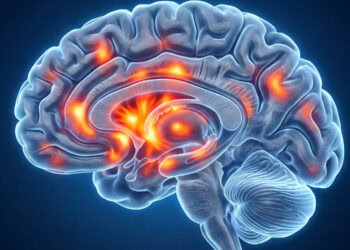
A study of individuals suffering from moderate to severe depression in Japan found that those with larger volumes of the left hippocampus region of the brain and greater leftward laterality were more likely to respond to treatment with escitalopram (i.e., to experience a reduction in depression symptoms). Also, the volume of the right hippocampus and the right hippocampal head of these individuals increased more in response to this medication. The paper was published in Translational Psychiatry.
Major depressive disorder is a common mental health condition characterized by persistent low mood and loss of interest or pleasure in daily activities. It goes beyond normal sadness and significantly interferes with functioning at work, school, and in relationships. Core symptoms include depressed mood, anhedonia, fatigue, and feelings of worthlessness or excessive guilt. Many individuals also experience changes in sleep, appetite, concentration, and psychomotor activity.
Despite the large number of people worldwide suffering from depression, treatments for depression are still lacking. Studies indicate that at least 30% of people suffering from depression do not experience a remission of symptoms after completing two antidepressant treatment protocols, reclassifying their condition into treatment-resistant depression. Other studies indicate that less than 10% of individuals seeking help for depression receive an effective treatment.
Because of this, research into ways to make anti-depression treatments more effective is a topic of great scientific interest. One of the paths these researchers take is looking into ways to identify individuals who will respond to standard treatments for depression and those who will not.
Study author Toshiharu Kamishikiryo and his colleagues explore the relationship between the structural characteristics of the brain, their changes, and escitalopram treatment for depression. Escitalopram is a medication from the group of selective serotonin reuptake inhibitors that is commonly used to treat depression (i.e., major depressive disorder).
It is known that this medication promotes the creation of new neurons (neurogenesis) in the dentate gyrus of the hippocampus region of the brain, thereby altering its structure. Study authors wanted to see whether these changes are associated with the response to treatment (i.e., with a reduction of depressive symptoms as a result of taking escitalopram).
Study participants were 107 individuals suffering from moderate to severe depression. 52% of them were women. Their average age was 42 years and it ranged between 25 and 73 years. They were treated with escitalopram because of their depressive symptoms.
The participants completed magnetic resonance imaging of their brains at two time points. The first imaging was done, on average, 7-8 days after they started escitalopram treatment. The second imaging was completed after 55 days of treatment, on average. However, only 71 participants or 66% of them participated in the second data collection.
At these two time points, study participants also completed assessments of depression symptoms (HRSD-17 and HRSD-6). If the score at the second timepoint was reduced at least 50% compared to the start of the study, study participants were considered responders i.e., it was considered that they responded to treatment. Non-responders were participants whose reduction in score was lower than 50%.
Results showed that around 50% of participants responded to escitalopram treatment. 34% of participants achieved remission (i.e., the symptoms were minimal). Responders did not differ from non-responders in parameters such as body mass index and age.
Looking at brain area volume, responders had larger left hippocampal volume and greater leftward laterality (i.e. their left hippocampus was larger than the right) at the start of the study compared to non-responders. Also, the right hippocampus and right hippocampal head volume increased more in responders than in non-responders, and their laterality changed in response to escitalopram treatment. These changes were larger in individuals who experienced a stronger reduction of depressive symptoms.
“This study is the first to demonstrate that increases in the volume and changes in the laterality of the right total hippocampus and right hippocampal head are involved in the treatment response to escitalopram. The response to escitalopram treatment cannot be explained fully by hippocampal volume changes alone, but it is likely that volume changes in the right hippocampus and its head play an important role in improving depressive symptoms,” the study authors concluded.
The study contributes to the scientific understanding of the neural correlates of depressive symptoms. However, it should be noted that the design of this study does not allow any definitive causal inferences to be derived from the results. Additionally, the study had a very large attrition rate leaving room for survivorship bias to have affected the results.
The paper, “Relationship between hippocampal volume and treatment response before and after escitalopram administration in patients with depression,” was authored by Toshiharu Kamishikiryo, Eri Itai, Yuki Mitsuyama, Yoshikazu Masuda, Osamu Yamamoto, Tatsuji Tamura, Hiroaki Jitsuiki, Akio Mantani, Norio Yokota, and Go Okada.