Subscribe
The latest psychology and neuroscience discoveries.
My Account
  • Mental Health
  • Social Psychology
  • Cognitive Science
  • Psychopharmacology
  • Neuroscience
  • About
No Result
View All Result
PsyPost
PsyPost
No Result
View All Result
Home Exclusive Mental Health

Leaky blood-brain barrier linked to Alzheimer’s disease

by Radiological Society of North America
May 31, 2016
in Mental Health
Photo credit: Gaurav Patel

Photo credit: Gaurav Patel

Share on TwitterShare on Facebook

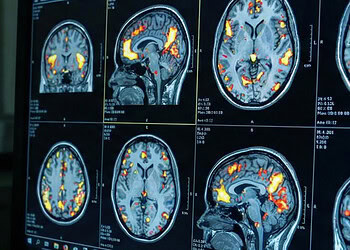
Researchers using contrast-enhanced MRI have identified leakages in the blood-brain barrier (BBB) of people with early Alzheimer’s disease (AD), according to a new study published online in the journal Radiology. The results suggest that increased BBB permeability may represent a key mechanism in the early stages of the disease.

The BBB, a collection of cells and subcellular structures in the cerebrovascular wall that separates the circulating blood from the brain, is essential to keep brain tissue in healthy condition. It regulates the delivery of important nutrients and blocks neurotoxins, while removing surplus substances from the brain.

For the study, researchers used contrast-enhanced MRI to compare 16 early AD patients with 17 healthy age-matched controls. They measured BBB leakage rates and generated a map called a histogram to help determine the amount of the leaking brain tissue.

The BBB leakage rate was significantly higher in AD patients compared with controls and the leakage was distributed throughout the cerebrum–the largest part of the brain. AD patients had a significantly higher percentage of leaking brain tissue in the gray matter, including the cortex, the brain’s outer layer. The researchers also found that measurements derived from the histogram showed very subtle BBB impairment in the brain’s white matter.

“Blood-brain barrier leakage means that the brain has lost its protective means, the stability of brain cells is disrupted and the environment in which nerve cells interact becomes ill-conditioned,” said study author Walter H. Backes, Ph.D., from the Maastricht University Medical Center in Maastricht, the Netherlands. “These mechanisms could eventually lead to dysfunction in the brain.”

Indeed, the researchers found a relationship between the extent of BBB impairment and decline in cognitive performance, suggesting that a compromised BBB is part of the early pathology of AD and might be part of a cascade of events eventually leading to cognitive decline and dementia.

The connection between BBB impairment and AD pathology was strengthened by the fact that the addition of diabetes and other non-cerebral vascular diseases to the analysis model did not change the results.

According to Dr. Backes, the key advantage of detecting BBB leakage with contrast MRI is that it can detect early microvascular changes in AD even in cases where no directly visible cerebrovascular abnormalities can be observed.

“For Alzheimer’s research, this means that a novel tool has become available to study the contribution of blood-brain barrier impairment in the brain to disease onset and progression in early stages or pre-stages of dementia,” he said.


RELATED

The psychological desire to be the “true” victim predicts anti-democratic attitudes
Anxiety

Gen Z reports highest anxiety levels as screen time increases

January 1, 2026
Cannabidiol shows promise for treating Alzheimer’s in mice by targeting brain hyperactivity
Addiction

Cannabidiol may prevent sensitization to cocaine and caffeine by influencing brain structure genes

December 31, 2025
Brain health in aging: Intermittent fasting and healthy diets show promising results
Mental Health

The science of purpose-based performance could save your New Year’s resolutions

December 30, 2025
Neuroimaging study finds gray matter reductions in first-time fathers
PTSD

Biological roots of PTSD differ strikingly between men and women

December 30, 2025
New Harry Potter study links Gryffindor and Slytherin personalities to heightened entrepreneurship
COVID-19

Scientists published a groundbreaking study on school re-openings. Major outlets fumbled the stats.

December 30, 2025
New research links certain types of narcissism to anti-immigrant attitudes
Mental Health

How to increase your chances of sticking with your resolutions

December 29, 2025
Lifelong diet quality predicts cognitive ability and dementia risk in older age
Mental Health

Young adults experience high loneliness despite having large friend networks

December 29, 2025
Lifelong diet quality predicts cognitive ability and dementia risk in older age
Cognitive Science

Lifelong diet quality predicts cognitive ability and dementia risk in older age

December 29, 2025

PsyPost Merch

STAY CONNECTED

LATEST

Gen Z reports highest anxiety levels as screen time increases

Scientists demonstrate how reliable news sources are weaponized to spread falsehoods

Rising income inequality predicts longer work hours globally, new research finds

The psychological desire to be the “true” victim predicts anti-democratic attitudes

Microdosing psychedelics linked to better sleep and exercise habits

Marriages are happier when partners find each other without intermediaries, study suggests

Corporate diversity statements can backfire when they become the norm

Cannabidiol may prevent sensitization to cocaine and caffeine by influencing brain structure genes

RSS Psychology of Selling

  • How spotting digitally altered ads on social media affects brand sentiment
  • New research links generative AI usage to improved sales performance and administrative efficiency
  • Brain scans suggest that brand longevity signals quality to shoppers
  • The double-edged sword of dynamic pricing in online retail
  • How expert persuasion impacts willingness to pay for sugar-containing products
         
       
  • Contact us
  • Privacy policy
  • Terms and Conditions
[Do not sell my information]

Welcome Back!

Login to your account below

Forgotten Password?

Retrieve your password

Please enter your username or email address to reset your password.

Log In

Add New Playlist

Subscribe
  • My Account
  • Cognitive Science Research
  • Mental Health Research
  • Social Psychology Research
  • Drug Research
  • Relationship Research
  • About PsyPost
  • Contact
  • Privacy Policy