
A recent study published in the journal NeuroImage: Clinical indicates that adults who developed depression after experiencing childhood trauma tend to have lower levels of myelin, a protective coating on nerve cells. This reduction in brain insulation provides evidence for a potential biological link between early life adversity and the later onset of depressive symptoms.
Major depressive disorder affects millions of people worldwide and carries a heavy personal and economic toll. Exposure to adverse experiences during childhood is a well-documented risk factor for developing this mental health condition in adulthood. However, the exact biological mechanisms that connect early trauma to adult depression remain poorly understood. To explore this connection, scientists have increasingly looked at the brain’s microscopic structure.
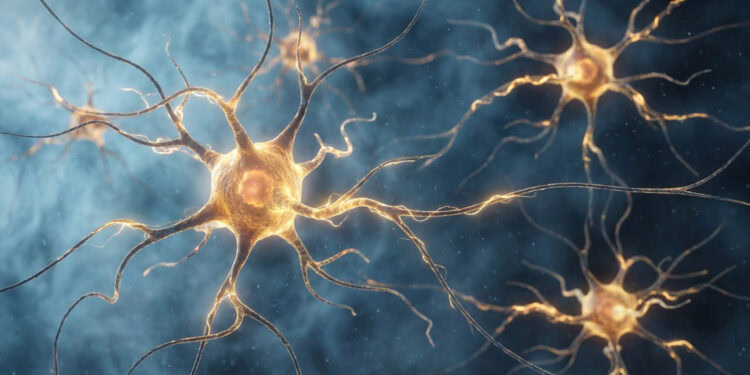
One area of interest is myelin. Myelin is a fatty substance that wraps around the thread-like extensions of nerve cells. It acts much like the plastic insulation on an electrical wire. By insulating the nerve cells, myelin helps speed up the transmission of electrical signals between neurons, allowing different parts of the brain to communicate effectively. When myelin is damaged or fails to develop properly, this communication can break down.
Most previous research has focused on myelin in the brain’s white matter, which acts as the deep communication highways of the brain. Much less is known about myelin in the gray matter, the outer layer of the brain where most information processing occurs. Myelin in the gray matter is less dense but is thought to play a role in synchronizing complex neural circuits. The authors of the current study wanted to explore whether abnormal myelin levels in the gray matter might serve as a biological bridge explaining how childhood trauma leads to depression.
The research team recruited 35 young adults diagnosed with major depressive disorder and 49 healthy control participants. The patients had a median age of 23 years, and seven of them were men. The healthy controls had a median age of 24 years, with 18 men in the group. None of the patients had taken systematic antidepressant medications prior to joining the study.
To evaluate the participants, the researchers used clinical questionnaires, including the Hamilton Depression Rating Scale, the Hamilton Anxiety Rating Scale, and the Childhood Trauma Questionnaire. They then scanned the participants’ brains using a technique called synthetic magnetic resonance imaging. This specific type of brain scan allowed the scientists to measure the exact volume of myelin in the gray matter of the brain in a single five-to-six-minute session. It also measured proton density, which reflects the concentration of water in the brain tissue.
The brain scans indicated that the participants with depression had lower myelin content and higher proton density in several specific areas on the left side of their brains compared to the healthy controls. These areas included regions involved in language processing, visual attention, and emotional regulation, such as the left inferior frontal sulcus and the left insula. Other imaging metrics recorded during the scans, such as the T1 and T2 relaxation times of the tissue, were not statistically significant between the groups.
The group differences in myelin and proton density were moderate to large in magnitude. To measure this, the researchers used a statistical metric called Cohen’s d, which expresses the size of a difference between two groups. The difference in myelin content between the depressed and healthy groups yielded a Cohen’s d effect size ranging from 0.75 to 0.85 depending on the specific brain region. The higher proton density in the depressed group showed a similar effect size ranging from 0.71 to 0.94.
An increase in proton density often indicates that more brain tissue has been replaced by water. Along with reduced myelin, this water increase suggests a loss of structural integrity in those specific gray matter regions. The researchers theorize that delayed development or disruption of myelin within the gray matter might make these neural circuits more vulnerable to the negative effects of environmental stress.
The researchers then looked at how these structural brain differences related to the participants’ symptoms and histories. Lower myelin content in the left hemisphere correlated with worse scores on both the depression and anxiety questionnaires. Through a statistical mediation analysis, the authors found that reduced myelin in a specific region called the left lateral area 5 helped explain the link between childhood trauma and current depressive symptoms. This region of the brain is generally associated with visual attention, or the ability to focus on specific visual information in the environment.
This structural brain difference in the left lateral area 5 accounted for roughly 6.4 percent to 8.1 percent of the relationship between early trauma and adult depression. A similar mediating effect was found for anxiety symptoms in the left insula, a region heavily involved in processing internal body states and negative emotions like fear and disgust. By accounting for a single-digit percentage of the variance, the myelin reduction suggests a small but measurable contribution, highlighting that depression is a complex condition with many contributing factors.
The study relies on a cross-sectional design, meaning all data was collected at a single point in time. This setup makes it impossible to determine the direction of cause and effect. It is biologically possible that the ongoing stress or inflammation associated with experiencing depression led to the reduction in myelin, rather than the myelin loss preceding the depression. Tracking these brain changes in individuals over several years would be required to establish a firm timeline of events.
The researchers did not control for the presence of comorbid anxiety when selecting their participants. Because anxiety symptoms are highly common in people with depression and were correlated with myelin changes in this sample, it is difficult to isolate which brain changes belong exclusively to depression. The sample size of 84 individuals is also relatively small for structural brain imaging research, and the sex distribution was uneven between the two groups. Future research would benefit from observing larger, evenly matched groups to confirm how childhood trauma and brain development interact.
The study, “Abnormal myelin could be a mediator of childhood-trauma-induced depression: a quantitative synthetic MRI study,” was authored by Junyan Wen, Shuqiong Zheng, Zhimin Chen, Xuecong Lin, Shanshan Yang, Wei Cui, Liaoming Gao, Ziqi Wu, Liya Gong, Zhujia Li, Ying Guo, Yanyu Hao, Mingxuan Gao, Jingwen Luo, Linlin Jing, Honglei Yin, and Ge Wen.