![[Adobe Stock]](https://sp-ao.shortpixel.ai/client/to_webp,q_glossy,ret_img,w_750,h_375/https://www.psypost.org/wp-content/uploads/2025/11/make-america-great-again-hat-750x375.jpg)
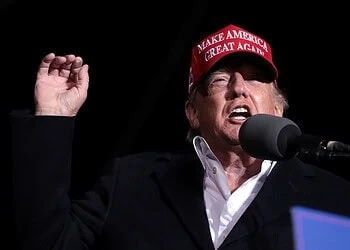
A new survey analysis indicates that while adherents of the “Make America Great Again” movement are more likely to view political violence as justified, they are generally not more willing to engage in it themselves compared to other groups. The research suggests that widespread endorsement of such acts could nonetheless foster an environment where violence is more likely to occur. These findings were published in the journal Injury Epidemiology.
Political tension in the United States has raised concerns among public health experts regarding the potential for conflict. The researchers approaching this issue view violence not just as a criminal matter but as a public health crisis that requires evidence-based prevention strategies. By identifying the specific characteristics and beliefs of those who support aggressive political action, they aim to develop interventions to reduce the risk of harm.
The team conducting this investigation includes Garen J. Wintemute and colleagues from the Violence Prevention Research Program at the University of California, Davis. They previously established the “Life in America Survey” to track these trends over time. This longitudinal project seeks to understand who supports political violence and why, particularly as the 2024 federal election approached.
The data for this analysis came from the third wave of a large, nationally representative survey conducted between May and June 2024. The researchers utilized the Ipsos KnowledgePanel, which recruits participants through address-based sampling to ensure they accurately reflect the American population. The final sample included 8,896 adults who completed the questionnaire online.
Participants self-identified their political affiliations. They indicated whether they considered themselves “MAGA Republicans” or supporters of the movement. The researchers then compared the views of these groups against other Republicans and those who were neither Republicans nor MAGA supporters. The study utilized statistical weighting to adjust for demographics such as age, gender, and race, ensuring the findings represented the broader United States population.
The study assessed respondents’ views on whether force was justified to achieve political goals. The results showed that MAGA Republicans were substantially more likely to endorse violence to effect social change. Approximately 56 percent of this group considered violence usually or always justified to advance at least one of 21 specific political objectives.
In contrast, only about 25 percent of non-MAGA non-Republicans held similar views. The specific objectives that garnered support included stopping illegal immigration or preserving an “American way of life.” The researchers observed a consistent pattern where MAGA Republicans supported violence for a greater number of specific causes than other groups.
The survey also asked about the prospect of civil conflict. MAGA Republicans were more likely to agree that civil war in the United States is inevitable in the coming years. They were also more likely to agree with the statement that the country needs a civil war to set things right. Specifically, about 10 percent of MAGA Republicans predicted a civil war soon, compared to roughly 5 percent of those outside the movement and party.
Despite this high level of abstract support for violence, the study found a disconnect regarding personal participation. MAGA Republicans were not statistically more likely than others to say they would personally shoot, injure, or threaten someone to advance a political goal. The willingness to commit these acts remained low across all surveyed groups.
However, there was a distinction regarding firearms. In scenarios where they felt political violence was justified, MAGA Republicans were more likely to predict they would be armed with a gun. They were also more likely to say they would carry that gun openly. This group reported higher rates of general firearm ownership and recent purchasing behavior compared to the other cohorts.
The investigation explored psychological and social traits associated with these views. The analysis revealed that MAGA Republicans were more likely to endorse authoritarian statements. For instance, they more frequently agreed that having a strong leader is more important than maintaining a democracy. They were also more likely to support suspending Congress to allow a leader to solve problems without political interference.
The researchers also found strong correlations between MAGA affiliation and specific biases. This group was more likely to score high on measures of racism, hostile sexism, and xenophobia. They also expressed higher levels of support for Christian nationalist beliefs and the QAnon movement.
Belief in conspiracies was another distinguishing factor. MAGA Republicans were more likely to agree that the government conceals its involvement in acts of terrorism on domestic soil. They also more frequently attributed the spread of viruses to deliberate, concealed efforts by organizations.
The researchers identified a small but distinct group of respondents who were not Republicans but still identified as MAGA supporters. This cohort tended to be younger and included more women than the Republican MAGA group. While small in number, these individuals often expressed levels of support for violence that exceeded those of their Republican counterparts.
These 2024 results align closely with the team’s previous findings from 2022. That earlier study, published in PLOS One, also identified a specific subset of Republicans who endorsed political violence at higher rates than the general public. In the 2022 analysis, the researchers defined MAGA Republicans based on their voting history and denial of the 2020 election results.
The 2024 study allowed participants to self-identify with the movement, yet the patterns remained consistent. Both studies found that while endorsement of violent rhetoric was high, personal willingness to engage in violence was low. The 2022 data had similarly highlighted that MAGA Republicans held distinct views on race and democratic norms compared to other conservatives.
For example, the earlier study found that over half of MAGA Republicans believed in the “great replacement” theory. The new data reinforces that this group remains a distinct minority with views that diverge significantly from other Republicans and non-Republicans. The persistence of these trends over two years suggests that these attitudes are stable rather than transient.
The researchers acknowledge certain limitations inherent in survey-based research. Because the study relies on self-reporting, respondents might withhold their true willingness to commit violence due to social stigma. This could lead to an underestimation of the actual risk posed by these groups.
Additionally, the study captures a snapshot in time. The survey was fielded shortly before the conviction of Donald Trump on felony charges, though a sensitivity analysis suggested this did not skew the results. The researchers noted that cross-sectional data cannot prove that MAGA affiliation causes these beliefs, only that they are strongly linked.
Future research aims to understand the small but distinct group of non-Republicans who support the MAGA movement. The team also plans to investigate whether approval of extremist groups changes over time. A primary question remains whether those who justify violence but refuse to participate might be persuaded to discourage others from acting.
The researchers emphasize that while few individuals are willing to commit violence, the broader climate of justification is dangerous. It may enable the small fraction of people who are willing to act to feel supported. Prevention efforts may need to focus on dissuading the supporters, as they could influence the potential perpetrators.
The study, “The MAGA movement and political violence in 2024: findings from a nationally representative survey,” was authored by Garen J. Wintemute, Bradley Velasquez, Sonia L. Robinson, Elizabeth A. Tomsich, Mona A. Wright and Aaron B. Shev.