A neuroimaging study of adults with varying levels of adverse childhood experiences showed that participants reporting higher levels of maternal antipathy (in childhood) exhibited reduced activation in the brain reward network when they anticipated social rewards. Normally, activations in brain regions underlying reward processing are elevated when a person is anticipating social rewards. The study was published in Translational Psychiatry.
Approximately half of all adults in Europe and North America report having adverse experiences in their childhood. Studies have shown that adverse childhood experiences, such as abuse and neglect increase the risk of developing various mental health disorders in adulthood. These include, among others, posttraumatic stress disorder, major depressive disorder and somatic symptoms disorder.
One potential explanation for the link between adverse childhood experiences and psychopathology in adulthood is that adverse childhood experiences make changes to brain reward anticipation i.e., in how brain anticipates and represents future incentives. Early experiences with primary caregivers, particularly with mothers, shape reward anticipation throughout life.
Due to this, maternal warmth and encouragement in childhood and adolescence is integral for developing healthy reward processing. However, maternal antipathy, a relationship in which the mother is cold and hostile towards the child is a common type of adverse childhood experience. It may contribute to potentially debilitating aberrations in reward processing later in life.
Study author Katja I. Seitz and her colleagues wanted to investigate the association between adverse childhood experiences and neural correlates of monetary and social reward anticipation. They were particularly interested in maternal antipathy.
Participants were 118 individuals with varying levels of adverse childhood experiences. Of these, 86 suffered from a psychiatric disorder (depression, posttraumatic stress syndrome or the somatic symptom disorder), while 32 were healthy volunteers. The somatic symptom disorder is diagnosed when a person has a significant focus on physical symptoms, such as pain, weakness or shortness of breath, to a level that results in major distress and problems in everyday functioning.
Participants completed assessments of their psychiatric disorders (by qualified diagnosticians using SCID-5), adverse childhood experiences (the Childhood Experience of Care and Abuse Questionnaire). The adverse childhood experiences assessment used in the study covers lack of parental care, parental physical abuse and sexual abuse. It also covers maternal antipathy through one of the subscales measuring lack of parental care.
Additionally, participants completed assessments of current severity of symptom of the disorder they are suffering from (Brief Symptom Inventory, PTSD Checklist for DSM-5, Beck’s Depression Inventory) and reported daily consumption of psychotropic medications.
Participants underwent functional magnetic resonance imaging during which they completed certain tasks. These tasks were to result in social or monetary rewards if the participant was successful. Participants were shown target symbols and asked to press a button as soon as they see a target symbol.
If they reacted fast enough, they would receive the reward. The monetary reward was being shown a picture of a wallet full of coins, while the social reward was the picture of a happy smiling face. Brain reactions to these were compared to reactions to neutral stimuli i.e., faces with neutral expressions and wallets without coins.
Participants were successful in the tasks approximately 66% of the time. Their reaction times did not depend on the type of reward. After neuroimaging, they were asked to rate the rewards and the results showed that they saw social stimuli (faces) as more rewarding than monetary stimuli (wallet with and without coins).
Analysis of brain images showed that participants’ brains reacted with elevated activation only when participants were anticipating social rewards (happy faces), but not when they were anticipating monetary rewards (picture of the wallet).
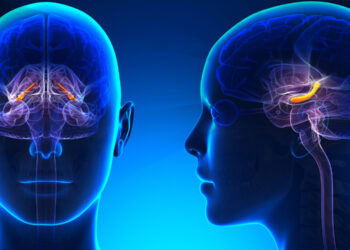
“Anticipating social rewards elicited widespread activation, encompassing the bilateral dorsal anterior cingulate cortex, anterior insula, supplementary motor area, putamen, right pallidum, thalamus, precuneus, middle frontal gyrus, bilateral occipital lobe, fusiform gyrus, and calcarine sulcus. Anticipating monetary rewards yielded activation only in the bilateral occipital lobe, fusiform gyrus, and right calcarine sulcus,” the study authors wrote.
Participants with higher levels of maternal antipathy showed reduced activation in key regions of the reward network including the ventral striatum and the anterior cingulate cortex on both sides, anterior insula, ventromedial prefrontal and orbitofrontal cortex, and superior temporal gyrus regions of the brain. This reduction was even stronger in patients with the posttraumatic stress disorder. Activation to monetary rewards was not connected to maternal antipathy.
“The current study provides initial evidence for differential mechanisms in the relationship between maternal antipathy, a specific, but common type of adverse childhood experience, and altered neural reward responses to social reward anticipation,” the study authors concluded.
The study sheds light on the neural mechanism linking adverse early experiences to later psychopathology. However, it also has limitations that need to be taken into account. Notably, expected brain reactions to monetary reward anticipation were not detected. This might be due to participants higher appreciation of social rewards, but also to the nature of monetary stimuli used. Additionally, adverse childhood experiences assessment was based on retrospective self-reports and was, thus, prone to memory bias.
The paper “Your smile won’t affect me: Association between childhood maternal antipathy and adult neural reward function in a transdiagnostic sample” was authored by Katja I. Seitz, Kai Ueltzhöffer, Lena Rademacher, Frieder M. Paulus, Marius Schmitz, Sabine C. Herpertz, and Katja Bertsch.