Post-traumatic stress disorder (PTSD) is a mental health condition that can occur following exposure to a traumatic or repeated stressful events. It is commonly experienced by military veterans and first responders. While available treatments may not work for everyone, recent research suggests that combining therapy with MDMA administration could be a more effective approach.
A study published in Frontiers in Psychiatry found that patients who received MDMA-assisted therapy (MDMA-AT) experienced significant reductions in PTSD symptoms severity and changes in brain activity after 2 months of treatment.
MDMA, which stands for 3,4-methylenedioxymethamphetamine, is a synthetic drug that alters mood and perception. It is chemically similar to both stimulants and hallucinogens, and produces feelings of increased energy, pleasure, emotional warmth, and distorted sensory and time perception. MDMA is also known as “ecstasy” or “molly” when it is sold in pill form.
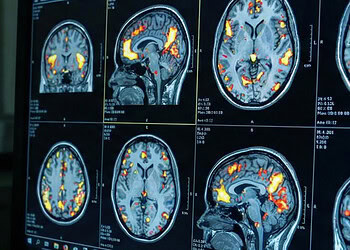
MDMA is thought to lower the fear response associated with traumatic memories, which could help patients with PTSD process their traumatic experiences. The authors behind this study used an MRI-based approach to study brain activity in patients before and after MDMA treatment. Specifically, they focused on the amygdala and the hippocampus, brain regions involved in fear response and memory, respectively.
“MDMA-assisted therapy for PTSD is poised to be the first FDA-approved ‘psychedelic’ medicine (depending how one defines the term),” explained study author Parker Singleton (@singletonion), a postdoctoral researcher at Weill Cornell Medicine. “That being said, there is still limited research on MDMA’s impact on brain dynamics, and up until this study, there was no study that investigated the long term changes in the brain dynamics of individuals who had undergone MDMA-assisted therapy for PTSD.”
The study included nine patients (aged 41.3 on average) with moderate-to-severe PTSD, who were exposed to traumatic and neutral audio recordings of personal events inside an MRI scanner. Only eight of these patients underwent an additional scan. Patients were scanned twice, with the second scan taking place two months after their last dose of MDMA.
After 2 months of MDMA-AT treatment, patients experienced a significant decrease in PTSD symptom severity, with an average reduction of 57%. An increase in communication between the amygdala and the hippocampus, previously suggested to be an adaptive mechanism to threat exposure, was found. However, this increase in communication was not statistically significant.
Additionally, before therapy the brain showed higher activity in areas involved in fear, emotion and autobiographical memories when patients listened to traumatic recordings of their past experiences compared to neutral recordings. After therapy, there was no significant difference in brain activity between these two types of recordings, suggesting a reduced intensity of the recollection of traumatic memories.
Finally, a significant correlation between PTSD symptom improvement and changes in the way different parts of the brain communicate with each other was found after therapy. “We found preliminary evidence that MDMA-assisted therapy alters brain response to traumatic memories,” Singleton said.
This study provides insight into the therapeutic effects of MDMA-AT on PTSD patients and sheds light on the potential mechanisms underlying its effectiveness. However, further research with larger sample and control population is needed to fully understand the changes in brain function associated with MDMA-AT treatment and to determine the long-term effects of this treatment approach.
“We consider this to be a pilot study that generates several hypotheses and preliminary findings for future research,” Singleton explained. “The number of subjects included here was very small.”
“I would like to sincerely thank the study participants for volunteering their time and for being willing to be scanned under such vulnerable conditions,” he added. “I would also like to thank MAPS for funding the research and for providing me with the opportunity to analyze and publish these data.”
The study, “Altered brain activity and functional connectivity after MDMA-assisted therapy for post-traumatic stress disorder“, was authored by S. Parker Singleton, Julie B. Wang, Michael Mithoefer, Colleen Hanlon, Mark S. George, Annie Mithoefer, Oliver Mithoefer, Allison R. Coker, Berra Yazar-Klosinski, Amy Emerson, Rick Doblin, and Amy Kuceyeski.