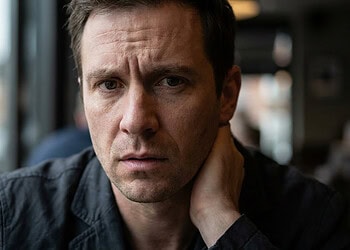
New research has identified a barrier that military veterans may face when returning to the civilian workforce. According to the study, which was recently published in Organizational Behavior and Human Decision Processes, veterans are viewed as having a strong ability to plan and act but less of a “mind” when it comes to their ability to feel.
“We were presented with the opportunity to study issues related to military veterans and their transition back to civilian society. We thought about how the public often thinks about and how the media often thinks about veterans and those in the military more generally, and how that might feed into some of the issues veterans face when the leave the military,” said study author Steven Shepherd, an assistant professor at Oklahoma State University.
“We thought that social psychological theory could actually concisely explain a lot of this quite well, but it turns out that social psychological theory has rarely been applied to veterans’ issues.”
In a series of surveys and experiments, the researchers found that veterans are generally typecast as agentic individuals who are relatively lacking in emotion. These stereotypes about veterans are in turn associated with perceptions about career suitability.
“Employers can be mindful of how preconceived notions about veterans might shape their perceptions of veterans — from the first read of the resume, to the interview, or the tasks that are assigned to veterans within an organization. Our research also speaks to the importance of employers having a more accurate understanding of veterans,” Shepherd told PsyPost.
“For veterans, our research suggests that they may want to take at least some measures to provide counter-stereotypical information. For example, because veterans are stereotyped as being unfeeling, we found that simply signaling this ability (i.e., listing animal shelter experience on one’s resume) could significantly reduce stereotypical judgments.”
In a survey of 223 participants, the researchers found that veterans were seen as higher in agentic traits like self-control, memory, planning, and intentional thought — but were seen as having a reduced capacity for feeling. Veterans were also seen as more loyal and trustworthy than non-veterans but also less sensitive and sympathetic. They were also rated as more mechanistic than non-veterans.
In a series of follow-up surveys, the researchers found that this held true regardless of whether the service members were described as currently serving or veterans, a member of the Army or Marines, serving in a non-combat role, or male or female.
In two additional surveys, with 207 participants in total, the researchers found that people commonly assumed that veterans were better suited for hands-on jobs and organizational jobs than jobs requiring artistic ability and social interaction.
Similarly, another survey of 199 participants found that jobs that required the ability to plan and act were viewed as a better fit for veterans than jobs that required the ability to sense and feel different sensations and emotions.
Yet another study of 396 participants found that veterans were viewed as better suited for technology-related careers than mental health careers — even when their resume noted they had done humanitarian work. This finding was replicated with another sample of 709 participants who had careers involving management or hiring decisions.
In three more experiments, with 1,069 participants in total, the researchers found that veterans were viewed as being more likely to succeed as dishwashers and prep cooks than restaurant servers, compared to non-veterans.
Finally, the researchers found evidence that the stereotyping of veterans could be mitigated with information that counters the stereotype. In particular, the experiment with 298 participants found that the negative effect of the stereotype was eliminated by including relevant work experience on a resume, such as working at a humane society where they “effectively managed bonding time with animals.”
But the study — like all research — includes some caveats.
“While we tested people’s views of different veteran targets, varying their service role and how that information was communicated, these effects might vary based on a number of other factors such as branch of service. These stereotypes about veterans may also interact with other stereotypes (e.g. gender, race/ethnicity) that were not fully explored in our research,” Shepherd explained.
“It is also important to note that people who may implicitly or explicitly hold these stereotypes don’t necessarily think negatively about the military. In fact, we posit that these stereotypes if anything stem from seeing veterans are heroic agents who can carry out a plan and get things done, which is a very positive belief to hold about somebody. But based on past work on mind perception, these beliefs may also lead people to see veterans are relatively unfeeling.”
The study, “Military veterans are morally typecast as agentic but unfeeling: Implications for veteran employment“, was authored by Steven Shepherd, Aaron C. Kay, and Kurt Gray.