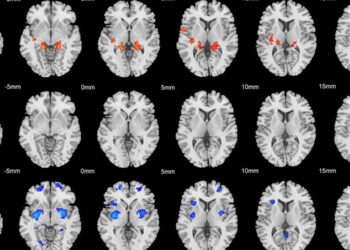
A new study published in Biological Psychiatry: Cognitive Neuroscience and Neuroimaging has found that mindfulness meditation can reduce gaming cravings in individuals with internet gaming disorder. This effect is achieved by altering brain connectivity patterns, particularly between the default mode network and executive control-related brain regions. The findings highlight mindfulness as a promising intervention for managing addictive behaviors, with evidence showing its impact on both psychological symptoms and underlying neural mechanisms.
Internet gaming disorder, characterized by excessive gaming that disrupts daily life, has become a growing concern worldwide. Individuals with this disorder often experience mental health issues such as depression and social isolation. Traditional treatments, including cognitive behavioral therapy and pharmacological interventions, have shown mixed results, with limited exploration of the neural mechanisms driving these outcomes.
Previous research has linked internet gaming disorder to abnormal functional connectivity in brain regions associated with reward processing, executive control, and the default mode network. These abnormalities impair cognitive control and reinforce addictive behaviors. Given the limitations of existing treatments and the potential of mindfulness meditation to improve mental health, researchers in China sought to investigate whether mindfulness could address the neural and psychological aspects of gaming addiction.
The study involved 80 participants diagnosed with internet gaming disorder, recruited through advertisements and screened using diagnostic interviews and tests. Participants were randomly assigned to either a mindfulness meditation group or a control group practicing progressive muscle relaxation. Both groups underwent eight training sessions over four weeks, led by certified trainers. While mindfulness meditation emphasized present-moment awareness and nonjudgmental observation, progressive muscle relaxation focused on systematic body relaxation techniques.
Before and after the training period, participants completed assessments measuring gaming addiction severity, gaming cravings, and mindfulness levels. Functional magnetic resonance imaging (fMRI) scans were used to evaluate changes in brain connectivity. The researchers focused on three brain regions: the dorsolateral prefrontal cortex, the left precuneus, and the posterior cingulate cortex, which are key nodes in the executive control and default mode networks.
The researchers found that mindfulness meditation reduced gaming cravings and the severity of internet gaming disorder compared to the control intervention. Participants in the mindfulness group showed marked improvements in mindfulness levels, which correlated with reductions in gaming addiction symptoms. The progressive muscle relaxation group also exhibited slight improvements, likely reflecting a minor placebo effect.
Participants practicing mindfulness showed increased connectivity between the dorsolateral prefrontal cortex and other regions involved in decision-making and impulse control, such as the orbitofrontal cortex and superior frontal gyrus. These changes likely improved participants’ ability to regulate their cravings and resist gaming cues.
One of the most notable results was the enhancement of functional connectivity within the executive control network. This network, anchored by regions such as the dorsolateral prefrontal cortex and the orbitofrontal cortex, plays a crucial role in decision-making and impulse control. Participants who engaged in mindfulness meditation exhibited stronger connections within this network, suggesting an improved ability to resist gaming-related urges and exercise better self-control.
The study also found that mindfulness meditation improved connectivity between the executive control network and the default mode network. The default mode network, which includes the precuneus and posterior cingulate cortex, is typically active during self-referential thinking and mind-wandering. Strengthened connections between these two networks suggest that mindfulness fosters greater integration between systems responsible for managing external impulses and internal self-awareness.
In addition, mindfulness meditation strengthened connectivity between the executive control network and reward-related brain areas, such as the parahippocampal gyrus. The parahippocampal gyrus is involved in processing reward-related memories and motivations, which are often heightened in individuals with gaming addiction. By enhancing connectivity in these regions, mindfulness appears to dampen the brain’s sensitivity to gaming-related rewards, making it easier for participants to resist cravings and engage in healthier behaviors.
Another intriguing finding was the association between brain connectivity changes and neurotransmitter systems, particularly those involving dopamine and serotonin. The study showed that increased connectivity in specific brain regions correlated with changes in the activity of dopamine and serotonin receptors. Since these neurotransmitters are central to reward processing and mood regulation, the findings suggest that mindfulness meditation may have a stabilizing effect on the neurochemical imbalances often seen in addictive behaviors.
While the study provides evidence for the benefits of mindfulness meditation in treating internet gaming disorder, it has some limitations. First, the research focused solely on resting-state functional connectivity, which does not reveal the direction of changes in brain activity. Future studies could use effective connectivity analyses to determine causal relationships between brain regions.
Second, the control group practicing progressive muscle relaxation experienced slight improvements, indicating a potential placebo effect. Incorporating additional control groups in future studies could clarify the specific effects of mindfulness meditation. Lastly, while the study demonstrated correlations between brain connectivity changes and neurotransmitter systems, further research is needed to explore these relationships in more depth.
The study, “Mindfulness Meditation Training Reduces Gaming Cravings by Reshaping the Functional Connectivity Between the Default Mode Network and Executive Control–Related Brain Regions,” was authored by Xuefeng Xu, Xuefeng Ma, Haosen Ni, Huabin Wang, Tongtong Wang, Chang Liu, Xiaolan Song, and Guang-Heng Dong.