A new study indicates that individuals who do not trust public health institutions were much more likely to have negative views of COVID-19 vaccines and to refuse to get vaccinated. This tendency persisted over time. Only 49% of participants of these individuals were vaccinated against COVID-19 compared to 72% in the overall sample. The study was published in Social Science & Medicine.
Vaccine hesitancy is the reluctance or refusal to receive vaccinations despite their availability. It can stem from various factors, such as concerns about vaccine safety, misinformation, distrust in healthcare systems, and religious or cultural beliefs. Vaccine hesitancy poses a significant public health challenge, as it can lead to lower vaccination rates and increase the risk of preventable diseases spreading in communities.
Vaccination hesitancy existed before the COVID-19 pandemic. The World Health Organization named it one of the top ten global threats in the world back in 2019. However, in the course of the COVID-19 pandemic, vaccination hesitancy increased even further. This was best seen when COVID-19 vaccines became available and vaccination campaigns began. The share of vaccinated population increased quickly in the beginning only to level off and stop increasing altogether very far from the 100% mark. In some groups, the vaccination rates barely reached 50% or did not even reach it in spite of vaccine availability.
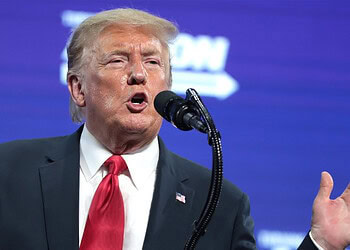
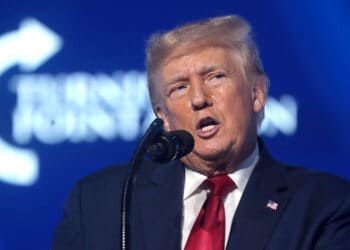
Study authors Yongjin Choi and Ashley M. Fox wanted to explore the factors that predict the level of vaccine hesitancy. They note that, around the world, low trust in government is one of the most important predictors of vaccine hesitancy. However, in the United States, vaccine hesitancy also has a partisanship dimension, as it was particularly pronounced among Trump supporters.
To disentangle these associations, the researchers used data from nine waves of the Understanding America Survey covering the period from December 2020 to July 2021, including the time before and after COVID-19 vaccines were available to the general public in the United States. The Understanding America Survey is a project from the Center for Economic and Social Research at the University of Southern California.
The average number of respondents to the survey across the nine waves used in this analysis was 4,196. These were 5,446 different individuals (not all participated in all surveys). In the survey, participants were asked about their vaccination status and their likelihood of getting vaccinated in the future. Participants who said they were somewhat or very unlikely to get vaccinated were classified as vaccine hesitant. The survey also collected data on perceptions of vaccine usefulness and effectiveness, trust in physicians, and social network contacts.
The researchers also analyzed responses on perceptions of usefulness and effectiveness of vaccines, along with trust in physicians, contacts on social network services, national/local newspapers, family and close friends, and acquaintances.
The study authors further identified participants who trust and those who do not trust public health institutions (based on responses on how much they trust local health department officials, the Department of Health and Human Services and the CDC), and those who do and who do not trust Trump (based on answers about how much they trust Donald Trump).
The study found that among the survey participants, 21% mistrusted public health institutions but trusted Trump, 15% trusted both public health institutions and Trump, 21% didn’t trust either public health institutions or Trump, and 42% trusted public health institutions but didn’t trust Trump.
Overall, 72% of respondents had received at least one COVID-19 vaccine shot by the last survey wave. However, among those who mistrusted public health institutions, only 49% had received at least one shot, compared to 93% among those who trusted public health institutions but not Trump.
Trusting Trump seems to have compounded the mistrust in public health institutions. The share of vaccinated in the group that mistrusted public health institutions but trusted Trump was 41%, compared to 56% in the group that mistrusted both public health institutions and Trump.
“Vaccine hesitancy is a highly contextual problem influenced by political, cultural, and social values that set the stage for whether individuals or communities trust or mistrust authority. In the U.S., vaccine hesitancy and low uptake have been linked to conservative ideology generally and support for former President Donald Trump specifically. However, we find that broader mistrust in public health institutions is an even stronger and more consistent predictor of vaccine hesitancy and low uptake than trust in Trump alone, or party identification,” the researchers concluded.
The study makes an important contribution to the scientific understanding of current factors of vaccine hesitancy in the U.S. However, it also has limitations that need to be taken into account. Notably, the survey waves covered only a short time period. Therefore, the data do not allow the observation of partisan dynamics outside that period. It is possible that the reported associations might not remain the same when political dynamics change.
The study, “Mistrust in public health institutions is a stronger predictor of vaccine hesitancy and uptake than trust in Trump”, was authored by Yongjin Choi and Ashley M. Fox.