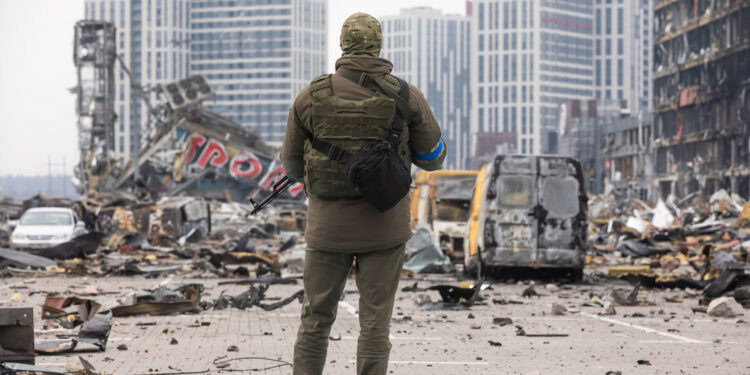

A recent study published in Political Psychology explored the emotions of guilt and shame among Russians regarding their country’s invasion of Ukraine and how these emotions influence antiwar actions. The researchers found that feelings of moral shame, rather than guilt or image shame, were significant predictors of antiwar behavior in Russia.
The Russia-Ukraine conflict has spurred complex emotional responses among Russians, particularly regarding feelings of collective responsibility, guilt, and shame. Although group-based guilt and shame have been studied in democratic contexts, little is known about these emotions in authoritarian regimes. The researchers aimed to determine whether these emotions can motivate collective action in such environments.
They sought to answer three primary questions: Are feelings of guilt and shame linked to beliefs about political influence? Do these emotions predict antiwar actions in an authoritarian state? Are these emotions more predictive of antiwar actions than other attitudes?
“I have been interested in the topic of group-based guilt and shame for a long time, wondering why many countries don’t deal with or even recognize all the horrible things that they did in the past (denial of the Armenian genocide by Turkey, the non-discussion of various crimes committed by the Soviet regime in Russia and other post-Soviet states, etc.),” explained study author Lusine Grigoryan of the University of York.
“When Russia invaded Ukraine, being a Russian citizen, I was paralyzed with shame and guilt for what my country was doing, and then noticed all these discussions taking place online where people were getting angry about the possibility of feeling guilt or shame for their country (we describe it in the introduction to the paper). Together with colleagues, we felt that we needed to do something to understand why people do or don’t protest in Russia, and the variables that I wanted to focus on were those related to guilt and shame.”
The study involved a large-scale online survey conducted in August 2022, targeting a representative sample of the Russian population. Participants were recruited via the Yandex Toloka platform and completed the survey anonymously to ensure safety given the risks associated with expressing antiwar sentiments in Russia. Out of 1,011 participants who consented, 973 completed the survey.
Participants, balanced by gender and age, were asked about their political beliefs, emotional responses to the war, and antiwar actions. The survey measured support for democratic values, political alienation, and political cynicism. Emotions were assessed using the Positive and Negative Affect Scale, focusing on guilt, image shame, and moral shame. Antiwar actions were measured by past behaviors (e.g., signing petitions, participating in demonstrations) and future intentions to engage in such activities.
Grigoryan and her colleagues found that democratic values were the strongest predictor of group-based guilt and shame, surpassing other political beliefs like political cynicism and alienation. Participants who endorsed democratic principles such as human rights, freedom of speech, and the rule of law were more likely to feel guilt, moral shame, and image shame in response to Russia’s invasion of Ukraine.
Moral shame emerged as the most significant predictor of antiwar actions. This type of shame, which arises from the perception that one’s group has violated moral standards, was consistently linked to both past and future antiwar behavior. Participants who felt moral shame were more likely to have engaged in actions such as signing petitions or participating in demonstrations, and they also expressed stronger intentions to continue such actions in the future..
The findings highlight “that people can protest even when the risks are high and there is not much hope for change if they feel that their group is violating some core moral principles,” Grigoryan told PsyPost.
Interestingly, guilt and image shame did not have the same predictive power as moral shame. Guilt, which involves a sense of responsibility for the actions of one’s group, and image shame, which relates to concerns about the group’s reputation, were less influential in driving antiwar actions.
The researchers speculated that in an authoritarian context, where individuals may feel powerless to change governmental actions, guilt might become dysfunctional. The lack of control over political outcomes can inhibit the motivational impact of guilt, making it less effective in spurring collective action.
The study also highlighted the importance of negative dominant emotions, such as anger and disgust, in predicting the strength of antiwar intentions. These emotions, characterized by a sense of moral outrage, were strong predictors of participants’ willingness to engage in political actions against the war.
In contrast, negative submissive emotions like fear and sadness were associated with weaker intentions to act. This distinction suggests that while moral reasoning influences the decision to participate in collective action, the intensity of participation is driven by stronger, more assertive emotional responses.
However, the study’s cross-sectional design limits causal conclusions. Social desirability bias is another concern, as participants may have been reluctant to express their true feelings due to the criminalization of antiwar sentiments in Russia. Despite these limitations, the findings provide valuable insights into the emotional drivers of collective action in authoritarian regimes.
Future research should explore similar dynamics in other nondemocratic contexts to validate and expand upon these findings. Longitudinal studies would help establish causal relationships between political beliefs, emotions, and collective actions. Additionally, developing interventions to enhance a sense of responsibility for the ingroup’s actions in repressive contexts could be beneficial.
The study, “Guilt, shame, and antiwar action in an authoritarian country at war,” was authored by Lusine Grigoryan, Vladimir Ponizovskiy, Marie Isabelle Weißflog, Evgeny Osin, and Brian Lickel.