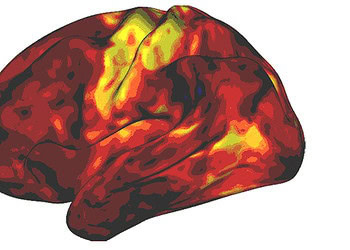
An analysis of brain neuroimaging data from youths undergoing cognitive behavioral therapy (CBT) for anxiety found no significant associations between the brain’s structural features or functional connectivity and treatment outcomes. Although some associations between specific brain characteristics and therapy outcomes were observed, the study authors considered these effects too small to be of practical relevance. The findings were published in Psychological Medicine.
Pediatric anxiety refers to excessive fear, worry, or nervousness in children that interferes with their daily functioning. It is one of the most common mental health conditions in childhood and can manifest as separation anxiety, social anxiety, or generalized anxiety disorder. Symptoms may include irritability, restlessness, trouble sleeping, stomachaches, or avoidance of certain situations.
Younger children often have difficulty verbalizing their worries and may instead express them through physical complaints or clingy behavior. Causes of pediatric anxiety can include genetic predisposition, temperament, environmental stress, and traumatic experiences. Early identification is important because untreated anxiety can negatively affect academic performance, social development, and self-esteem. It also often precedes the onset of long-term emotional problems in adulthood.
Study author Andre Zugman and his colleagues aimed to explore whether the outcomes of CBT for pediatric anxiety could be predicted using anatomical characteristics of the brain and its functional connectivity. Although CBT is currently the first-line treatment for pediatric anxiety, it leads to full remission in fewer than half of treated children.
To investigate this, the researchers analyzed neuroimaging data from 54 youths who enrolled in a study at the National Institute of Mental Health (NIMH), part of the National Institutes of Health (NIH) in Bethesda, Maryland. All participants were diagnosed with an anxiety disorder by a licensed clinician and completed 12 weekly CBT sessions. The researchers also used a second, smaller dataset consisting of 15 youths who had participated in an earlier study examining the effects of an 8-week CBT protocol.
All participants underwent functional magnetic resonance imaging (fMRI) scans. Their anxiety symptoms were assessed using the Pediatric Anxiety Rating Scale (PARS) either at four time points before, during, and after CBT (for the first dataset), or at two time points—before and after treatment—in the second dataset.
The researchers used a machine learning approach called connectome predictive modeling (CPM) to determine whether changes in anxiety symptoms could be predicted based on functional connectivity between brain regions. They also attempted to predict treatment outcomes using structural characteristics of the brain, such as cortical thickness and gray/white matter contrast.
Overall, the researchers were not able to predict CBT outcomes from the neuroimaging data using the statistical methods applied. Although a few associations were identified, the authors did not consider them to be clinically meaningful.
“Despite using expert clinicians, gold-standard outcome measures, and medication-free subjects, the models failed to consistently identify robust patterns associated with treatment response. This study, therefore, does not support evidence for the use of CPM [connectome predictive modeling, the statistical/machine learning technique applied in the study] to predict treatment outcomes in pediatric anxiety,” the study authors concluded.
The study contributes to the scientific understanding of the links between pediatric anxiety on one side, and structural and functional characteristics of the brain on the other. However, it also highlights the current limitations of using brain-based data to make accurate clinical predictions. The sample sizes were relatively small, and the field’s understanding of how brain characteristics map onto psychological symptoms remains limited.
The paper, “Brain functional connectivity and anatomical features as predictors of cognitive behavioral therapy outcome for anxiety in youths,” was authored by Andre Zugman, Grace V. Ringlein, Emily S. Finn, Krystal M. Lewis, Erin Berman, Wendy K. Silverman, Eli R. Lebowitz, Daniel S. Pine, and Anderson M. Winkler.