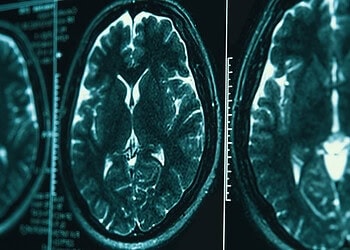
Brain regions implicated in depression tend to develop differently in adolescent girls and boys, according to new research published in Science Advances. The findings provide evidence that there may be a connection between the way brain networks develop during adolescence and sex differences in the risk of depression.
The authors behind the new research were interested in better understanding how changes in functional connectivity (FC) during adolescence might be related to depression. FC is a measure of the statistical relationship between different brain regions based on the temporal patterns of neural activity in those regions. In other words, it is a way to study how different areas of the brain communicate and work together to carry out different cognitive and behavioral functions.
“Women are almost twice as likely to be diagnosed with depression than men,” said study author Lena Dorfschmidt, a PhD candidate at the Department of Psychiatry at the University of Cambridge.
“Concerningly, we don’t understand much yet about how neurobiological sex differences affect psychiatric disorders, many scientific studies and even clinical trials don’t specifically investigate sex differences, and animal studies often only use male animals. I think it is really important to understand sex differences in healthy brain development in order to understand why there are sex differences in both prevalence and expression in disorders.”
The researchers analyzed brain imaging data from 298 healthy participants (aged 14 to 26 years) from the Neuroscience in Psychiatry Network, a longitudinal study that sought to measure developmental change in adolescents. They measured three parameters of adolescent FC development: baseline connectivity at age 14, rate of change in connectivity between 14 and 26 years, and the maturational index (MI), which reflects the developmental trajectory of connectivity.
Females had lower global FC across all ages on average, and the rate of change in FC during adolescence was significantly reduced in females for connections between the nucleus accumbens and 27 cortical structures.
Dorfschmidt and her colleagues found that, in both sexes, MI was positive in sensorimotor cortex and negative in association cortex and subcortical areas.
But the results of the study showed that there were normative sex differences in adolescent brain development, with females having more disruptive development of FC in a default mode cortical, limbic, and subcortical network. Females had significantly more negative MI than males in 107 regions, indicating weak connections at 14 years that became stronger during adolescence, and strong connections that became weaker.
These findings suggest that the sexually divergent risk trajectory for depression may be linked to underlying sex differences in adolescent brain network development.
“Adolescence is an incredibly interesting period of brain development – a lot needs to change for our brains to help us go from being children to becoming adults,” Dorfschmidt told PsyPost. “We find that during adolescence, some brain regions show more drastic changes in girls, compared to boys.”
“More specifically, in teenage girls, some brain regions change their wiring, or connectivity, to the rest of the brain quite strongly, whereas in boys the same regions don’t change much, or just strengthen already established connections.”
“When the brain changes its internal wiring, there is always a chance that things may go wrong. Thus, the fact that there are more drastic changes, or ‘rewiring’ in these brain regions in girls, compared to boys, could suggest an increased risk for ‘things to go wrong.”
The results provide new insights into the neural mechanisms underlying the development of depression and may help to develop sex-specific prevention and treatment strategies for depression.
“Incidentally, when we compared the set of brain regions that develop differently between girls and boys with the set of regions known to be implicated in depression, we find that the overlap is large,” Dorfschmidt explained. “Regions that tend to be strongly implicated in depression, also tend to show greater sex differences in adolescent brain rewiring. We suggest that the process of more fundamental rewiring in some brain regions may expose teenage girls to a greater risk of ‘mis-writing’ and thereby could lead to a greater risk for depression.”
The study utilized a large fMRI dataset with approximately equal numbers of males and females. But, as with all research, it includes some limitations. For example, Dorfschmidt noted that the study examined “sex differences on average. This ignores the fact that the patterns we observe in girls and boys overlap strongly. We didn’t have sufficient data to show this presumably continuous spectrum of development.”
Future research should examine patients diagnosed with depression, the researchers said.
“In this work, we show that sex differences in healthy adolescents are co-located with differences between patients with major depression and healthy controls,” Dorfschmidt explained. “In order to understand this link better it would be very interesting to study healthy subjects that later develop depression.”
“A comment I often get about this work is ‘Oh, so women’s brains look more like depressed brains.’ And no, this is absolutely not true,” Dorfschmidt noted. “All we are showing in our work is that there are some brain regions in which teenage girls’ brains rewire slightly differently from boys’ brains – and those same brain regions happen to be implicated in depression.
“This doesn’t mean that healthy girls develop depression or that their brains look depressed. It only suggests that the way their brains naturally develop might expose them to a greater risk for developing depression.”
The study, “Sexually divergent development of depression-related brain networks during healthy human adolescence“, was authored by Lena Dorfschmidt, Richard A. Bethlehem, Jakob Seidlitz, František Váša, Simon R. White, Rafael Romero-García, Manfred G. Kitzbichler, Athina R. Aruldass, Sarah E. Morgan, Ian M. Goodyer, Peter Fonagy, Peter B. Jones, Ray J. Dolan, NSPN Consortium, Neil A. Harrison, Petra E. Vértes, and Edward T. Bullmore.