A study published in Neuropsychopharmacology provides new insight into how the psychedelic drug LSD influences the way different brain regions communicate. The findings suggest that LSD disrupts the brain’s gatekeeping process, leading to increased information flow and altered perception.
Psychedelics have long been known to induce profound changes in perception, cognition, and consciousness. LSD provides a unique opportunity to study the brain and its functions. By investigating its effects, researchers can gain valuable insights into the neural processes that underlie perception, consciousness, and altered states of mind.
The authors behind the new study were particularly interested in identifying potential biomarkers that can predict the subjective effects induced by psychedelic drugs, which could be a valuable tool for both research and clinical purposes.
“I got interested in understanding the effects of LSD through a colleague and friend of mine who has been working on this topic for a long time. I myself usually work with patients with schizophrenia, who sometimes report hallucinations and a primary goal of my research is to understand why the patients have these and other experiences,” said study author Daniel Hauke, a postdoctoral research fellow at University College London.
“Speaking to my friend about the experiences that participants in his LSD studies report made it clear as day to me that everyone’s brain is able to generate these incredible, rich and sometimes scary experiences and how much of what we perceive as ‘reality’ is actually constructed by our brain. I wanted to understand this astonishing ability of our brain better in hope of learning something that might help me one day to explain to patients why they experience hallucinations.”
The study aimed to examine the neural mechanisms underlying the effects of LSD on the whole brain by employing computational modeling and machine learning. The researchers focused on two types of connectivity measures: functional connectivity and effective connectivity.
Functional connectivity measures the correlation between the activity of different brain regions, while effective connectivity estimates the directed influences between brain regions, taking into account the asymmetry of connections and the presence of self-inhibition within a region.
The study utilized data from two randomized, placebo-controlled, double-blind, cross-over trials involving a total of 45 healthy participants. The participants were administered either LSD or placebo in two separate experimental sessions, with at least a 7-day interval between sessions. Functional magnetic resonance imaging (fMRI) data were acquired during rest after the administration of LSD or placebo. The subjective effects of LSD were assessed using the 5 Dimensions of Altered States of Consciousness scale.
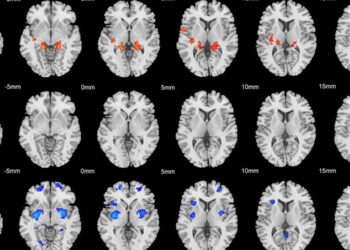
The researchers found evidence that LSD resulted in widespread changes in both functional connectivity and effective connectivity. Overall, LSD increased the strength of connections in many brain regions compared to placebo. However, there were also weaker connections in certain parts of the brain.
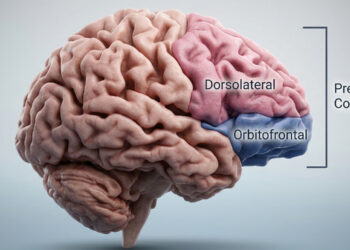
Hauke and his colleagues observed stronger functional connectivity between regions in the parietal, temporal, and inferior frontal areas of the brain. These regions support a wide range of cognitive processes and behaviors, including sensory processing, decision-making, language production, and memory.
Additionally, LSD was found to enhance connectivity in brain areas associated with thinking and cognitive functions. This included stronger connections between the inferior frontal gyrus and postcentral gyrus, which are involved in motor planning and sensory integration, as well as connections between the angular gyrus and inferior frontal gyrus, which are associated with language and semantic processing.
Hauke and his colleagues observed weaker functional connectivity between several regions in the occipital lobe, including the occipital pole, lingual gyrus, supracalcarine cortex, intracalcarine cortex, and fusiform gyrus. Weaker connections in these areas suggest that the interaction between these regions were reduced or less synchronized compared to when participants were in the placebo condition.
“I was surprised by the magnitude of the changes in connectivity in the brain under LSD,” Hauke told PsyPost. “Usually when we look at brain data – even when comparing the brains of patients with schizophrenia and healthy controls for example – the changes we see are much more subtle.”
The researchers found that changes in both functional connectivity and effective connectivity between specific brain regions, such as the angular gyrus and inferior frontal gyrus, as well as connections between occipital and cerebellar regions, were correlated with the overall subjective effects of LSD.
They trained a machine learning model to predict whether a person was under the influence of LSD or placebo based on their brain connectivity patterns, and the model performed well, indicating that brain connectivity could be used as a biomarker for drug effects.
Additionally, Hauke and his colleagues looked at how LSD affected inhibitory self-connections, which are related to the brain’s stability. They found that LSD increased inhibitory connections in some brain regions while reducing them in others. The study raises the possibility that LSD may disrupt the balance between excitation and inhibition in the brain, a factor that has been linked to psychosis and hallucinatory experiences.
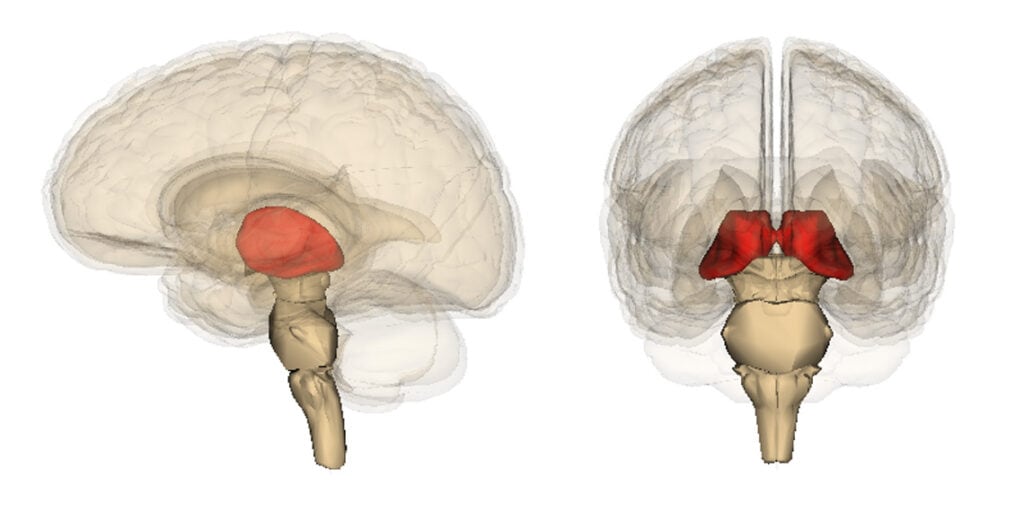
Importantly, LSD increased the connectivity between various cortical regions and the thalamus, which is involved in regulating the flow of sensory information to the cortex. The findings support the thalamic gating hypothesis, which suggests that psychedelics like LSD reduce thalamic gating, allowing excessive information flow from the thalamus to other regions.
“Our findings suggest that LSD changes the connectivity in almost the entire brain,” Hauke told PsyPost. “Mostly it increases communication between brain areas that usually do not talk to each other much. One possible explanation that is also supported by our findings is that LSD affects a brain region called the thalamus.”
“The thalamus acts as a gatekeeper for the brain and LSD seems to open the gate to let more information pass the gatekeeper and reach other areas of the brain. Interestingly, we also found reduced communication between brain areas that are concerned with processing visual information, which we did not expect.”
“We don’t know yet what these changes mean and what the long-term consequences of them are,” Hauke explained. “We will try to get to the bottom of this by investigating how they relate to subjective experiences like hallucinations or synesthesia – the experience that one sense changes the perceptions in another sense, for example listening to music can change the things that people see under LSD.”
But the study, like all research, includes some caveats.
“One important limitation of our work is that LSD also leads to changes in blood flow in the brain, which we could not disentangle from changes in connectivity between brain regions,” Hauke explained. “In the future we will try to address this question by recording pulse and heart rate while participants are inside the scanner. It will also be important to investigate whether LSD results in long term changes in connectivity.”
The study, “The effect of lysergic acid diethylamide (LSD) on whole-brain functional and effective connectivity,” was authored by Peter Bedford, Daniel J. Hauke, Zheng Wang, Volker Roth, Monika Nagy-Huber, Friederike Holze, Laura Ley, Patrick Vizeli, Matthias E. Liechti, Stefan Borgwardt, Felix Müller, and Andreea O. Diaconescu.