A study of brain tissue of deceased individuals who suffered from schizophrenia found elevated levels of iron. On the other hand, levels of ferritin were reduced. Ferritin is a protein that stores iron in an inactive form and releases it into the body when needed, helping to regulate iron levels and prevent iron toxicity. The study was published in Molecular Psychiatry.
Schizophrenia is a complex, severe mental disorder characterized by symptoms that impact an individual’s thinking, emotions, and behavior. It typically emerges in late adolescence or early adulthood. Those with schizophrenia may experience hallucinations, such as hearing voices or seeing nonexistent things, and delusions, which are strongly held yet false beliefs resistant to reason or contrary evidence. These symptoms can lead to disorganized thinking, hindering individuals from communicating logically, following a conversation, or completing tasks coherently.
Negative symptoms, including social withdrawal, diminished emotions, reduced motivation, and impaired ability to initiate and sustain activities, often result in significant social and occupational dysfunction. While there is no cure for schizophrenia, treatment usually involves a combination of antipsychotic medications, psychotherapy, and support services. These treatments aim to manage symptoms and improve the individual’s quality of life.
However, these treatments do not effectively address the most debilitating symptoms of the disease, such as emotional blunting, lack of will, and impairments in social and cognitive functioning. Studies have shown that individuals with schizophrenia experience a rapid loss of brain gray matter in the first few years after the onset of the disease, coinciding with the development of cognitive deficits. Neuroimaging studies and molecular markers suggest that individuals with schizophrenia experience accelerated brain aging, likely contributing to increased dementia rates later in life.
Study author Amit Lotan and his colleagues hypothesized that alterations in brain iron levels might contribute to the adverse cognitive changes observed in schizophrenia. Typically, iron is stored in an inactive form within the protein ferritin in neurons and glia cells, and is released when needed for processes such as energy production and myelin synthesis. However, previous studies indicated that individuals with cognitive decline often have elevated brain iron levels, suggesting that a disruption in iron level regulation could be involved in cognitive decline. The study authors proposed that a similar mechanism might be at play in schizophrenia.
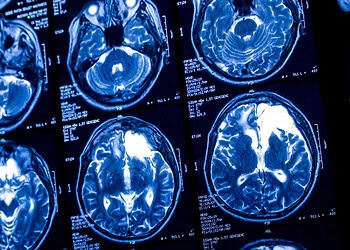
The researchers analyzed and compared prefrontal cortex tissue samples from deceased individuals who had schizophrenia or schizoaffective disorder and from healthy individuals matched for demographic characteristics. These samples were sourced from the New South Wales Brain Tissue Resource Center (NSW-BTRC), Victorian Brain Bank Network (VBBN), and National Institute of Mental Health Human Brain Collection Core (NIMH-HBCC) in Australia. They specifically assessed iron and ferritin levels in the brain tissue.
The results showed that individuals with schizophrenia had higher iron levels but lower ferritin levels in the examined brain tissue. This suggests a disruption in iron availability in key brain areas responsible for reasoning and planning in individuals with schizophrenia. The disparity in iron levels was most pronounced between the brains of younger individuals with schizophrenia and age-matched healthy controls.
“In the current study, we found that iron levels in the PFC [prefrontal cortex region of the brain] are elevated in schizophrenia compared to age-matched controls. Ferritin, which stores iron in a redox-inactive form, is paradoxically decreased in individuals with the disorder. Among schizophrenia cases, we observed a loss of age-dependent iron accumulation that characterized control individuals [iron levels in the brain normally gradually increase with age], in that iron levels were already high in cortices of young adults with schizophrenia. Accordingly, the difference in iron between groups was largest among young adults, with high iron levels conferring a major risk for being diagnosed with disease in this age group,” the study authors concluded.
The study highlights an important link between schizophrenia and iron biology. However, it also acknowledges limitations, notably its focus on the prefrontal cortex. Iron levels can vary significantly across different brain regions, and it remains unclear whether these changes are present in other areas of the brain beyond the prefrontal cortex.
The paper, “Perturbed iron biology in the prefrontal cortex of people with schizophrenia”, was authored by Amit Lotan, Sandra Luza, Carlos M. Opazo, Scott Ayton, Darius J. R. Lane, Serafino Mancuso, Avril Pereira, Suresh Sundram, Cynthia Shannon Weickert, Chad Bousman, Christos Pantelis, Ian P. Everall, and Ashley I. Bush.