Subscribe
The latest psychology and neuroscience discoveries.
My Account
  • Mental Health
  • Social Psychology
  • Cognitive Science
  • Neuroscience
  • About
No Result
View All Result
PsyPost
PsyPost
No Result
View All Result
Home Exclusive Social Psychology Political Psychology

New research indicates that liberals and conservatives differ in how they interpret conversations

by Eric W. Dolan
December 5, 2022
in Political Psychology
Share on TwitterShare on Facebook

New research has uncovered differences between how conservatives and liberals interpret indirect remarks. The study, published in the Journal of Applied Social Psychology, provides evidence that people who are more politically liberal in the United States are more likely to endorse indirect meanings of conversational utterances.

“We have been investigating miscommunication and began to think about how people may differ in their interpretation of conversation remarks, differences that then could result in miscommunication,” said study author Thomas Holtgraves, a professor of psychological science at Ball State University.

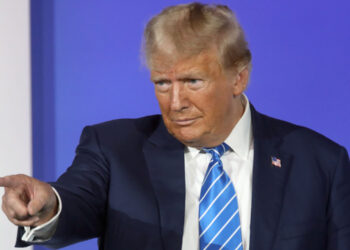
“Inspired by a critical issue in Donald Trump’s first impeachment trial (his ‘I’d like you to do us a favor, though’ statement to the president of Ukraine), we examined whether liberals and conservatives would differ in their interpretation of conversation remarks. And they did.”

For their study, the researchers used an online platform known as Prolific to recruit a sample of 700 U.S adults.

The participants read a brief transcript of a conversation between two business executives. The conversation consisted of 21 total utterances, including five indirect utterances. For example, during the conversation one of the executives asked “I’m also wondering, what are your thoughts about interest rates? Do you think they’ll be raised anytime soon?” to which the other executive offered the indirect response “Well, some people think they’ll be raised soon.”

The exchange was presented one utterance at a time on a computer screen. The participants pressed the spacebar to move on to the next utterance. “For seven utterances (five targets and two fillers), participants, immediately after pressing the spacebar, were presented with an interpretation of the utterance and asked to provide their judgment of the likelihood of that interpretation,” the researchers explained.

Liberal participants were more likely to endorse indirect interpretations compared to their conservative counterparts. But there was no difference between liberals and conservatives in the interpretation of the control (filler) utterances. This was true even after accounting for factors such as emotional intelligence, education level, and social class.

“People differ in terms of the how they interpret conversations,” Holtgraves told PsyPost. “In our research, we have identified one variable – political orientation – that is associated with such differences.”

Google News Preferences Add PsyPost to your preferred sources

He added that the researchers stumbled upon the findings by accident. “The finding itself surprised us because we were not looking for it,” Holtgraves explained. “We were examining how people interpret utterances like ‘I’d like you to do us a favor though’ and we happened to notice that there was a difference between liberals and conservatives, which we then decided to pursue in detail.”

Previous research has indicated that liberals tend to score higher on measures of cognitive flexibility and empathy. But neither of these factors helped to explain the differences in interpretation between liberals and conservatives. “We are continuing to explore possible mediators of this effect,” Holtgraves said.

The study, “US liberals and conservatives live in different (linguistic) worlds: Ideological differences when interpreting business conversations“, was authored by Thomas Holtgraves and Ky Bray.


Previous Post

The link between body dissatisfaction and relationship dissatisfaction is weaker among those with higher BMI

Next Post

A low-dose of caffeine suppresses alpha brain waves and improves executive functioning

RELATED

New psychology research sheds light on the mystery of deja vu
Political Psychology

Black Lives Matter protests sparked a short-term conservative backlash but ultimately shifted the 2020 election towards Democrats

March 9, 2026
A psychological need for certainty is associated with radical right voting
Personality Psychology

A psychological need for certainty is associated with radical right voting

March 7, 2026
Pro-environmental behavior is exaggerated on self-report questionnaires, particularly among those with stronger environmentalist identity
Climate

Conservatives underestimate the environmental impact of sustainable behaviors compared to liberals

March 5, 2026
Common left-right political scale masks anti-establishment views at the center
Political Psychology

American issue polarization surged after 2008 as the left moved further left

March 5, 2026
Evolutionary psychology reveals patterns in mass murder motivations across life stages
Authoritarianism

Psychological network analysis reveals how inner self-compassion connects to outward social attitudes

March 5, 2026
Republicans’ pro-democracy speeches after January 6 had no impact on Trump supporters, study suggests
Conspiracy Theories

Trump voters who believed conspiracy theories were the most likely to justify the Jan. 6 riots

March 5, 2026
Scientists discover psychedelic drug 5-MeO-DMT induces a state of “paradoxical wake”
Business

Black employees struggle to thrive under managers perceived as Trump supporters

March 4, 2026
Self-interest, not spontaneous generosity, drives equality among Hadza hunter-gatherers
Political Psychology

X’s feed algorithm shifts users’ political opinions to the right, new study finds

March 3, 2026

STAY CONNECTED

LATEST

A surprising number of men suffer pain during sex but are less likely than women to speak up

Finger length ratios offer clues to how the womb shapes sexual orientation

Study links parents’ perceived financial strain to delayed brain development in infants

Genetic factors drive the link between cognitive ability and socioeconomic status

How viral infections disrupt memory and thinking skills

Everyday mental quirks like déjà vu might be natural byproducts of a resting mind

New analysis shows ideology, not science, drove the global prohibition of psychedelics

People with psychopathic traits don’t lack fear—they actually enjoy it

PsyPost is a psychology and neuroscience news website dedicated to reporting the latest research on human behavior, cognition, and society. (READ MORE...)

  • Mental Health
  • Neuroimaging
  • Personality Psychology
  • Social Psychology
  • Artificial Intelligence
  • Cognitive Science
  • Psychopharmacology
  • Contact us
  • Disclaimer
  • Privacy policy
  • Terms and conditions
  • Do not sell my personal information

(c) PsyPost Media Inc

Welcome Back!

Login to your account below

Forgotten Password?

Retrieve your password

Please enter your username or email address to reset your password.

Log In

Add New Playlist

Subscribe
  • My Account
  • Cognitive Science Research
  • Mental Health Research
  • Social Psychology Research
  • Drug Research
  • Relationship Research
  • About PsyPost
  • Contact
  • Privacy Policy

(c) PsyPost Media Inc