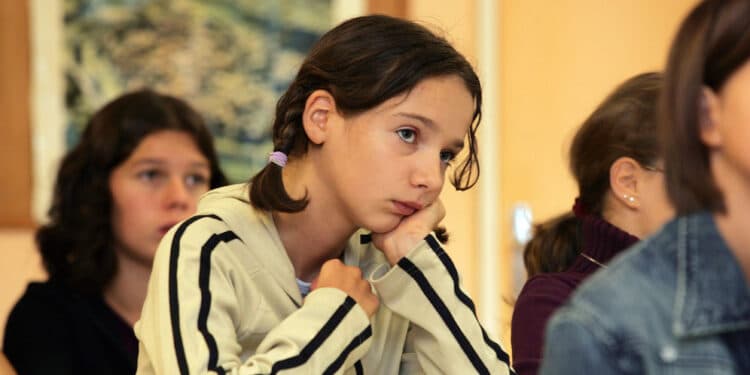

A recent study suggests that the 2008 Great Recession had an adverse impact on children as well as adults. The findings, published in the journal SERIEs, show that children whose fathers lost their jobs during this time experienced a significant drop in their school grades.
The Great Recession of 2008 marked a period of global economic decline. As financial markets crashed and banks plummeted, millions of people around the world lost their jobs and struggled to regain employment. Study author Jenifer Ruiz-Valenzuela explains that a depleted job market can lead to mental and physical health decline in the unemployed but can also have an effect on the family, including children. Yet, the author says little is known about how children may have been impacted by the 2008 financial crisis.
Ruiz-Valenzuela conducted a study to explore how children whose parents lost their jobs during the Great Recession may have suffered in terms of school performance.
“I had read a research paper using data from Norway on the negative impact of parental job loss on school performance; and some research by social psychologists on how children, from very young ages, were able to understand parental work conditions (such as pay or work disputes),” explained Ruiz-Valenzuela, a research scientist at the London School of Economics.
“Spain was hardly hit by the late 2000’s crisis with many people losing their jobs. I wanted to understand whether the negative impact of parental job losses on the academic achievement of children seen elsewhere in the economic literature, was even harsher during recession times. Spain provided a good scenario to answer the question.”
Ruiz-Valenzuela distributed a survey to parents of 358 children between the ages of 3 and 16 who were attending an average school in Barcelona, Spain. Parents were asked to indicate their employment status at the time of the survey (year 2012), as well as their employment statuses in 2010 and 2008. Ruiz-Valenzuela then collected the children’s school records for all five years between 2008 and 2012, including only those whose fathers had been employed at the onset of the Great Recession. This left a final sample of 178 students.
The researcher’s analysis of the data revealed that children whose fathers lost their jobs during the Great Recession suffered a significant drop in their average school grades. This drop was substantial — about 15% of a standard deviation.
The findings further suggested that certain subgroups of children were more impacted than others. The adverse impact of job loss appeared to be driven by those whose fathers had suffered longer periods of unemployment and children whose fathers had previously held stable employment (as measured by at least three years of tenure at their former jobs).
“Parental job loss has negative consequences on the worker itself that seem to spillover to family life. In particular, father’s job losses happening during the Great Recession in Spain have had a negative impact on the school performance of their children; with effects being of a larger magnitude for children whose parents entered long-term unemployment following job loss,” Ruiz-Valenzuela told PsyPost.
The findings also suggested that the effects of job loss were stronger among children whose fathers had a lower education. As Ruiz-Valenzuela wrote in her study, this suggests that the impact of job loss was disproportionately felt among children belonging to families that may have been already disadvantaged, potentially widening the inequality gap.
Interestingly, a mother’s job loss was not found to significantly affect children’s school grades. The author said that this falls in line with research suggesting that job insecurity is linked to financial anxiety among men, but not women. It could also be tied to the fact that the men in the study tended to contribute a greater share of the household income than did women.
Ruiz-Valenzuela noted that her study uncovered particularly large effect sizes, suggesting that a job loss during a significant economic crisis can trigger greater detrimental effects on children’s school performance than regular job losses.
“The results have potential implications for the current COVID-19 crisis. In many countries around the world, the restrictions put in place to deal with the pandemic have led to a substantial amount of job losses. The impact of parental job losses happening during the COVID-19 crisis can potentially impact the school performance of affected children, and this could be aggravated in those countries where schools remain closed,” the researcher explained.
The author pointed out that her study analyzed only the short-term effects of parental job loss. It would be of interest for future studies to consider whether a parental job loss can inflict long-term consequences on children.
“A major caveat is that the results are based on a small sample size. However, the school is similar to the average school in Catalonia (Spain) when it comes to school performance, or parental characteristics of the children enrolled (such as the labor market status of the parents),” Ruiz-Valenzuela explained.
“In terms of the questions that still need to be addressed: a bigger sample would allow for a rigorous analysis of differential effects depending on the age of the child when exposed to parental job loss. More data would also be needed to carefully understand what mechanisms are driving the negative effect of parental job loss on children’s school performance.”
The study, “Job loss at home: children’s school performance during the Great Recession”, was authored by Jenifer Ruiz-Valenzuela.