
How personality and social context shape adolescent loneliness
A new study tracking the daily habits of teenagers reveals that while spending time alone is linked to momentary isolation, young people with maladaptive personality traits tend to experience chronic loneliness regardless of their social surroundings.
Read moreDetails
Autistic individuals might be somewhat better at reading emotions of other autistic people
A new study challenges the idea that autism impairs empathy. While both groups read emotions similarly overall, autistic individuals are actually more accurate than non-autistic people at tracking the emotional valence of other autistic adults.
Read moreDetails
Therapeutic gardening improves mental health for adults with chronic conditions
A recent review of scientific literature reveals that therapeutic gardening offers a moderate boost to mental health for adults with chronic diseases, though the benefits for physical health conditions are much less pronounced.
Read moreDetails
Weightlifting offers large antidepressant effects for young women with anxiety, regardless of intensity
A new study finds you don't need to lift heavy to see mental health benefits. Researchers discovered that both standard and low-intensity strength training significantly reduced depressive symptoms in young women experiencing high levels of anxiety.
Read moreDetails
How anxiety and face gender shape emotional processing in children
A recent study reveals how the developing brain processes facial expressions based on gender and emotion, finding that elevated anxiety alters how children react to threatening faces.
Read moreDetails
Escitalopram reduces anger and irritability in premenstrual dysphoric disorder, study finds
New research shows that administering the antidepressant escitalopram during the luteal phase eases the debilitating irritability and anger associated with premenstrual dysphoric disorder, while simultaneously reducing the brain’s neural response to aggressive social stimuli.
Read moreDetails
Semaglutide may protect against psychiatric disorders independent of weight loss
New research suggests that higher doses of the weight-loss drug semaglutide might lower the risk of developing certain mental health conditions. Surprisingly, this psychiatric benefit appears to be independent of how much weight a person actually loses.
Read moreDetails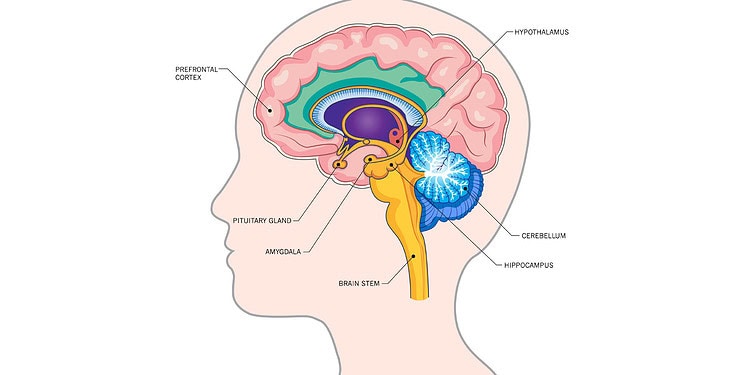
Brain scans reveal how recurrent depression leaves a lasting mark on the amygdala
A large study found that a history of multiple depressive episodes is tied to heightened brain activity during emotional processing. The findings suggest each episode leaves a biological signature, increasing vulnerability to future relapses.
Read moreDetails
The surprising link between prosocial motivation and dark creativity
Being actively rejected and being silently ignored both cause social pain, but they trigger different forms of dark creativity. A recent psychological study reveals how specific types of social exclusion shape our desire for creative revenge.
Read moreDetails
Chronic shame may drive destructive thought patterns in abuse survivors
Adults who experienced emotional abuse in childhood often battle destructive thought patterns like rumination and emotional avoidance. A new study suggests that chronic shame serves as the psychological bridge linking early maltreatment to these harmful habits.
Read moreDetails
Getting a smartphone before age 13 linked to worse mental health in young adulthood
Getting a smartphone early in childhood may have lasting consequences. A new study links early phone ownership and social media access to worse psychological well-being, disrupted sleep, and strained family relationships in young adulthood.
Read moreDetails
Daily stress predicts nighttime wakefulness through cognitive arousal
A new study tracks how daily stress and bedtime worry impact sleep. Researchers found that racing thoughts predict nighttime wakefulness, especially for individuals with high sleep reactivity, while physical symptoms like elevated heart rate play a smaller role.
Read moreDetails
Analyzing infant cries to detect autism shows potential, but definitive evidence is still lacking
Can a baby’s cry reveal early signs of autism? A new review shows that while certain acoustic patterns and AI tools show promise, there is no definitive evidence yet that autistic infants can be identified solely by crying.
Read moreDetails
A six-decade study links teenage school anxiety to late-life memory complaints
While childhood intelligence and grades do not predict how people view their memory in old age, a new study finds that early adolescent school anxiety does.
Read moreDetails
The brain’s fuel system rapidly recovers after you stop heavy drinking
Heavy drinking changes how the brain fuels itself. But new research shows this metabolic shift is highly reversible, with the brain’s energy system returning to near-normal within just one month of abstinence.
Read moreDetails