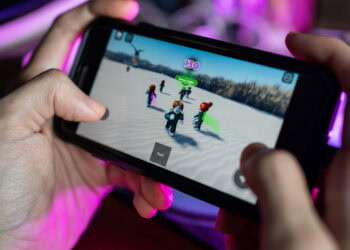
The emphasis on physical appearance within dating apps may contribute to disordered eating among users, according to findings published in the Journal of Eating Disorders. The study found that the use of dating apps — and the motivations for using them — were tied to higher levels of disordered eating.
The dating scene is increasingly dominated by dating apps, and many of these apps are highly focused on physical appearances. For example, apps like Tinder and Bumble involve swiping through large numbers of potential matches and making snap decisions that are primarily based on a user’s profile photo.
This focus on looks has led some researchers to question whether these apps might contribute to body dissatisfaction and disordered eating among users. Early research seems to support these concerns, but with substantial limitations. Study author Jade Portingale and her colleagues conducted a new investigation to address a few of these gaps and hopefully uncover new insights.
“We sought to address key gaps in the dating app and eating disorder literature,” explained Portingale, a PhD candidate and member of The Eating Disorder Lab at the University of Melbourne. “Namely, whether common psychological traits known to exacerbate eating disorder risk were increased among app users, and whether specific motivations for dating app use were associated with increased eating disorder risk. This research would shed light on the users most at risk, and subsequently, new avenues for eating disorder intervention/prevention programmes.”
The researchers distributed a questionnaire among 690 young people with an average age of 20. Participants answered questions regarding their dating app usage and symptoms of disordered eating. They also completed assessments of various traits related to disordered eating — appearance-based rejection sensitivity, social rank, fear of negative evaluation, and emotion dysregulation.
According to the survey responses, Tinder was by far the most popular dating app, used by 40% of dating app users. Next, the results revealed that participants who reported using dating apps were more likely to report symptoms of disordered eating compared to those who did not.
Moreover, four of the six motivations for using dating apps were tied to disordered eating. Participants who used dating apps for love or the thrill of excitement had lower disordered eating, while those who used dating apps for the ease of communication or validation of their self-worth had higher disordered eating.
“Using dating apps for the thrill of excitement was associated with lower eating disorder risk,” Portingale said. “This was interesting, given that sensation seeking is often associated with eating disorders, presumably due to the urge to satisfy needs for risk and excitement through disordered eating.”
Notably, the findings revealed that none of the trait-level psychological predictors of disordered eating (e.g., appearance-based rejection sensitivity, fear of negative evaluation) had stronger effects on dating app users compared to non-users.
“Lifetime dating app use may constitute a socio-cultural appearance-based pressure that increase one’s risk of eating disorders,” Portingale told PsyPost. “In particular, sensitivity to appearance-based rejection and emotion dysregulation, as well as motivation to use dating apps for self-worth validation or ease of communication, may play a role in increased risk.”
While the findings suggest that dating app users are more likely to report disordered eating, the study was cross-sectional and the direction of this relationship is unknown. For example, the study authors mention two ways to interpret the correlation.
For one, people with higher body image concerns and disordered eating behaviors might be more likely to use dating apps since they allow them to exert greater control over their self-presentation. Alternatively, dating apps — and the pressures they exude concerning physical appearances — might cause people to try to enhance their physical attractiveness by engaging in disordered eating.
The authors say that their findings may help inform ways to protect vulnerable users, such as those using dating apps to boost their self-worth, from developing eating pathology. “For instance,” the researchers write, “dating app developers could partner with clinicians to implement a pre-screening instrument that assesses for interpersonal functioning deficits and the need for self-worth validation, and then notifies users about potential risks.”
The study, “Dating app usage and motivations for dating app usage are associated with increased disordered eating”, was authored by K. Blake, J. Portingale, S. Giles, S. Griffiths, and I. Krug.