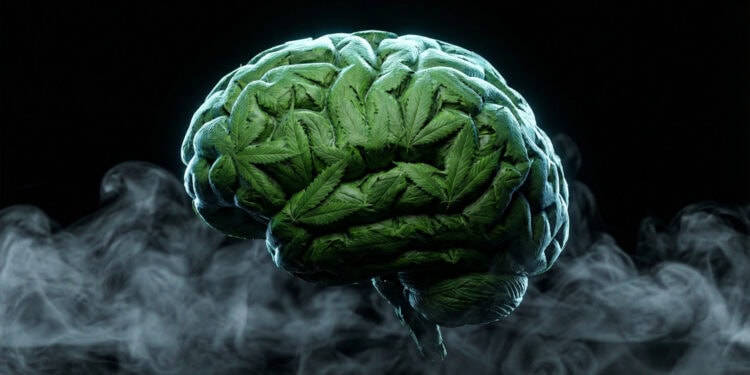
A study of individuals with cannabis use disorder in Australia did not find evidence that they pay more attention to pictures of cannabis compared to individuals not suffering from that disorder. The paper was published in Comprehensive Psychiatry.
Cannabis use disorder is a mental health condition characterized by a problematic pattern of cannabis use that leads to significant impairment or distress. It occurs when a person continues using cannabis despite experiencing negative consequences in daily life.
Individuals with this disorder may have difficulty controlling how often or how much cannabis they use. They may spend a lot of time obtaining, using, or recovering from the effects of cannabis. Another common feature is craving, which refers to a strong desire or urge to use the substance. People with cannabis use disorder tend to also develop tolerance, meaning they need larger amounts of cannabis to achieve the same effects.
Some individuals experience withdrawal symptoms such as irritability, sleep problems, or reduced appetite when they stop using cannabis. The disorder can interfere with responsibilities at work, school, or home. It may also lead to social or interpersonal problems related to cannabis use.
Study author Marianna Quinones-Valera and her colleagues wanted to explore how attentional bias towards cannabis-related pictures (vs. neutral pictures) differs between individuals with moderate-to-severe cannabis use disorder who are not seeking treatment and control participants, accounting for the amount of alcohol consumption during the past month. They also wanted to see whether the strength of this attentional bias depends on how much cannabis they use, cannabis cravings, cannabis-related problems, and a number of other characteristics.
Study participants were 108 individuals recruited from the Melbourne metropolitan area (Australia) via flyers from the general community, university campuses, and online platforms. Participants were required to be between 18 and 55 years of age, with normal or corrected-to-normal vision, and fluent in English. Participants with cannabis use disorder also needed to report daily or almost daily cannabis use for at least the past 12 months, and to meet diagnostic criteria for a moderate-to-severe cannabis use disorder.
Study participants completed assessments of anxiety (the State-Trait Anxiety Index – Y Form), and depressive and psychotic symptoms (the Community Assessment of Psychic Experiences). They also completed a clinical interview to confirm the severity of their cannabis use disorder, reported their motivation to change cannabis use habits (the Contemplation Ladder), and completed an assessment of problematic alcohol use (the Alcohol Use Identification Test).
Attentional bias was measured using a task where participants viewed and responded to pictures. There were 10 pairs of cannabis and neutral images. Cannabis images included photos of cannabis, of people using cannabis, and cannabis paraphernalia. Neutral images included people and objects matched to cannabis images on composition, complexity, brightness, and color.
The task first briefly showed a cannabis and a neutral image side-by-side. After this, one of those images was replaced by an arrow, and the participant had to indicate the orientation of the arrow. The idea is that if participants show attentional bias towards cannabis (i.e., if cannabis images attract their attention more than neutral images), they will react faster to arrows that replace the cannabis image because their gaze and attention were already directed at that place before the arrow appeared there (so they do not need to move their gaze to view the arrow). Each participant completed 164 of these trials, lasting some 15 minutes in total.
The results did not support the expectation that participants with cannabis use disorder have a stronger attentional bias towards cannabis pictures compared to the control group. However, within participants suffering from cannabis use disorder, those with more severe symptoms tended to have very slightly faster reaction times when the arrow appeared over cannabis images compared to neutral images. However, this difference was very small, and it remained unclear whether it is a systematic difference or just something produced by random variations in participants’ responses.
“Attentional bias might not be a robust feature of CUD [cannabis use disorder], though this notion requires validation in a larger sample using more direct measures of attentional bias,” the study authors concluded.
The study contributes to the scientific knowledge about cannabis use disorder. However, it should be noted that reactions to briefly shown cannabis pictures might not adequately reflect how people react to cannabis in real-world situations. Study authors also note that the fact that they selected participants with cannabis use disorder that do not suffer from any other psychiatric illness might have resulted in a sample not really representative of the general population of individuals with cannabis use disorder.
The paper, “Attentional bias in people with moderate-to-severe cannabis use disorder,” was authored by Marianna Quinones-Valera, Gary Chan, Madeleine I. Fraser, Andrew Jones, Tom P. Freeman, Chandni Hindocha, Hannah Thomson, Eugene McTavish, Hannah Sehl, Adam Clemente, Janna Cousijn, Izelle Labuschagne, Peter Rendell, Gill Terrett, Lisa-Marie Greenwood, Govinda Poudel, Chao Suo, Victoria Manning, and Valentina Lorenzetti.