Subscribe
The latest psychology and neuroscience discoveries.
My Account
  • Mental Health
  • Social Psychology
  • Cognitive Science
  • Psychopharmacology
  • Neuroscience
  • About
No Result
View All Result
PsyPost
PsyPost
No Result
View All Result
Home Exclusive Social Psychology Political Psychology

People with lower emotional intelligence are more likely to hold right-wing views, study finds

by Eric W. Dolan
September 3, 2019
in Political Psychology
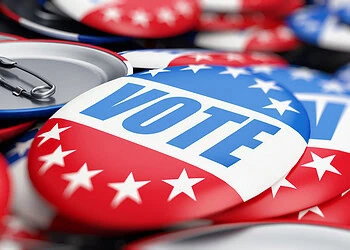
(Photo credit: Bradley Gordon)

(Photo credit: Bradley Gordon)

Share on TwitterShare on Facebook

New research from Belgium provides evidence that deficits in emotion understanding and emotion management are related to right-wing and prejudiced attitudes. The study has been published in the journal Emotion.

“I have a lifelong interest in political psychology and in political ideology in particular. The observation that left-wing and right-wing adherents tend to differ on so many psychological characteristics is amazing,” said study author Alain Van Hiel, a professor at the University of Ghent.

“Many scholars have investigated the cognitive basis of ideology in general, and right-wing ideological attitudes in particular. In the present study, we wanted to investigate if a similar relationship would exist for emotional abilities.”

In two studies, the researchers assessed the emotional abilities and political ideology of 983 Belgian undergraduate students. The second study also examined the participants’ cognitive ability. Emotional ability was measured with three tests: the Situational Test of Emotional Understanding, the Situational Test of Emotion Management, and the Geneva Emotion Recognition Test.

The researchers found that individuals with weaker emotional abilities — particularly emotional understanding and management — tended to score higher on a measure of right-wing authoritarianism and social dominance orientation.

Right-wing authoritarianism is a personality trait that describes the tendency to submit to political authority and be hostile towards other groups, while social dominance orientation is a measure of a person’s preference for inequality among social groups.

“The results of this study were univocal. People who endorse authority and strong leaders and who do not mind  inequality — the two basic dimensions underlying right-wing political ideology — show lower levels of emotional abilities,” Van Hiel told PsyPost.

Those with lower emotional and cognitive abilities were also more likely to agree with blatantly prejudiced statements such as “The White race is superior to all other races.”

The researchers controlled for age, sex, and education level. But like all research, the study includes some limitations. The study only collected correlational data, preventing inferences of causality from being made.

“Of course, caution should be exercised in the interpretation of such results,” Van Hiel said. “One cannot discredit any ideology on the basis of such results as those presently obtained. Only in a distant future we will be able to look back upon our times, and then we can maybe judge which ideologies were the best. Cognitively and emotionally smart people can make wrong decisions as well.”

“The results have been obtained in one particular context. Would similar results be obtained in other contexts besides in a Western country with a long-standing stable democracy? Whether these tendencies are universal, or limited to particular contexts, is very intriguing.”

The study, “The Relationship Between Emotional Abilities and Right-Wing and Prejudiced Attitudes“, was authored by Alain Van Hiel, Jonas De keersmaecker, Emma Onraet, Tessa Haesevoets, Arne Roets, and Johnny R. J. Fontaine.

RELATED

Endorsing easily disproved lies acts as a psychological “power move” for some
Authoritarianism

Endorsing easily disproved lies acts as a psychological “power move” for some

December 2, 2025
Psychotic delusions are evolving to incorporate smartphones and social media algorithms
Authoritarianism

Participating in activist groups linked to increased narcissism and psychopathy over time

November 30, 2025
Whom you observe in your daily life alters your willingness to tax the rich
Political Psychology

Whom you observe in your daily life alters your willingness to tax the rich

November 28, 2025
Are online quizzes secretly changing your vote? Surprising study uncovers an “opinion matching effect”
Political Psychology

Your brain’s reaction to the unknown could predict how you vote

November 27, 2025
New psychology research sheds light on the mystery of deja vu
Authoritarianism

MAGA Republicans are more likely to justify political violence, study finds

November 21, 2025
Why are some people less outraged by corporate misdeeds?
Business

Why are some people less outraged by corporate misdeeds?

November 16, 2025
Liberals prefer brands that give employees more freedom, study finds
Business

Liberals prefer brands that give employees more freedom, study finds

November 15, 2025
A psychologist spent 50 years studying egos. He has a lot to say about Trump’s signature.
Donald Trump

A psychologist spent 50 years studying egos. He has a lot to say about Trump’s signature.

November 13, 2025

PsyPost Merch

STAY CONNECTED

LATEST

Boosting a regulatory protein allows brain cells to clear Alzheimer’s plaques in mice

Neurodiverse youth may regulate overwhelming stimuli by turning brain activity inward

Women with high Dark Triad scores exhibit more anhedonia and alexithymia

Alzheimer’s drug Lecanemab works by triggering a specific cleaning program in immune cells

Many suicide deaths occur without high genetic risk for mental illness

Long-term calorie restriction may slow biological aging in the brain

Distinct neural pathways allow the prefrontal cortex to fine-tune visual processing

Parental divorce linked to higher stroke risk in older adults

RSS Psychology of Selling

  • Brain wiring predicts preference for emotional versus logical persuasion
  • What science reveals about the Black Friday shopping frenzy
  • Research reveals a hidden trade-off in employee-first leadership
  • The hidden power of sequence in business communication
  • What so-called “nightmare traits” can tell us about who gets promoted at work
         
       
  • Contact us
  • Privacy policy
  • Terms and Conditions
[Do not sell my information]

Welcome Back!

Login to your account below

Forgotten Password?

Retrieve your password

Please enter your username or email address to reset your password.

Log In

Add New Playlist

Subscribe
  • My Account
  • Cognitive Science Research
  • Mental Health Research
  • Social Psychology Research
  • Drug Research
  • Relationship Research
  • About PsyPost
  • Contact
  • Privacy Policy