A new analysis of clinical trial data indicates that psilocybin, when administered alongside psychotherapy, may provide rapid relief for patients suffering from cancer-related anxiety and depression. The research suggests that while the reduction in anxiety symptoms persists for at least two weeks, the antidepressant effects may diminish more quickly without specific dosing strategies. This study, which synthesized data from prior randomized controlled trials, was published in The International Journal of Psychiatry in Medicine.
Patients facing terminal illness often experience profound psychological challenges that differ from standard mood disorders. Individuals with advanced cancer frequently struggle with major depressive disorder and prolonged grief. They also face a unique form of existential distress characterized by a loss of meaning and a fear of death.
Treating these conditions in a palliative care setting is notoriously difficult. Standard antidepressant medications, such as SSRIs, typically require a gradual increase in dosage over several weeks. It can take six to twelve weeks for the full therapeutic effect to manifest.
This delay is often untenable for patients with limited life expectancy. Additionally, patients with end-stage cancer often suffer from compromised liver or kidney function due to their disease or aggressive oncology treatments. These physical impairments make it difficult for their bodies to process daily medications safely and effectively.
Previous research has hinted that antidepressants offer only moderate benefits in this specific population. Consequently, there is a pressing need for treatments that act quickly and are well-tolerated by physiologically fragile patients. Damian Swieczkowski, a researcher at the LUXMED Group and the Medical University of Gdansk in Poland, led a team to investigate a potential alternative.
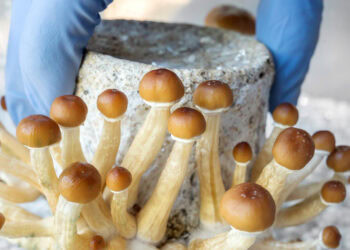
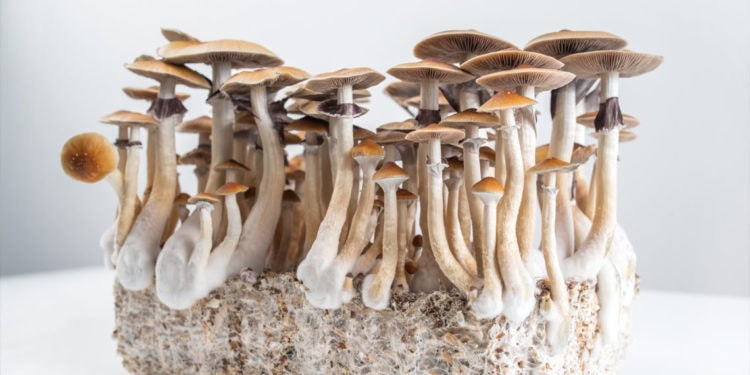
The researchers focused on psilocybin, a compound found in certain mushrooms that acts on the serotonin receptors in the brain. They sought to evaluate its efficacy and speed of action specifically for patients with a diagnosis of life-threatening cancer. The team also aimed to determine which dosage levels provided the best outcomes.
To accomplish this, the investigators utilized a network meta-analysis to synthesize findings from separate studies. This statistical technique allows researchers to estimate how different treatments compare to one another, even if they were never tested head-to-head in the same experiment. By combining these independent results, the team could evaluate the relative effectiveness of varying psilocybin dosages against a placebo.
They performed a comprehensive search of major medical databases for randomized controlled trials. The researchers applied strict criteria to ensure the quality of their data. They only included studies involving adult patients with life-threatening cancer and clinically verified symptoms of depression or anxiety. The trials had to be randomized and include a placebo control group.
Ultimately, the analysis incorporated data from two rigorous clinical trials conducted in the United States. These studies included defined measurements of depression and anxiety at specific time points. The team looked at outcomes one day after treatment and again at the two-week mark.
In the included trials, psilocybin was not taken in isolation. The drug administration occurred within a structured psychotherapeutic setting. Participants underwent preparatory sessions to build trust with their therapists.
The dosing sessions took place in a supportive environment with trained counselors present. Afterward, patients engaged in integration sessions to discuss and contextualize their psychedelic experiences. This combination of drug and therapy is central to the treatment model.
The analysis revealed that psilocybin produced a rapid therapeutic effect. On the first day following treatment, patients who received psilocybin showed a reduction in depression scores compared to those who received a placebo. This immediate response stands in contrast to the slow onset of conventional antidepressants.
The researchers also observed a reduction in anxiety levels on the first day. This suggests that the treatment targets the intense emotional distress often felt by those with a terminal diagnosis. The magnitude of symptom relief was substantial in the immediate aftermath of the session.
The team then examined whether these benefits were sustained over time. At the two-week follow-up, the reduction in anxiety remained statistically distinct from the placebo group. Patients continued to report lower states of anxiety and fewer anxious personality traits.
However, the findings regarding depression at the two-week mark were less definitive. While the depression scores for the psilocybin group remained lower than the placebo group numerically, the difference was not statistically significant. This indicates that the antidepressant effect might be more transient than the anxiolytic effect.
The lack of statistical significance at two weeks implies a dynamic variability in how patients respond to the treatment over time. It suggests that the initial relief from depression might require reinforcement. This could potentially be addressed through additional therapeutic integration or dosing adjustments.
The study also provided a ranking of different dosages based on their likelihood of success. The researchers compared a moderate dose of 0.2 milligrams per kilogram of body weight against a higher dose of 0.3 milligrams per kilogram. They used a statistical calculation to determine the probability of each dose being the most effective.
The analysis identified the higher dose of 0.3 milligrams per kilogram as the most effective option. This dosage ranked highest for reducing both depression and anxiety scores on the first day. It also maintained the highest ranking for anxiety reduction at the two-week point.
The lower dose was also effective compared to the placebo but generally performed less well than the higher dose. This finding hints at a dose-response relationship, where a sufficient amount of the compound is necessary to achieve maximum clinical benefit. The results support the idea that dosing protocols in future trials should consider these higher levels.
The researchers proposed biological mechanisms that might explain these effects. Psilocybin is known to alter connectivity in the default mode network of the brain. This network is often overactive in depression and is associated with rumination and rigid negative thinking.
By temporarily disrupting this network, psilocybin may allow for increased neuroplasticity and emotional processing. This “reset” could help terminally ill patients break out of cycles of despair and existential dread. The therapy component then helps them make sense of this shift in perspective.
Despite the promising results, the authors highlighted several limitations that require attention. The primary constraint is the small amount of data available. The analysis relied on only two trials with a relatively small number of total participants.
This small sample size limits the ability to make broad generalizations. The specific finding that the higher dose was superior relies on limited direct comparisons. Larger trials are needed to confirm these dosing recommendations with greater certainty.
Another challenge inherent in this type of research is the issue of blinding. In a typical drug trial, participants do not know if they received the active medication or a placebo. With psychedelics, the intense psychoactive effects make it obvious to most participants which group they are in.
This “functional unblinding” can introduce bias. Patients who know they took the active drug may expect to feel better, which can skew their self-reported scores on mood questionnaires. Conversely, those who realize they took the placebo may feel disappointed, potentially worsening their reported symptoms.
The authors also noted that the trials relied on self-reported scales for depression and anxiety. While these are standard tools, they are subjective. Future studies would benefit from including assessments made by clinicians to provide a more objective measure of improvement.
The authors emphasized that these findings are provisional. They serve as a guide for future research rather than a final verdict on clinical practice. The results highlight the potential for psilocybin to serve as a short-term, add-on treatment for palliative care.
For patients who cannot wait weeks for relief, this therapy could offer a bridge to stability. It may be particularly useful for managing acute existential crises. However, the transient nature of the antidepressant effect suggests that long-term management strategies still need development.
Future research must focus on larger, more diverse patient populations. Researchers need to explore how different types of cancer or psychiatric diagnoses might influence the response to treatment. Establishing standardized protocols for both dosing and psychological support will be essential.
The study, “Psilocybin-assisted psychotherapy as a rapid-acting treatment for cancer-related depression and anxiety: Evidence from a network meta-analysis,” was authored by Damian Swieczkowski, Aleksander Kwaśny, Michal Pruc, Zuzanna Gaca, Lukasz Szarpak, and Wiesław J. Cubała.