![[Adobe Stock]](https://sp-ao.shortpixel.ai/client/to_webp,q_glossy,ret_img,w_750,h_375/https://www.psypost.org/wp-content/uploads/2025/02/psychedelic-head-750x375.jpg)
A recent study has found that some autistic adults report lasting improvements in their mental health and social lives after using psychedelic drugs. The research, published in the journal Psychopharmacology, revealed that a significant number of autistic individuals attributed reductions in distress and social anxiety, along with increased social engagement, to a single, impactful psychedelic experience. However, the study also highlighted that a minority of participants experienced negative effects, emphasizing the need for caution and further research in this area.
There is a growing interest in the potential of psychedelic drugs to treat various mental health conditions, such as depression and post-traumatic stress disorder, in the general population. Autism spectrum disorder, a developmental condition characterized by challenges in social interaction and communication, as well as repetitive behaviors, often co-occurs with mental health difficulties. Autistic individuals are known to experience higher rates of anxiety, depression, and loneliness, and often report a lower quality of life compared to non-autistic people.
While psychedelics are being explored as therapies for mental health in broader populations, there is very little scientific understanding of how these substances affect autistic individuals specifically. Some anecdotal accounts suggested that psychedelics might be helpful for autistic people, potentially by improving their understanding of themselves and their emotions, but rigorous research was lacking. The new study aimed to investigate the experiences of autistic adults who have used psychedelics and to understand if they perceived any changes in their mental health and social abilities as a result.
To conduct their investigation, the researchers used an online survey to gather information from adults who identified as autistic. Participants were recruited through advertisements on social media platforms, online forums related to psychedelics and autism, and by collaborating with an organization called the Autistic Psychedelic Community. The advertisements were carefully worded to encourage participation from individuals with both positive and negative psychedelic experiences. To be included in the study, participants had to be at least 18 years old, fluent in English, and either have a formal diagnosis of autism from a healthcare professional or self-identify as autistic. They also needed to have used a psychedelic substance at least once in their lives.
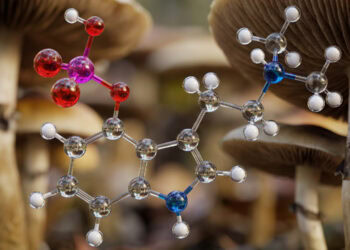
A total of 284 people completed the survey. For their analysis, the researchers focused on 233 participants who reported that their most ‘impactful’ psychedelic experience involved a classic psychedelic drug, such as lysergic acid diethylamide (LSD) or psilocybin (the active compound in magic mushrooms). The other participants who were excluded from the main analysis had reported that their most impactful experience was with substances like MDMA, cannabis, or ketamine.
The survey asked participants to think about their single “most impactful” psychedelic experience and to answer questions about the effects of that experience. They were asked to rate how impactful this experience was compared to other events in their lives, using a scale from ‘no more than routine experiences’ to ‘the single most impactful experience of my life’. Participants then completed a series of questionnaires that were adapted to assess perceived changes in different areas of their lives since that impactful psychedelic experience.
To understand the nature of the psychedelic experience itself, participants completed questionnaires about their subjective experiences during the drug’s effects. This included the Mystical Experience Questionnaire, which measures feelings of unity, sacredness, and transcendence, and the Challenging Experience Questionnaire, which assesses difficult emotions and sensations like fear, grief, and paranoia that can occur during a psychedelic experience.
To assess perceived changes, the researchers adapted several well-established psychological questionnaires. For example, the Depression, Anxiety and Stress Scale, which usually asks about symptoms in the past week, was modified to ask about long-term changes believed to be caused by the psychedelic experience. The response scale was also changed to range from ‘decreased very much’ to ‘increased very much’, allowing participants to report both positive and negative changes.
Other areas assessed included social anxiety (using the Social Phobia Inventory), psychological flexibility (using the Acceptance and Action Questionnaire II, where a decrease indicates increased flexibility), and autism-related traits (using the Autism Quotient Short). Changes in social connection and engagement were measured using the Social Connectedness Scale and the Lubben Social Network Scale, respectively. Loneliness and satisfaction with relationships and sex life were also assessed.
The study found that a large majority of participants considered their chosen psychedelic experience to be among the most impactful experiences of their lives. When looking at the perceived changes, the researchers found that most participants reported improvements in several areas. A significant percentage, over 80%, believed their most impactful psychedelic experience led to a reduction in general psychological distress.
Similarly, around 78% reported a decrease in social anxiety, and 70% felt an increase in their social engagement. Participants also reported feeling more psychologically flexible, meaning they felt more able to accept and cope with difficult thoughts and feelings. Interestingly, a majority also reported a decrease in traits typically associated with autism, as measured by the Autism Quotient Short, and a decrease in feelings of loneliness. Furthermore, many participants reported increased satisfaction with their relationships and their sex lives.
However, the study also revealed that not all experiences were positive. A notable minority, about 20% of participants, reported undesirable effects, including increases in anxiety. Some of these individuals described their psychedelic experience as one of the most negatively impactful events in their lives.
To understand what factors might be linked to these changes, the researchers conducted statistical analyses. They found that the most significant factor predicting a reduction in psychological distress was an increase in psychological flexibility. In other words, participants who became more psychologically flexible after their psychedelic experience were more likely to report feeling less distressed overall. While the intensity of the mystical aspects of the psychedelic experience was weakly associated with reduced distress, it was not as strong a predictor as psychological flexibility.
Surprisingly, the intensity of challenging experiences during the psychedelic episode was not found to be a significant predictor of changes in mental health or social engagement, although those who reported increased distress did report experiencing more challenging experiences on average.
The researchers acknowledged several limitations to their study. Because participants were recruited through online forums and social media, particularly those related to psychedelics, the sample may not be representative of all autistic adults who use psychedelics. It is possible that people with positive experiences were more likely to participate, potentially overestimating the benefits. Additionally, the study relied on participants’ memories of past experiences and their perceptions of change, which can be influenced by memory biases. The questionnaires used were also modified to assess perceived change, and while they showed good internal consistency in this study, their validity in this adapted format hasn’t been fully established. Finally, the study design was cross-sectional, meaning it captured data at one point in time, and therefore cannot prove that psychedelics directly caused the reported changes.
Despite these limitations, the researchers concluded that their findings suggest that some autistic adults perceive lasting benefits in mental health and social functioning from psychedelic experiences. These results justify further research, specifically controlled clinical trials, to explore the potential of psychedelic interventions for autistic people. Future studies should assess both potential benefits and risks, paying particular attention to safety and ethical considerations.
The researchers emphasized the importance of involving the autistic community in future research and focusing on improving wellbeing and understanding, rather than aiming to “cure” autism. They also recommended that future research should investigate why some individuals experience negative effects, and how to minimize these risks in potential therapeutic settings.
The study, “Perceived changes in mental health and social engagement attributed to a single psychedelic experience in autistic adults: results from an online survey,” was authored by Jack Stroud, Charlotte Rice, Aaron Orsini, Marco Schlosser, Justine Lee, Will Mandy, and Sunjeev K. Kamboj.