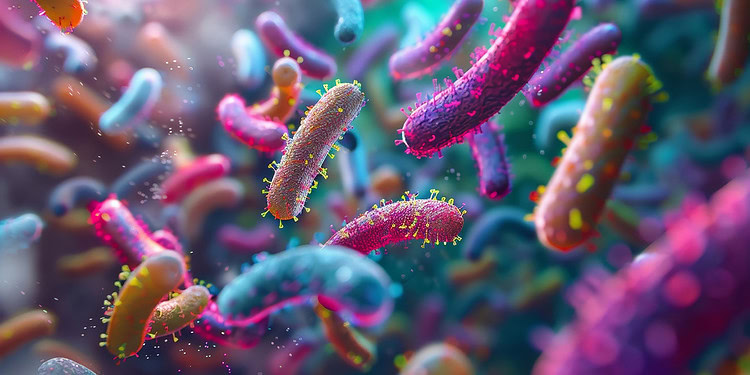

Recent research published in the journal Cell has found a link between our mental state and the immune system, particularly through an interaction between the brain and the gut. The study focused on a little-known structure in the digestive system called Brunner’s glands, located in the duodenum (the first section of the small intestine). These glands appear to play a pivotal role in how stress affects gut bacteria and immune defenses.
The relationship between the brain and gut health has been an area of growing interest in science. We know that psychological stress can harm the body’s ability to fight infections, and we also know that gut bacteria play a key role in maintaining a healthy immune system. What has been less clear is the exact mechanism by which stress and mental states can alter gut health and, in turn, affect the immune system.
Brunner’s glands were a focal point in this study because they are involved in producing mucus that protects the gut lining. Previous studies have shown that stress can reduce the population of beneficial bacteria like Lactobacillus in the gut, which leaves the body more vulnerable to infections. The researchers hypothesized that these glands might serve as a connection point between the brain and the gut, influenced by stress and other psychological states.
“We were interested in understanding how psychological states make the body more vulnerable to disease. We all know this is a real biological phenomenon, but there has been no mechanistic explanation for it. We initially assumed that a neural circuit must link emotion-related regions of the brain to the peripheral cells that control defenses against pathogens,” explained study author Ivan E. de Araujo, director at the Max-Planck Institute for Biological Cybernetics.
The study was performed on over a thousand adult male mice. The researchers used various techniques to stimulate or suppress the activity of the vagus nerve, which plays a crucial role in communicating signals between the brain and the gut. Some mice had specific sections of their vagus nerve or Brunner’s glands altered or removed to test the role these structures play in gut health.
To explore the brain’s role, the researchers manipulated a part of the brain called the central nucleus of the amygdala, which is heavily involved in processing emotions, particularly stress and fear. They mapped out a pathway that connects this brain region to the Brunner’s glands via the vagus nerve, using advanced methods such as gene targeting, viral injections, and brain imaging. By either stimulating or inhibiting these circuits, they could observe how it affected the activity of Brunner’s glands and the gut’s bacterial composition.
Additionally, they conducted a range of physiological tests on the mice, including analyzing the thickness of the gut lining, bacterial cultures from the intestines, and even monitoring the mice’s vulnerability to bacterial infections after stress exposure.
The researchers found that when the central amygdala was suppressed—either by stress or through experimental inhibition—Brunner’s glands became inactive, reducing mucus production and allowing harmful bacteria to proliferate. Conversely, when the central amygdala was activated, it led to an increase in vagus nerve activity, which in turn stimulated Brunner’s glands to produce more mucus. This promoted the growth of beneficial bacteria.
Furthermore, the researchers observed that removing or damaging Brunner’s glands led to profound changes in the immune system. Mice that had their Brunner’s glands surgically removed were much more vulnerable to bacterial infections than those with intact glands. These mice had thinner mucus layers in their intestines, increased gut permeability (which can lead to inflammation), and a higher likelihood of harmful bacteria entering the bloodstream.
“The surprising aspect of the work is how profound the impact of duodenal glands on immunity is,” de Araujo told PsyPost. “They were initially believed to counter gastric acidity.”
This finding highlights the critical role that Brunner’s glands play not just in maintaining gut health, but in supporting the immune system as a whole. The glands help create a protective barrier in the gut, preventing harmful pathogens from gaining a foothold. Without this barrier, the immune system is left exposed, and the body is less capable of defending itself against infections.
The study mapped out a precise neural circuit that connects the brain’s emotional centers to the gut through the vagus nerve. This nerve is known for its role in controlling various involuntary functions, such as digestion and immune responses. When the vagus nerve was artificially stimulated in the study, it increased mucus production in the gut, promoting a healthier bacterial population. Conversely, when the vagus nerve’s communication with Brunner’s glands was disrupted, either by surgery or stress, this beneficial effect was lost, leading to a less hospitable environment for gut bacteria.
Interestingly, probiotic treatments, or introducing beneficial bacteria directly to the gut, were able to partially reverse these harmful effects. Probiotics are live bacteria that, when consumed in adequate amounts, can confer health benefits by restoring the balance of gut bacteria. The researchers found that administering probiotics to the stressed mice helped restore healthy levels of Lactobacillus and improved the integrity of the gut lining, reducing the risk of infections.
In one experiment, the researchers introduced a probiotic cocktail of Lactobacillus and Bifidobacterium to mice that had their Brunner’s glands removed or disrupted. The probiotic treatment significantly improved the mice’s gut health, restoring mucus production, promoting healthy bacteria growth, and reducing their susceptibility to infection. This suggests that even when the natural connection between the brain and the gut is disrupted, as in the case of stress or surgery, introducing beneficial bacteria can help restore gut health.
“It must be understood that psychological states can change the ability of the body to fight pathogens in profound ways,” de Araujo said. “So, mental states do control our ability to fight off disease in palpable ways.”
While this study provides new insights, it is not without limitations. One limitation was the use of animal models, meaning the findings may not directly translate to humans. Although the researchers were able to replicate some findings in human gut tissue samples, more research is needed to confirm whether the same brain-gut circuits exist in people. Similarly, while the study showed the potential for probiotics to restore gut health, more research is needed to determine how these treatments might be applied to human patients.
“There are some caveats, which of course refer to the possibility that this system operates differently in humans,” de Araujo noted. “However, we did study (to the extent possible) these glands in humans and the conclusion thus far is that they maintain the anatomical organization and may play equivalent roles in immunity. The glands and their innervation are conserved across mammals. In the long-run, we want to study the role of the glands in human diseases known to be triggered or worsened by stress – especially inflammatory bowel disease and irritable bowel syndrome.”
The study, “Stress-sensitive neural circuits change the gut microbiome via duodenal glands,” was authored by Hao Chang, Matthew H. Perkins, Leonardo S. Novaes, Feng Qian, Tong Zhang, Peter H. Neckel, Simon Scherer, Ruth E. Ley, Wenfei Han, and Ivan E. de Araujo.