![[Adobe Stock]](https://sp-ao.shortpixel.ai/client/to_webp,q_glossy,ret_img,w_750,h_375/https://www.psypost.org/wp-content/uploads/2025/02/man-in-mask-receiving-vaccine-from-doctor-750x375.jpg)
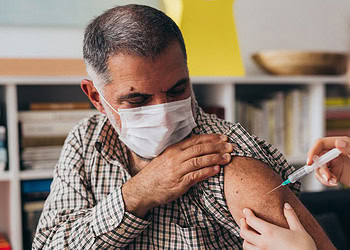
Getting a shingles vaccine is a standard recommendation for older adults looking to avoid a painful skin rash, yet new research suggests the benefits may extend much deeper into the body’s cells. A recent analysis indicates that receiving this immunization is associated with a slower rate of biological aging. The study suggests that the vaccine may help dampen systemic inflammation and keep cellular mechanisms looking younger. These findings were published in The Journals of Gerontology, Series A.
Most people measure their age by the number of birthdays they have celebrated. Scientists refer to this as chronological age. However, two people born in the same year can have vastly different health profiles. Biological age attempts to measure the actual wear and tear on the body’s tissues and systems.
Jung Ki Kim and Eileen M. Crimmins, researchers at the Davis School of Gerontology at the University of Southern California, led this investigation. They sought to understand if the shingles vaccine impacts the fundamental processes that drive aging. Previous research has hinted that certain adult vaccines might lower the risk of Alzheimer’s disease and other forms of dementia.
The researchers hypothesized that the vaccine acts by suppressing the varicella-zoster virus. This is the virus responsible for chickenpox, which remains dormant in the body’s nerve cells long after the initial infection clears. If the virus reactivates, it causes shingles, but it may also cause low-level stress on the immune system even without a rash. This chronic activation can lead to “inflammaging,” a persistent, low-grade inflammation that degrades tissues over time.
To test their hypothesis, Kim and Crimmins utilized data from the Health and Retirement Study. This is a large, ongoing survey that represents the older population of the United States. The team analyzed biological samples collected in 2016 from nearly 4,000 adults who were over the age of 70.
The researchers did not rely on a single test to determine biological health. Instead, they examined blood samples to measure aging across seven distinct biological domains. They looked at inflammation, cardiovascular health, and two types of immune system function. They also analyzed DNA methylation and gene expression, which are molecular markers that act as “clocks” to estimate cellular age.
The results showed a clear distinction between those who had received the shingles vaccine and those who had not. Individuals who were vaccinated displayed significantly lower levels of C-reactive protein and other markers of systemic inflammation. This supports the theory that the vaccine helps reduce the body’s overall inflammatory burden.
The study also found that vaccinated participants had younger cellular profiles. Their epigenetic and transcriptomic clocks—measures of how genes are regulated and expressed—indicated a slower pace of aging compared to unvaccinated peers. When the researchers combined all measures into a single composite score, the vaccinated group again showed a healthier biological profile.
While the results regarding inflammation and molecular aging were positive, the findings related to neurodegeneration were distinct and contrary to some expectations. Given the prior epidemiological evidence linking shingles vaccination to a reduced risk of dementia, the researchers specifically looked for biological proof of brain protection in the blood.
They measured concentrations of specific proteins such as neurofilament light chain and phosphorylated tau. These proteins are well-established biomarkers for neurodegeneration. When brain cells are damaged or die, these proteins leak into the bloodstream and can serve as early warning signs for conditions like Alzheimer’s disease.
Despite the healthier profiles seen in other systems, the researchers found no association between shingles vaccination and these neurodegenerative biomarkers. The levels of brain injury proteins were essentially the same in both the vaccinated and unvaccinated groups. The results were not statistically significant, meaning the vaccine did not appear to prevent the accumulation of these specific damage markers in the blood.
This null finding is important because it adds nuance to the conversation about vaccines and dementia. It suggests that if the shingles vaccine does reduce dementia risk, as other studies imply, it may not do so by directly stopping the cellular damage measured by these specific proteins.
Alternatively, it is possible that the protective effects on the brain take longer to manifest than the timeline of this study allowed. It is also possible that blood biomarkers are not sensitive enough to capture the specific type of neuroprotection the vaccine might offer.
The study also revealed a complex result regarding the adaptive immune system. This part of the immune system remembers past infections. Vaccinated individuals actually had higher scores in this domain, which in this study’s context indicated a decline in function. The authors suggest this could be a sign of the immune system working hard to maintain memory of the virus, or it could reflect natural aging of immune cells.
Timing appeared to play a role in the benefits observed. The improvements in DNA methylation and gene expression were most visible in people who had been vaccinated within the last three years. In contrast, the benefits regarding lower inflammation were strongest in those who had received the vaccine four or more years prior. This suggests that different biological systems respond to the immunization on different schedules.
There are limitations to this research that require consideration. The study is observational, which means it cannot definitively prove that the vaccine caused the slower aging. It is possible that people who choose to get vaccinated are generally healthier or wealthier than those who do not. The researchers used statistical models to adjust for education, income, and health history to minimize this “healthy user bias,” but it remains a factor.
Additionally, the data comes from a time when the older Zostavax vaccine was the standard. A newer, more effective vaccine called Shingrix is now recommended. It is unknown if the newer vaccine would produce the same, weaker, or stronger associations with biological aging.
The lack of a direct link to neurodegenerative markers serves as a reminder that biological aging is a multi-faceted process. While the vaccine appears to help with inflammation and molecular regulation, its relationship with brain health markers is not straightforward. Future research will need to follow individuals over longer periods to see if these biological differences translate into fewer cases of frailty or disease.
The study, “Association between shingles vaccination and slower biological aging: Evidence from a U.S. population-based cohort study,” was authored by Jung Ki Kim and Eileen M. Crimmins.