![[Adobe Stock]](https://sp-ao.shortpixel.ai/client/to_webp,q_glossy,ret_img,w_750,h_375/https://www.psypost.org/wp-content/uploads/2025/05/cannabis-750x375.jpg)
A new study published in Psychopharmacology investigates the biological phenomenon known as reintoxication in cannabis users. The findings indicate that acute physical stress caused by cold water immersion does not release stored THC back into the bloodstream. This research suggests that moderate physical stressors encountered in daily life are unlikely to cause a person to test positive for cannabis or experience impairment long after their last use.
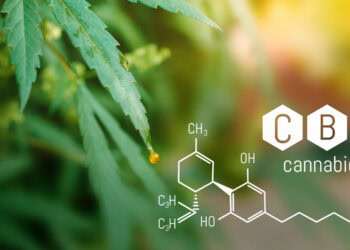
The primary psychoactive compound in cannabis is delta-9-tetrahydrocannabinol, commonly known as THC. This chemical is highly lipophilic, meaning it dissolves readily in fats rather than water.
When a person consumes cannabis, the body metabolizes much of the THC, but a significant portion is absorbed and stored in fat tissue throughout the body. These fat deposits can act as a long-term storage depot for the drug. Traces of THC have been detected in human fat biopsies weeks after consumption has stopped.
This biological storage mechanism has led scientists to propose the reintoxication hypothesis. The body naturally breaks down fat deposits for energy when it faces a deficit, such as during periods of starvation or intense physical stress. This process is called lipolysis. The hypothesis suggests that when the body breaks down fat cells during stress, the stored THC could be released back into the bloodstream along with the stored energy.
“It has been suggested that THC stored in body fat could be released back into circulation during periods of acute stress, potentially increasing blood THC concentrations,” said study author Danielle McCartney, an associate lecturer in pharmacology at the University of Sydney.
“This idea has been discussed in scientific and legal contexts, but there is very little direct human evidence to support it. We wanted to test this under controlled conditions to see whether acute stress actually increases blood THC concentrations in regular cannabis users.”
Previous research on animals has provided some evidence for this phenomenon. Studies involving rats showed that stress hormones and food deprivation could increase blood THC concentrations in animals that had been pre-treated with the drug.
Human studies, however, have been less conclusive. One study found that intense exercise significantly raised plasma THC levels in regular users. Another study involving food deprivation and running produced mixed results. The authors of the current study aimed to clarify these findings by using a different form of stress.
The researchers recruited fifteen volunteers for the experiment. The sample included nine females and six males. All participants were regular cannabis users who reported consuming the drug at least three days per week. On average, the group used cannabis five days a week. To ensure that any THC detected was not from immediate use, participants were required to abstain from cannabis for at least twelve hours before the test. They also fasted for more than eight hours to ensure their bodies were ready to metabolize fat.
The chosen stressor for this experiment was cold water immersion. This method is known to trigger a robust “fight or flight” response and stimulate the breakdown of fats. Participants sat in a bath filled with water cooled to approximately 10 degrees Celsius, or 50 degrees Fahrenheit. They remained submerged up to their clavicles for ten minutes. This duration and temperature were selected to induce significant physiological stress without posing a danger to the volunteers.
The research team collected detailed measurements at three specific time points. They took baseline measurements immediately before the cold water immersion. They collected a second set of data five minutes after the participants exited the bath. A final set of data was collected two hours after the intervention. At each point, the team drew blood samples and administered cognitive tests.
The blood samples were analyzed for several chemical markers. The researchers looked for plasma THC and its metabolites to see if concentrations rose after the stress. They also measured levels of glycerol and free fatty acids. These compounds are byproducts of fat breakdown. An increase in glycerol and free fatty acids serves as biological proof that lipolysis is occurring. Additionally, the team monitored heart rate, blood pressure, and body temperature to quantify the physiological stress response.
Subjective and cognitive effects were also assessed. Participants completed computerized tasks designed to measure attention, processing speed, and psychomotor function. Specifically, they performed the Digit Symbol Substitution Task, the Divided Attention Task, and the Paced Serial Addition Task. Participants also used visual scales to rate how “stoned” or “euphoric” they felt, as well as their levels of calmness and nervousness.
The results demonstrated that the cold water immersion successfully induced a stress response. Participants exhibited elevated heart rates and higher systolic blood pressure following the bath. Their body temperature dropped as expected. Subjective ratings confirmed that the participants felt less calm and more nervous after the exposure.
The blood analysis confirmed that the intervention triggered the breakdown of fat. Concentrations of glycerol and free fatty acids increased significantly from the baseline to the post-intervention measurements.
Despite the successful induction of stress and fat breakdown, the researchers found no corresponding increase in blood THC levels. The concentrations of THC remained stable across all three time points. The levels of 11-COOH-THC, a primary metabolite of the drug, also did not rise following the cold water stress. In fact, the concentration of this metabolite tended to decrease slightly over the two-hour monitoring period, likely due to natural clearance from the body.
Cognitive performance remained unaffected by the stressor. The participants showed no signs of impairment on any of the computerized tasks. Their reaction times and accuracy scores did not change significantly after the cold water immersion. This aligns with the lack of change in blood THC concentrations. Without a spike in the drug’s presence in the bloodstream, functional impairment would not be expected.
There was a minor change in subjective sensations. Participants reported a slight increase in feeling “stoned” immediately after the cold bath. However, the researchers note that this effect was negligible. The average rating on a 100-point scale increased by fewer than three points. The authors suggest this was likely a result of the general physiological shock of the cold water or a placebo effect, rather than true intoxication.
The researchers also examined oral fluid, which is commonly tested in roadside drug screenings. The researchers found that the cold water stress did not lead to a surge in positive results for oral fluid tests. This provides evidence that stress-induced fat breakdown is unlikely to cause a false positive on saliva-based drug tests used by law enforcement.
“We found that brief physical stress, like cold water immersion, does not increase blood THC concentrations or cause intoxication in regular cannabis users,” McCartney told PsyPost. “This suggests that everyday stressors are unlikely to meaningfully impact blood THC concentrations. That said, our participants were moderate regular users rather than very heavy or dependent users, so the findings should be interpreted in that context.”
The researchers offered several explanations for why their results differed from the previous study that found exercise increased THC levels. The primary factor appears to be the intensity of the stress. The exercise study involved thirty-five minutes of cycling, which raised heart rates to roughly 130 beats per minute. The cold water immersion in this study only raised heart rates to about 80 beats per minute.
Consequently, the exercise study induced a much stronger metabolic response. The increase in free fatty acids observed in the exercise study was nearly six times greater than the increase observed in the cold water study.
It appears that while cold water causes some fat breakdown, it may not be intense enough to liberate a detectable amount of stored THC. The stressor in the real world would likely need to be severe and prolonged to mimic the effects seen in the exercise study.
Another factor could be the usage habits of the participants. The volunteers in this study were moderate regular users. Individuals with heavier consumption habits might store larger quantities of THC in their fat tissue. It is possible that a similar stressor could trigger a release in very heavy users or those with a higher body mass index.
Studies involving heavier cannabis users or different types of psychological and physical stress would provide a more complete picture. For now, the evidence indicates that brief, moderate physical stress is not a risk factor for sudden cannabis intoxication.
The study, “Does acute stress induced via cold water immersion increase blood THC concentrations in regular cannabis users,” was authored by Danielle McCartney, Jordan Levoux, Rebecca Gordon, Laura Sharman, Katie Walker, Jonathon C. Arnold, and Iain S. McGregor.