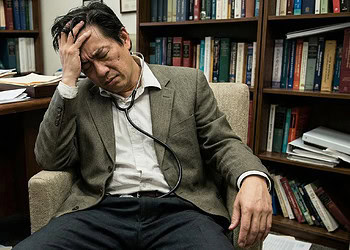
A new online survey found that men who suffered a loss of social status due to the COVID-19 pandemic were over four times more likely to have attempted suicide in the past month, more than twice as likely to report having suicidal ideas in the past two weeks and they reported higher levels of depressive symptoms compared to men who have not experienced loss of social status. These risks seem to be additionally elevated for men who strongly endorse traditional masculine roles. The study was published in Psychology of Men & Masculinities.
(If you are experiencing suicidal thoughts, call the National Suicide Prevention Lifeline at 1-800-273-8255 or follow this link to their online chat.)
The rising hospitalization rates caused by the COVID-19 pandemic and the threat of a health care breakdown led to state-imposed social distancing and lockdown measures worldwide. Almost all employees experienced a significant reduction in their subjective feelings of job security and many suffered underemployment, had to close their businesses, lost their jobs or suffered economic losses.
Psychological consequences of the COVID-19 pandemic attracted much attention from researchers and studies reported various adverse changes, such as increases in suicide attempts, contemplations of suicide, depression, anxiety and others. Research has also shown that involuntary job loss affects men more adversely than women, likely due to different expectations of the society from men and women.
Andreas Walther and his colleagues conducted a study to explore whether loss of social status due to COVID-19 is associated with increased risk of suicide, either attempted or contemplated. They also examined how the endorsement of traditional masculinity is associated with this risk of suicide and the relationship between status loss and suicide. Previous studies indicated that many men report a deterioration of both their financial situation and their mental health, particularly highlighting suicide ideation, due to the COVID-19 pandemic.
To study the association between social status loss and factors related to suicide, Walther’s team surveyed 490 adult German speakers mostly from Germany, Switzerland and Austria. Although they initially recruited 1,087 people, participants were excluded if they were below 18, were not male, had insufficient knowledge of German language, have not completed all the needed study documents.
Participants completed an online questionnaire asking for demographic data, questions related to adverse consequences of COVID-19 (financial loss, job insecurity, job loss, existential threat, loss of social contacts etc.), the history of suicide attempts and suicide ideation. They completed assessments of endorsement of traditional masculinity ideology, two depression related assessments and a subjective social status scale. Participants were asked to explicitly state whether they experienced a loss of social status due to the COVID-19 pandemic as a yes/no question. 14,7% of men in the sample reported having experienced status loss due to COVID-19.
The researchers found that 4.1% of men reported a suicide attempt in the past month, while 23.3% reported making a suicide attempt in their lifetime. Suicidal ideation during the past 2 weeks was reported by 49.0%. Comparison of the group that reported experiencing a loss of social status and the group that did not report such an experience showed that the odds of an attempted suicide in the past month were more than 4-fold higher in the first group.
The odds of experiencing suicidal ideation in the past 2 weeks were 2.4 higher in the group that experienced loss of status and depression indicators were more pronounced in this group as well. The acceptance of traditional male role norms was higher among men who have reported experiencing loss of status due to COVID-19 and the acceptance of these roles also added to the risk of suicide in this group of men.
The authors conclude that the results of the study “underline the pivotal role of social status loss in men with regard to suicide risk” and that “the impact of losing one’s job and perceived loss of social status could understandably threaten their self-worth.”
These results highlight the link between status loss, depression and suicide. However, authors note that men with mental distress were overrepresented in the study. As this is a correlation study, no inferences about cause-and-effect relationships between the studied factors can be made. While it might be the case that status loss leads to mental health issues, it might also be mental health issues that in turn lead to status loss and other options are also possible. Future studies with longitudinal research plans and more representative samples might shed additional light to this problem.
The study, “Status Loss Due to COVID-19, Traditional Masculinity, and Their Association With Recent Suicide Attempts and Suicidal Ideation,” was authored by Andreas Walther, Jessica Grub, Sarah Tsar, Ulrike Ehlert, Adrian Heald, Raymond Perrin, John S. Ogrodniczuk, Zac E. Seidler, Simon M. Rice, David Kealy, John L. Oliffe, and Lukas Eggenberger.