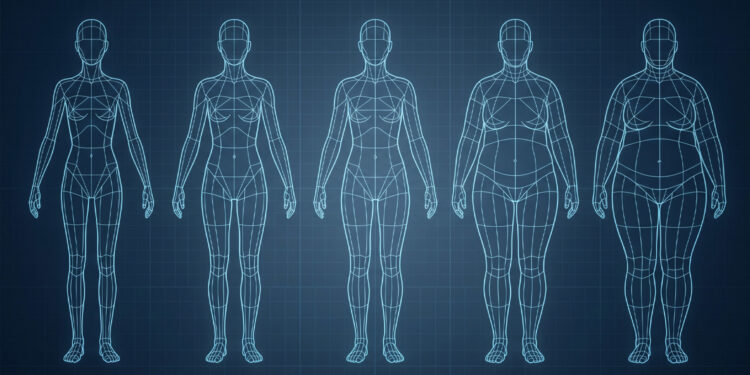
Researchers recently estimated the body mass index of female figures depicted in 19th-century Impressionist paintings, finding that these historical beauty ideals align with modern clinical classifications of obesity. The shifting standards highlight a stark contrast between past cultural preferences for fuller body types and contemporary pressures to achieve extreme thinness. The study was published in the International Journal of Obesity.
Throughout history, societies have continually redefined female beauty. Human aesthetic preferences are frequently tied to specific cultural values and the societal roles women are expected to fulfill. In the Paleolithic era, artifacts like the Venus of Willendorf featured prominent abdomens and ample breasts. These physical traits were celebrated as symbols of fertility and the ability to sustain life. During the Renaissance and Baroque periods, artists continued to emphasize voluptuous forms, associating rounded bodies with abundance and sensuality.
By the late 19th century, the Industrial Revolution had profoundly altered the world. Women began moving away from agricultural labor and domestic roles, increasingly participating in paid factory work within urban environments. Despite these shifting social structures, artistic representations of women remained anchored to classical ideals. Impressionist painters continued to feature soft, rounded forms as the epitome of feminine beauty.
This artistic preference for fuller shapes stood in sharp contrast to the lived reality of the general population. Economic hardship and widespread famine swept across Europe during this era, making undernutrition a common problem for many working people. Historical records suggest the average person maintained a lower body weight, making true clinical obesity exceptionally rare. The fuller figures celebrated on canvas represented an idealized vision of beauty that was physically unattainable for most citizens.
Don’t miss the next big psychology finding
Every morning, PsyPost sends a short briefing on the most interesting new peer-reviewed research in psychology and neuroscience.
Today, cultural aesthetics have shifted in the exact opposite direction. Runway fashion and digital media aggressively promote thinness, contributing to a rise in eating disorders and extreme weight-control behaviors. To examine how aesthetic expectations have changed over time, an international team of researchers decided to analyze historical artworks. Lead author Maria Vittoria Messina and colleagues Asia Saturnino and Paolo Pozzilli, an endocrinologist at the Fondazione Policlinico Universitario Campus Bio-Medico in Rome, worked to quantify the physical traits captured by Impressionist painters.
The research team selected 11 Impressionist paintings featuring female nudes for their analysis. The sample included highly recognizable artworks, such as Edgar Degas’s “Nude Woman Standing, Drying Herself,” Pierre-Auguste Renoir’s “Nu allongé,” and Paul Cezanne’s “Three Bathers.” Because the artists painted idealized figures rather than providing exact medical measurements, the researchers had to work backward to estimate the subjects’ physical dimensions.
To quantify the body size of the painted figures, the scientists focused on calculating their body mass index. Body mass index is a standard medical calculation that divides a person’s weight in kilograms by the square of their height in meters. Health organizations utilize this mathematical formula broadly to categorize body weight into healthy, overweight, or obese ranges. Calculating this index requires precise numbers for both weight and height.
Extracting weight data from a two-dimensional painting requires advanced technology. The team used a digital software program called a BMI Visualizer tool to generate three-dimensional body models based on the painted figures. Artificial intelligence systems then verified these estimations. The computer programs compared the newly generated models to the visual proportions in the original artwork, adjusting the variables until the digital representations matched the painters’ brush strokes.
Establishing the height of the painted subjects presented a separate mathematical hurdle. The researchers completely lacked height data for the imaginary or anonymous women depicted in the art. To solve this, the team established an arbitrary, standardized baseline height of 154.3 centimeters, or about five feet tall.
This specific height measurement was not chosen at random. The researchers derived the number from 19th-century historical records documenting the average height of female convicts. By applying this uniform baseline height to all 11 figures in the study, the team could isolate the visual variations in body weight and calculate a mathematically consistent metric for each painting.
After successfully running the calculations, the researchers averaged the results across the entire art sample. The estimated body weights assigned to the painted women ranged from 71.0 to 78.0 kilograms, or roughly 156 to 172 pounds. The statistical variance in weight across the different paintings was remarkably low, indicating relatively little variability in body weight across the sample.
The mean body mass index of the painted women registered at 31.0 kilograms per square meter. The lowest index score in the sample was 29.8, while the highest was 32.8. According to current standards established by the World Health Organization, a score between 18.5 and 24.9 falls into the healthy category. The figures celebrated as the absolute pinnacle of beauty in Impressionist art would currently be classified clinically as having overweight or obesity.
Relying strictly on this mathematical formula to determine health status presents inherent limitations. The metric only compares weight and height, meaning it cannot measure muscle mass, genetic predispositions, or overall metabolic health. In certain medical contexts, such as prolonged hospitalization or severe infections, carrying extra body weight can actually provide protective health benefits. Modern clinical definitions often pathologize body proportions that historical artists considered highly desirable.
Contemporary society frequently pushes aesthetic ideals toward the opposite extreme. The researchers noted that prolonged isolation and increased screen time during the COVID-19 pandemic amplified pressures to conform to unrealistic standards. People were constantly exposed to highly edited photographs online. This environment helped fuel a surge in unhealthy weight-control behaviors and intensified body dissatisfaction, particularly among younger individuals.
The pursuit of thinness has grown so intense that many individuals now rely on pharmaceutical interventions for aesthetic reasons. The study authors point to the rising illicit use of semaglutide, a medication originally designed exclusively to manage diabetes. Many people now utilize the drug specifically to achieve rapid weight loss. This practice demonstrates an extreme willingness to prioritize aesthetic preferences over sustainable physical health.
The stark difference between 19th-century paintings and modern runways reveals how aesthetic norms evolve, but art does not always mirror reality. Extreme physical proportions in artwork or commercial media do not perfectly reflect the general health of the society that produces them. The bodies painted by Degas and Renoir were aesthetic fantasies, existing in a society where widespread hunger prevented most people from achieving rounder figures.
Similarly, the high rates of obesity recorded in many modern populations are not necessarily driven by aesthetic preferences for fuller bodies. Contemporary weight gain is often heavily influenced by environmental factors. Psychosocial stress, economic inequality, sedentary office jobs, and the aggressive marketing of ultra-processed foods all contribute to rising body mass indexes, acting independently of cultural beauty standards.
The contemporary pressures forcing individuals toward extreme thinness are likewise detached from practical health guidelines. These expectations stem heavily from fashion industry demands, an expansive dieting culture, and the social media amplification of unrealistic bodies. Because body image and external environmental constraints do not move in perfect alignment, the historical preference for rounder figures in art should not be interpreted as a medical endorsement of poor health.
Finding a balance between aesthetic appreciation and physical well-being remains a challenge for modern societies. The historical paintings demonstrate the profound extent to which cultural narratives shape human perceptions of beauty. The researchers argue that a more holistic approach to body image is needed, one that promotes inclusive physical well-being without idolizing unattainable extremes on either end of the spectrum.
The study, “The body mass index of females in impressionist paintings: a contrast with modern ideals,” was authored by Maria Vittoria Messina, Asia Saturnino, and Paolo Pozzilli.
