We often think of people with dark personality traits as master manipulators, villains we can spot from a mile away. The reality science is uncovering is far more complex and often surprising. Researchers are discovering that these traits affect everything from how a person moves their head to what news stories they click on. The findings paint a strange, sometimes counterintuitive, picture of how these personalities operate in the world.
So, what are these traits? Psychologists often refer to the “dark tetrad.” This group includes narcissism, which involves a grandiose sense of self-importance and a need for admiration. It also includes Machiavellianism, a tendency to be cynical, unprincipled, and manipulative. The third trait is psychopathy, characterized by a lack of empathy, impulsivity, and antisocial behavior. The fourth, sadism, is the tendency to derive pleasure from others’ suffering. Together, they represent a disposition toward putting oneself first, often at others’ expense.
Psychopaths Move Their Heads Less
Researchers set out to quantify the body language of inmates with psychopathic traits. They used automated tracking algorithms to measure the head movements of 507 incarcerated men while they participated in videotaped conversations. The interviews, which ranged from one to four hours long, were used to score each inmate’s level of psychopathy using a standard diagnostic tool.
The digital camera was focused only on the inmate, who was seated and facing forward. A machine learning program then analyzed the footage to measure how much and how often each person’s head moved, providing a set of objective data on their nonverbal behavior during the interview.
The study found a strong connection between psychopathic traits and reduced head movement. Inmates who scored higher on psychopathy tests tended to keep their heads more stationary during their conversations, creating the effect of a rigid and focused “stare.”
This stillness was primarily linked to the antisocial elements of psychopathy, meaning that individuals with a long history of diverse and persistent antisocial behavior were the most likely to exhibit fixed head positions. The researchers suggest that this is a first step, and more work is needed to see if these findings apply to other groups, like women or adolescents.
Dark Personalities and Bullshitting
In two studies involving nearly 600 people in the first and over 400 in the second, researchers explored the connection between personality and the ability to detect “pseudo-profound bullshit.” Participants were shown a series of statements and had to judge them as either “profound” or “not profound.” Some statements were genuinely meaningful motivational quotes, while others were nonsensical but lofty-sounding sentences like, “Good health imparts reality to subtle creativity.”
Participants also estimated their own performance on this task, which allowed researchers to measure their overconfidence. In addition, they completed questionnaires assessing their personality traits, including narcissism and Machiavellianism, and how often they engaged in persuasive or evasive bullshitting themselves.
The results showed a clear Dunning-Kruger pattern: the people who were least able to distinguish nonsense from meaningful statements were also the most likely to overestimate their own ability. They incorrectly believed they were better at the task than their peers.
Machiavellianism was not strongly linked to the ability to detect bullshit, but they were connected to self-reported bullshitting behavior. Narcissists tended to think they were better at spotting nonsense than they actually were. Interestingly, people high in Machiavellianism were actually better at detecting bullshit, while also reporting that they use it themselves. This suggests they may use it as a conscious social tool rather than out of ignorance.
Dark Personalities More Susceptible to Phishing Scams
In a study of 461 undergraduate students, researchers investigated whether people with dark personality traits were more likely to fall for email phishing scams. Participants completed a series of questionnaires to measure different aspects of narcissism, Machiavellianism, and psychopathy. They also completed tests measuring their social intelligence, which includes social awareness (sensitivity to others’ motives) and social information processing (the ability to use social information).
To test their susceptibility to scams, participants were shown 12 real-looking phishing emails. They rated how likely they would be to respond to each email and how trustworthy and persuasive they found it. These ratings were combined into a single score for phishing vulnerability.
The results challenged the idea that manipulative people are always savvy about deception. Initially, there were almost no direct links between most dark traits and falling for scams. However, a deeper analysis revealed an indirect relationship. People with higher levels of traits like Machiavellian cynicism, psychopathic callousness, and narcissistic rivalry tended to score lower on social awareness.
This lower social awareness, in turn, predicted a greater vulnerability to phishing scams. In essence, a diminished ability to consider a sender’s intentions or notice subtle social cues made them easier to trick. The findings suggest that a lack of social insight, common in many dark personality types, might make them easier to exploit through social engineering.
Narcissists Are Drawn to a Particular Kind of News Story
Researchers conducted two studies to see what kind of news content people with narcissistic traits prefer. In the first study, 253 participants completed a narcissism questionnaire and were then asked to choose ten news headlines they wanted to read from a list of thirty. The headlines were pre-tested and categorized as antisocial (e.g., “Supervisor sexually harasses multiple interns”), prosocial (e.g., “Steep increase in blood donors”), or neutral.
A second study with 294 participants replicated this design but also measured other traits that might explain the choices, including empathy, the need for intense stimulation (sensation seeking), and social motives like altruism.
Across both studies, individuals who scored higher in antagonistic narcissism, a subtype characterized by arrogance and aggression, showed a clear preference. They were more likely to choose antisocial news stories and less likely to select stories about prosocial behavior.
The second study helped explain why. This preference was statistically linked to two underlying traits: lower levels of empathy and a higher need for sensation seeking. Narcissistic individuals’ reduced ability to feel compassion for others and their desire for intense experiences made them more interested in stories about harm and conflict, and less interested in stories about cooperation and kindness. This suggests that their media choices reflect and possibly reinforce their worldview.
Antisocial Behaviors and Brain Structure Abnormalities
In this study, researchers used advanced brain imaging to examine the brain structures of 39 men with high psychopathy scores who were recruited from forensic hospitals and parole offices. Each participant underwent an MRI scan, and their brain volumes were analyzed using a highly detailed anatomical map called the Julich-Brain Atlas.
The analysis focused on connecting brain structure with the two main dimensions of psychopathy: the first dimension involves interpersonal and emotional traits like manipulativeness and coldness, while the second dimension involves impulsive and antisocial lifestyle choices. The brain scans of the psychopathic individuals were also compared to an age-matched control group.
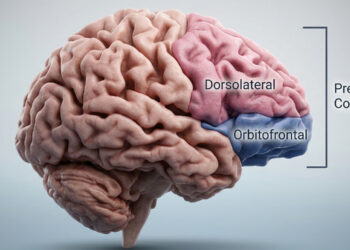
The study found that high scores on the second dimension of psychopathy, which relates to impulsive and antisocial behavior, were strongly associated with reduced volume in widespread brain regions. These areas, including parts of the brainstem, basal ganglia, and frontal cortex, are involved in behavioral regulation, self-control, and decision-making.
In contrast, the first dimension of psychopathy which covers emotional coldness and manipulation showed much weaker and more inconsistent links to brain structure. The findings suggest that the impulsive and criminal behaviors seen in psychopathy may be tied to measurable structural differences in brain circuits responsible for self-control, while the manipulative and affective traits might be less dependent on consistent structural changes.
Elevated Levels Observed Among Trump Supporters
Researchers conducted two large surveys with a total of over 9,000 U.S. adults to explore the psychological traits underlying political beliefs. Participants completed a range of questionnaires measuring attitudes toward Donald Trump, general political ideology, and various personality traits.
The personality assessments included measures of both “malevolent” traits (psychopathy, Machiavellianism, narcissism) and “benevolent” traits (humanism, faith in humanity). Participants also completed tests of empathy, which distinguished between feeling concern for others (affective empathy), understanding others’ emotions (cognitive empathy), and enjoying others’ suffering (dissonant empathy).
The findings consistently showed that people who rated Trump’s presidency highly were more likely to score higher on malevolent personality traits like psychopathy, narcissism, and Machiavellianism. These individuals also scored lower on benevolent traits, such as humanism and a belief in the basic goodness of others.
Support for Trump was also linked to specific empathy patterns. His supporters reported lower levels of affective empathy (less emotional concern for others’ suffering) and higher levels of dissonant empathy (greater enjoyment of others’ pain). These personality differences held up even when accounting for factors like age, gender, and education, suggesting a deep connection between these psychological dispositions and a particular political alignment.
Surprising Links to Makeup Habits
This study surveyed 1,410 Brazilian women about their personality and makeup habits. The women completed questionnaires that measured the “Big Five” personality traits as well as the dark triad traits of narcissism, psychopathy, and Machiavellianism.
They were also asked detailed questions about their makeup use: how much time and money they spent on it, and how frequently they wore it in different situations, such as at home, at work, on a first date, or while exercising. This allowed researchers to see if makeup use changed depending on the social context.
The study found a consistent positive link between narcissism and makeup use. Women who scored higher in narcissism tended to spend more time, money, and effort on makeup. They also adjusted their makeup usage significantly depending on the situation, wearing more in settings where they might meet new people or wanted to make a good impression.
In contrast, women who scored higher on psychopathy tended to have more stable and lower levels of makeup use across all situations. This suggests they may not use makeup as a tool for social presentation as much as other personality types. The researchers caution that these effects were small and that many other factors influence makeup habits.
Psychopathic Men Have More Children
To investigate the evolutionary perspective on psychopathy, researchers recruited 253 young men and 243 young women between the ages of 24 and 35 for an online survey. Participants provided demographic information, including their relationship status, income, and the number of children they had.
They also completed a self-report measure of psychopathy that assesses its four key dimensions: interpersonal manipulativeness, affective coldness, erratic lifestyle, and antisocial behavior. This allowed the researchers to look at both overall psychopathy and its specific facets in relation to reproductive success in a general, non-criminal population.
The study found that for men, prototypical psychopathy was associated with having more children. Specifically, the interpersonal, affective, and antisocial facets of psychopathy were all linked to a higher number of offspring in men. For women, however, there was no such association; only the antisocial facet showed a weak link to having more children.
The findings support the idea that, for men, psychopathic traits might be part of a “fast” life history strategy that prioritizes mating and producing more offspring, even if it comes at the cost of lower parental investment. The researchers note that a limitation was not distinguishing between biological and step-children, which is an important area for future study.
Generative AI Use Among Art Students
This study surveyed 504 university art students in Sichuan, China, to understand the psychological factors behind their use of generative AI tools like ChatGPT and Midjourney. The students, who came from diverse artistic fields, completed self-report questionnaires measuring dark personality traits (narcissism, Machiavellianism, psychopathy, and materialism).
They also answered questions about their academic behaviors and experiences, including academic misconduct, academic anxiety, procrastination, feelings of frustration, and negative thinking. Finally, they reported on their habits related to using generative AI for their coursework. Researchers then used a statistical model to see how all these factors were connected.
The results showed that students who scored higher on dark personality traits were significantly more likely to engage in academic misconduct, such as plagiarism or passing off AI work as their own. These traits were also linked to higher academic anxiety and more procrastination.
This combination of personality and behavior was, in turn, associated with increased frustration, negative thinking, and a greater reliance on generative AI tools. The study suggests that for some students, turning to AI is not just about seeking help; it’s part of a larger pattern driven by personality, stress, and poor self-regulation, where AI becomes a coping mechanism for academic pressures.
“Virtuous Victim Signaling” as a Dark Triad Strategy
A series of three studies with over 1,500 U.K. participants investigated “virtuous victim signaling,” a behavior where a person publicly highlights their suffering and moral character at the same time to gain sympathy and resources. Participants completed questionnaires measuring dark tetrad traits (narcissism, Machiavellianism, psychopathy, and sadism).
They also completed a scale measuring their tendency to engage in virtuous victim signaling. The third study introduced a new scale to measure the tendency to exploit accusations against others, such as by participating in public shaming or “canceling” them. The researchers controlled for factors that might predict actual victimhood, like poor health.
The first two studies confirmed that both narcissism and Machiavellianism are strongly linked to virtuous victim signaling. This suggests the behavior is a strategic tool for social influence rather than a simple reflection of genuine suffering. People high in these traits appear to use displays of victimhood and morality to manipulate others for personal gain.
The third study revealed a unique role for sadism. While sadism was not linked to signaling one’s own victimhood, it was connected to the enjoyment of exploiting accusations against others. Individuals high in sadism reported deriving pleasure from shaming or canceling people, often under the guise of moral righteousness. This shows a different way dark traits can manipulate social dynamics.
A Key Part of Machiavellianism May Protect Against Depression
Researchers recruited 343 adults online to explore how different components of dark triad traits relate to mental health. Participants completed detailed questionnaires that broke down narcissism, Machiavellianism, and psychopathy into their various facets, some considered adaptive and others maladaptive. They also completed measures of depression, anxiety, and stress.
A key part of the study was assessing “coping flexibility,” or a person’s ability to switch from an ineffective coping strategy to a more effective one. The researchers used network analysis, a statistical method that maps out the complex, interacting relationships between all of these different traits and symptoms.
The study found that a trait called “Machiavellian agency,” which involves strategic thinking, assertiveness, and goal-orientation, was a highly influential factor. Higher levels of Machiavellian agency were positively connected to coping flexibility and negatively connected to symptoms of depression. In other words, people who were more strategic and goal-focused were more flexible in their coping and reported less depression.
This challenges the idea that all dark traits are psychologically harmful. While other traits like narcissistic antagonism and secondary psychopathy were linked to higher depression and stress, Machiavellian agency appeared to function as a protective factor. It may help individuals leverage other traits, like extraversion, in ways that build resilience against psychological distress.
Gaining Trust Through Facial Attractiveness
Across four studies, researchers in China investigated how people perceive and trust individuals with dark triad traits based solely on their faces. First, they took neutral facial photographs of people who had scored either very high or very low on dark triad personality tests. Then, they had new groups of participants look at these photos and rate how trustworthy each person appeared.
In a follow-up study, they used a “trust game” where participants had to decide how much money to invest in a partner, based only on that partner’s picture. The amount invested served as a behavioral measure of trust. Other studies had participants rate the faces on attractiveness, dominance, and extraversion to see what might explain the trust ratings.
The results consistently showed that individuals with high dark triad traits were perceived as more trustworthy from their faces alone. In the trust game, participants also invested more money in the high-dark-triad individuals, showing that this perception translated into actual trusting behavior.
The reason for this surprising effect appeared to be attractiveness. Faces of people with high dark triad traits were rated as more attractive, and this attractiveness largely explained why they were seen as more trustworthy. The findings suggest that despite their manipulative nature, these individuals may have a social advantage in short-term interactions, where an appealing appearance can create a misleading first impression of trustworthiness.