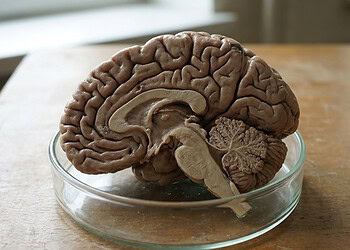
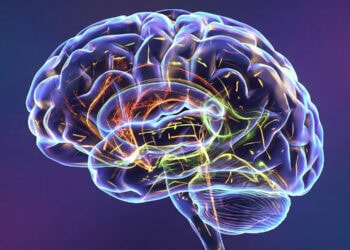
An experiment published in the journal Clinical Psychological Science found that inhibition of the insula using transcranial direct current stimulation (tDCS) reduces both self-reported disgust and moral rigidity. Notably, these effects were amplified among individuals with obsessive-compulsive traits, suggesting that tDCS might help alleviate symptoms among people with obsessive-compulsive disorder.
While disgust is often felt in response to a physical contaminant, such as dirt or bacteria, it can also be felt in response to a moral transgression. People can feel like they have a “dirty moral conscience” after committing an act that breaches their own moral rules. This feeling is referred to as deontological guilt and is believed to play a crucial role in the development and maintenance of obsessive-compulsive disorder (OCD). OCD is a disorder characterized by persistent, unwanted thoughts that lead to repetitive behaviors or compulsions.
Study authors Giuseppe Salvo and his team were motivated to study a possible method of alleviating these feelings of disgust among people with OCD. The insular cortex is implicated in disgust, and excitatory stimulation of the insula has been found to increase both feelings of disgust and deontological guilt. The researchers wanted to see whether inhibition of the insula would, therefore, alleviate feelings of disgust.
Salvo and his colleagues recruited a sample of 36 young men and women with an average age of 22, who had no known neurological or psychiatric diagnoses. Each participant took part in three laboratory sessions on three separate days, with each session involving a 15-minute transcranial direct current stimulation of the left insular cortex. Depending on the session, the tDCS was either anodal (excitatory), cathodal (inhibitory), or sham (very brief). The sham stimulation lasted only 30 seconds and served as a control condition.
During the brain stimulation, participants completed a moral task that asked them to rate the morality of a series of vignettes. Heart rate was also continuously monitored as a measure of physiological disgust since disgust tends to coincide with a decreased heart rate and increased heart rate variability. Before and after the tDCS, participants reported their levels of “shame, sadness, fear, disgust, anger, pity, altruistic guilt, deontological guilt, and happiness.”
In line with previous research, participants who received excitatory stimulation of the insula reported significantly greater disgust and increased moral rigidity compared to the sham condition. And in support of the researchers’ hypothesis, with inhibitory stimulation of the insula, the opposite pattern of results emerged — participants reported significantly lower disgust and lower moral rigidity compared to the sham condition.
In other words, participants who received inhibition of the insula judged the vignettes (which described deontological moral violations) less severely compared to the sham group. These findings were supported by the physiological measure of disgust — as deontological guilt decreased, so did heart rate variability.
The findings further suggest that the effects of the brain stimulation were amplified among participants with higher obsessive-compulsive tendencies. For example, participants with higher scores on the Obsessive-Compulsive Inventory–Revised (OCI-R) showed larger increases in self-reported disgust when activity in the insula was excited. Those with higher scores on the washing and obsessing subscales of the OCI-R showed larger decreases in self-reported disgust when activity in the insula was inhibited.
TDCS is already being used in therapeutic practice to treat disorders such as depression. The current findings suggest the technique may be useful for treating patients with OCD. Salvo and his team note that additional studies will be needed to replicate the results among a clinical sample and to determine the optimal number and frequency of sessions for people with OCD.
The study, “Filthiness of Immorality: Manipulating Disgust and Moral Rigidity Through Noninvasive Brain Stimulation as a Promising Therapeutic Tool for Obsessive Compulsive Disorder”, was authored by Giuseppe Salvo, Samantha Provenzano, Maria Di Bello, Francesca D’Olimpio, Cristina Ottaviani, and Francesco Mancini.