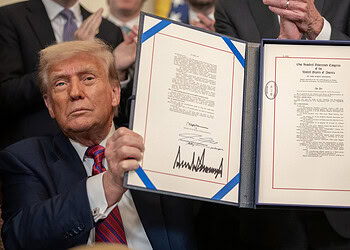
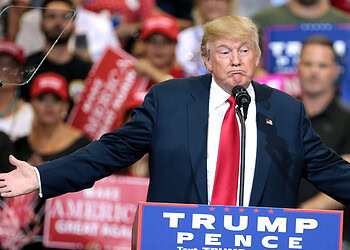
A new study published in the journal Advances in Psychology sheds light on the psychological factors that influenced voting behavior in the 2024 U.S. presidential election. The findings suggest that White Americans who perceive themselves as ranking at the bottom of the racial economic hierarchy—specifically those who feel tied with Black Americans—were the most likely to support Donald Trump. These individuals also expressed the strongest opposition to Diversity, Equity, and Inclusion (DEI) initiatives.
The United States currently exhibits a significant racial wealth gap. Economic statistics consistently show that the average White family holds considerably more wealth than the average Black or Hispanic family. Despite this objective reality, previous polling indicates that many White Americans feel as though they are personally falling behind in terms of their status. Psychological theories regarding “relative deprivation” suggest that people evaluate their well-being by comparing themselves to others rather than by looking at their resources in isolation.
The authors of the new research aimed to understand how these subjective comparisons influence political attitudes. Specifically, they investigated where non-Hispanic White individuals think they stand compared to their own, and other, racial groups. Previous research identified a phenomenon known as “last place aversion,” where people fear being at the very bottom of a social hierarchy.
“This line of research was motivated by recent political trends among some White Americans, including support for DEI bans, alignment with alt-right ideology, and endorsement of political violence in pursuit of political goals (e.g., January 6th),” explained study authors Erin Cooley and Jazmin Brown-Iannuzzi, associate professors of psychology at Colgate University and the University of Virginia, respectively. “Many of these attitudes are not only extreme but also anti-democratic, raising questions about how such views can coexist with identities centered on being ‘most American’ (e.g., White nationalist belief systems).”
For their study, the researchers recruited a representative sample of 506 non-Hispanic White Americans. They utilized a quota system to ensure the group accurately reflected the U.S. population in terms of age, gender, education, and geographic region. The study employed a longitudinal design, collecting data in five distinct waves from early September 2024 through the days immediately following the November presidential election.
The primary tool used to assess status was a measure called the “Perceived Self-Group Hierarchy,” developed by the study authors. Participants viewed a diagram representing a status ladder based on money, education, and job prestige. They were asked to place markers representing themselves, White people, Black people, Asian people, and Hispanic people onto this ladder. If participants wanted to indicate no difference among racial groups, they could place all icons in the same spot.
Using a statistical technique called Latent Profile Analysis, the researchers identified distinct subgroups based on how they viewed the social hierarchy. One group, comprising about 15% of the sample, fit a “last place (tied)” profile. These individuals perceived themselves as ranking below White, Asian, and Hispanic Americans. Notably, they viewed themselves as tied for the bottom position with Black Americans. In this profile, the participants also perceived the entire hierarchy as a “tight race,” meaning they felt the gaps between racial groups were relatively small.
The researchers found a consistent link between this “last place” profile and specific political views. White Americans who fit this profile reported the highest levels of support for Donald Trump throughout the campaign season. They also expressed the strongest intention to vote for him. When surveyed the day after the election, this group was the most likely to report having cast their ballot for Trump.
Beyond voting choices, this group showed the strongest opposition to DEI programs, favoring policies that would ban such initiatives in universities. Additionally, they showed higher alignment with alt-right ideologies, agreeing more frequently with statements such as “White people are generally under attack in the U.S.” and “The government threatens my personal rights.”
Importantly, the researchers found that these attitudes were not driven by actual poverty. The researchers controlled for objective indicators of socioeconomic status, such as income and education levels. They found that belonging to the “last place” profile predicted Trump support and anti-DEI attitudes regardless of how much money or education the participant actually had.
“We originally hypothesized that we would observe a subset of non-Hispanic, White Americans who feel ‘last place.’ That said, we expected this profile to be more likely among working class individuals,” Cooley told PsyPost. “However, perceiving oneself to be ‘last place’ was not associated with the lowest objective income nor the lowest objective education among the White Americans in our samples.”
According to Cooley, because these individuals are not objectively the lowest in status, the findings suggest that “racialized perceptions—rather than objective socioeconomic position—are reliably associated with the political outcomes examined here.”
The researchers also examined whether these feelings intensified as the election drew closer. They hypothesized that political campaigning might heighten status anxieties. However, the data showed that the relationship between profile membership and political support was stable over the three months. The link between feeling “last place” and supporting Trump was just as strong in September as it was in November.
“Although the effects are modest at the individual level—as is typical in political psychology—the consistency of the pattern across large samples with census-based quotas suggests meaningful practical significance,” Cooley noted. “When a psychologically distinct subgroup consistently emerges and is reliably associated with support for certain policies and votes cast in a presidential election, even small effects can matter at the population level.”
As with all research, there are limitations to consider. The design was correlational, which means it cannot prove that feeling “last place” causes someone to vote a certain way. It is possible that the relationship works in the opposite direction. Engaging with certain political media or movements could cultivate or intensify feelings of being left behind.
“One potential misinterpretation is that political outcomes are driven simply by feelings of falling behind other White Americans,” Cooley noted. “Indeed, across these studies, and others, we find that many White Americans perceive themselves as falling behind the perceived high status of ‘White Americans.'”
“However, when used as a predictor on its own, this perception of falling behind White people in particular does not predict political outcomes. Instead, it is the full pattern of how individuals perceive their own status relative to both other White Americans and Asian, Hispanic, and Black Americans that is predictive of alt-right tendencies, support for President Trump, and support for DEI bans.”
For future inquiries, the scientists plan to use mixed-methods research. This would involve interviewing participants to understand the personal life experiences that lead a White American to feel they are tied for last place in the economic hierarchy. Qualitative interviews could reveal the narratives and specific life events that shape these statistical profiles.
“At present, we have a limited understanding of the factors and life experiences that shape perceptions of personal status within the perceived racial economic hierarchy, particularly ‘last place’ perceptions,” Cooley said. “As a next step, we are moving toward mixed-methods approaches that combine quantitative analyses of racialized status perception profiles with structured follow-up interviews of participants—such as those classified into the “last place” profile based on their responses.”
Another limitation is the focus solely on non-Hispanic White Americans. The researchers chose this focus because of the group’s historically advantaged position in the U.S. racial hierarchy. However, this limits the ability to generalize the findings to other racial or ethnic groups. The dynamics of status perception likely operate differently for Black, Hispanic, or Asian Americans. Some initial data suggests that Hispanic Americans may be more likely to see themselves as “first place” than “last place,” presenting an interesting contrast to non-Hispanic White Americans’ status perceptions captured in the work reviewed here.
“Among Hispanic Americans, rather than a subset who feel ‘last place,’ we consistently observe a subset of Hispanic Americans who perceive themselves as close to, or tied for, ‘first place,’ and it is this subset of Hispanic Americans who are most supportive of alt-right ideology, President Trump, and DEI bans,” Cooley told PsyPost.
“Interestingly, Hispanic Americans who also identify as White are most likely to fall into these ‘first place’ profiles. We are currently testing competing theoretical explanations for these divergent patterns between non-Hispanic and Hispanic White Americans using additional mixed-methods research.”
The study, “White Americans’ feelings of being ‘last place’ are associated with anti-DEI attitudes, Trump support, and Trump vote during the 2024 U.S. presidential election,” was authored by Alisa Kukharkin, Fiona Barber, Erin Cooley, Nava Caluori, Xanni Brown, Anshita Singh, William Cipolli, and Jazmin L. Brown-Iannuzzi.